

Where the passage runs
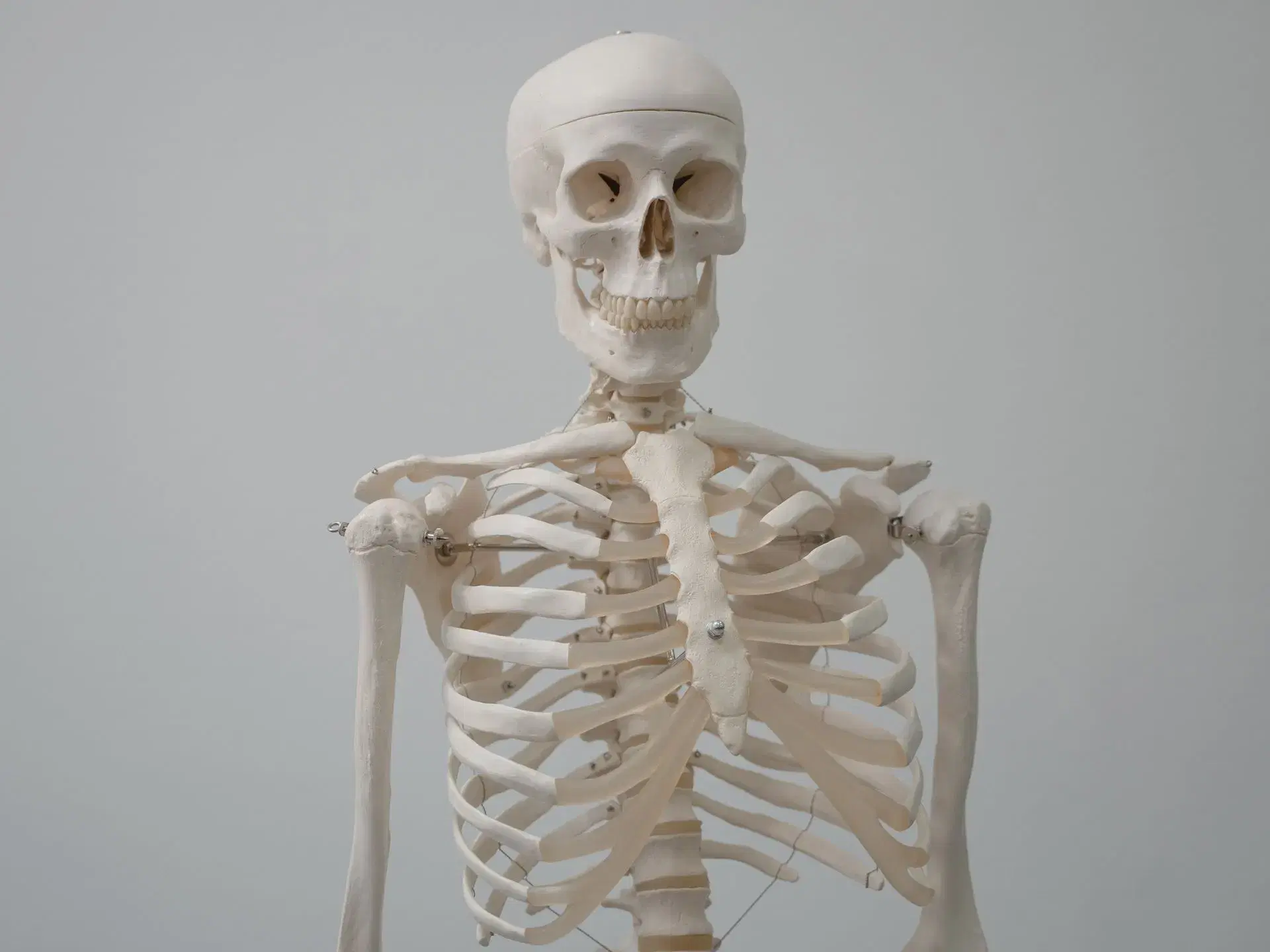
The thoracic outlet is the route taken by the bundle of nerves to the arm, the brachial plexus, together with the arm’s main artery and vein, as they leave the base of the neck, pass over the first rib and go under the collarbone into the armpit. In three places that route is tight, and each is a place where something can be pressed.
- Between the two scalene muscles. Two muscles run from the neck down to the first rib, and the nerves and the artery come through the gap between them. The vein runs in front of the front muscle, outside this gap.
- Between the collarbone and the first rib. A tighter space where all three pass together. It can narrow when the shoulder is pulled down and back, or when a broken collarbone has healed with a lump.
- Under the small chest muscle. Pectoralis minor lies beneath the large chest muscle and attaches to the shoulder blade. The bundle passes under it, and a short muscle with a shoulder rolled forward can press on what lies beneath.
Three types, with very different meanings
- The nerve type is the one usually meant. It brings an ache in the neck, shoulder or inner arm, tingling or numbness often in the ring and little fingers, a weak or clumsy grip, and a heavy feeling that builds with the arms raised, with carrying or with long spells at a keyboard. Experts disagree about how often it occurs and how it should be confirmed.
- The vein type brings a swollen arm, a bluish or dusky colour, a feeling of heaviness and more prominent veins at the shoulder or chest, and can follow hard, repeated use of the arm. A blood clot is the concern.
- The artery type brings a cold, pale or white-tipped hand, pain on use, an arm that tires quickly and sometimes a weaker pulse at the wrist. A narrowed artery can clot.
The last two are medical problems rather than ones for a musculoskeletal assessment: they need a doctor the same day, and an ambulance if they come on suddenly. A hand or arm that changes colour, goes cold or swells is the dividing line.
How the nerve type is worked out
No single test settles it. Positions that raise the arms while the hands open and close for a minute or more are used to see whether heaviness, tingling or colour change builds. Pressing over the scalene muscles above the collarbone may bring the arm symptoms on. A pulse at the wrist that fades when the arm is moved into certain positions is part of the tradition, but it does so in many people with no symptoms, so a changed pulse alone proves little.
What carries more weight is the pattern and what has been ruled out. X-rays and scans are arranged when clinically indicated, and a chest or neck X-ray may show a cervical rib, an extra rib above the first, which some people are born with and many never notice.
The look-alikes come first
The neck, the shoulder, the elbow and the wrist can each produce the same ache and tingling, and they are the more usual explanations, so they are examined before the outlet is named. A nerve root irritated in the neck, called radiculopathy, is the closest relative. At the wrist, carpal tunnel also brings pins and needles in the hands, but in the thumb, index and middle fingers instead. At the elbow, the ulnar nerve is the usual source of a numb little finger. Two sites can also be involved along one nerve at once, which is one reason the label is reached last.
Posture, load and what to try, carefully
Several things are talked about as contributors: shoulders carried forward and down with the head forward, arms working overhead for long stretches, a heavy load on the shoulder, an old collarbone or neck injury, and an extra rib. How much posture matters is still argued, since plenty of people sit that way with no symptoms.
Practical changes are modest. Break up long spells of overhead work or reaching forward, and shift loads off the shoulder. A doorway pec stretch is aimed at the chest muscle at the front of the shoulder, but if it sets off tingling or heaviness in the hand, leave it alone and note what happened, because that detail is worth more in an examination than the stretch. Colour change in the hand is different: stop, and see a doctor the same day.
Testing the outlet, and both arms side by side
The neck is moved while you report what the arm does, the shoulder blade is watched at rest and in motion, and the muscles above the collarbone, the first rib and the chest muscles are felt for tenderness and tightness. Strength, reflexes and sensation are tested in both arms, and the pulse and colour of the two hands are compared. Where the signs point to a vein or an artery, the assessment ends in a referral and not in hands-on care. When a nerve is involved, care is paced around how easily it is irritated, which is the idea behind disc and nerve rehabilitation. An assessment for neck pain takes in the whole region, including the arm and the way the head moves.
Which type, by what you notice
What you notice is where to start, not where to finish.
- Aching in the neck, shoulder or inner arm, tingling in the ring and little fingers, worse with the arm raised
- The picture usually called the nerve type. It can have a musculoskeletal assessment, once a GP has seen the arm symptoms.
- A swollen arm, a bluish or dusky colour, prominent veins at the shoulder or chest
- Suggests the vein is involved. A clot may be behind it, and it needs a doctor the same day.
- A cold, pale or white-tipped hand, an arm that tires fast, a weak pulse at the wrist
- Suggests the artery is involved. It needs a doctor the same day, and an emergency department if it comes on suddenly.
- Tingling in the thumb, index and middle fingers, worse at night, easing when the hand is shaken
- Leans towards the wrist and carpal tunnel rather than the outlet.
- Arm pain with chest pressure, breathlessness or sweating
- Not an outlet picture. Call an ambulance.
When to get it looked at
Call an ambulance if there is any confusion, sudden weakness or numbness in the face, arm or leg on one side, facial drooping, slurred speech, sudden trouble speaking, seeing or understanding, loss of vision, a seizure, or a sudden loss of balance or coordination.
Call an ambulance if arm, jaw or neck pain comes with chest pain, pressure or tightness, shortness of breath, sweating, nausea or dizziness.
Call an ambulance if a hand or arm suddenly turns cold, pale or blue, suddenly becomes very painful or numb, or you cannot move it.
Go to a hospital emergency department straight away for back or neck pain after a serious fall or a high-impact accident, such as a car accident; back or neck pain with a fever or feeling generally unwell; or new back or neck pain if your immune system is weakened, for instance by long-term steroids or chemotherapy, if you inject drugs, or if you have recently had a spinal injection, spinal surgery or a dental procedure.
Go to a hospital emergency department straight away if you have weakness in one arm that is severe or getting worse, or numbness in an arm that is spreading or getting worse quickly.
Go to a hospital emergency department the same day if you have new clumsiness in both hands, or new unsteadiness on your feet.
A hand or arm that goes cold, pale, blue or mottled, or that swells for no clear reason, needs a doctor the same day. Call an ambulance if it comes on suddenly, if the colour change is marked, or if the hand is also painful or numb.
See your GP promptly, before booking here, if you have pins and needles, numbness or weakness in an arm or hand, a history of cancer, unexplained weight loss, pain at night that will not settle in any position, or known osteoporosis with new severe pain.
Once a GP has seen any arm or hand symptoms, a nerve-type pattern is worth an assessment when the ache or tingling keeps returning with the arm raised, with carrying, with driving or with long spells at a keyboard, and the neck and wrist have not accounted for it. Describe which fingers, which positions and how long it takes to build, because that pattern is what the examination works from.