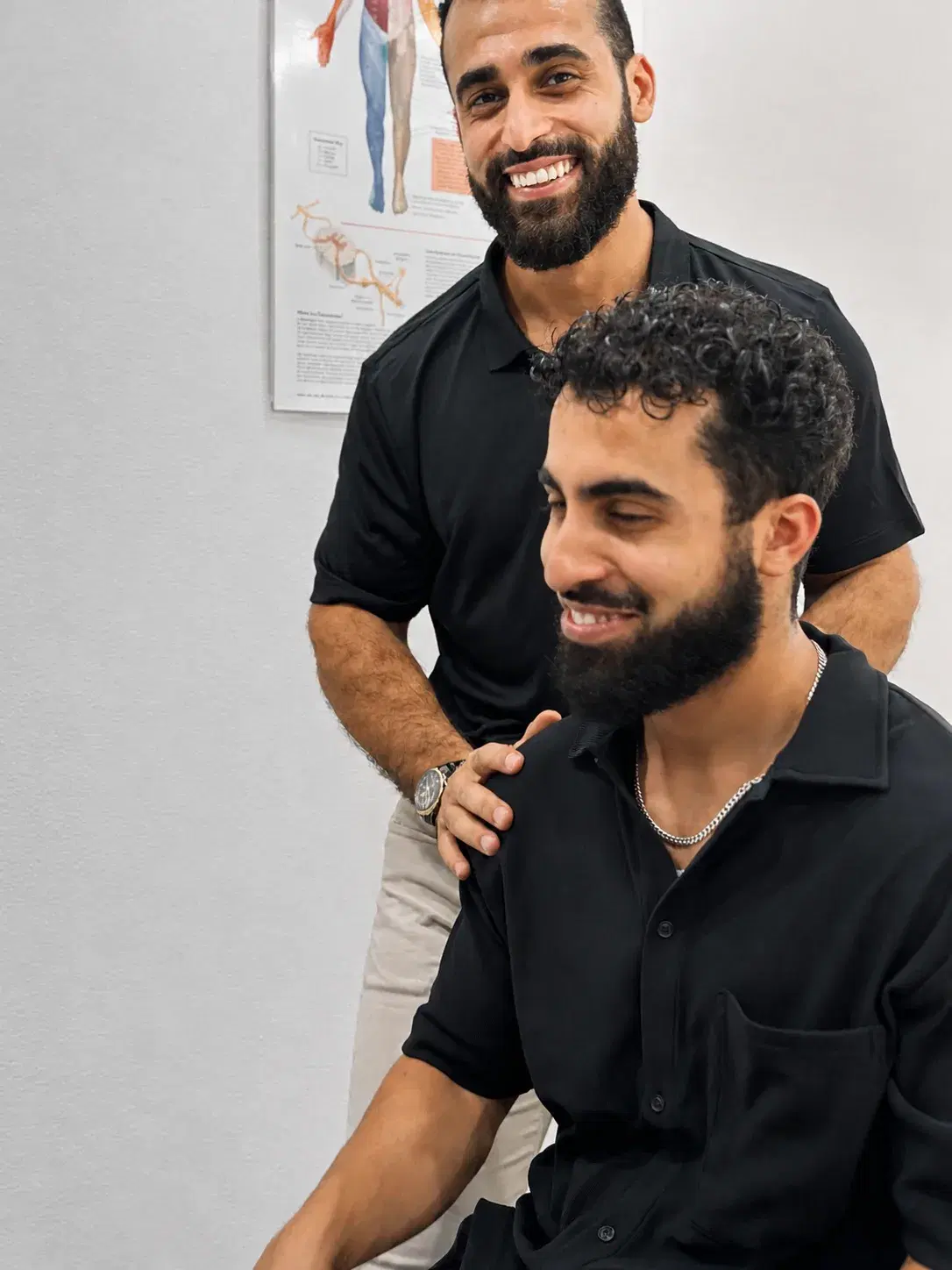
Our chiropractic services.
If pain, stiffness or reduced mobility is affecting your day, our care focuses on improving movement and function through thorough assessment and a plan built for what we actually find.
Four services. One assessment first.
Whichever of these you end up under, it starts the same way: a first visit where we listen, examine and explain what we found. Then we set out the plan for your case, and you start it in good hands.
Disc and nerve rehabilitation
For disc and nerve conditions that have become significant: care aimed at less pain, easier movement and an ordinary day back.
Common reasons slipped disc · shooting pain down my leg · pins and needles in my leg
Read the full guide about Disc and nerve rehabilitationPosture and structural correction
Postural imbalances caught early and corrected with a tailored plan, before they become chronic pain or an injury.
Common reasons tech neck · hunched at my desk all day · sore by the end of the work day
Read the full guide about Posture and structural correctionMobility and wellness care
A tailored care plan for stiffness, everyday aches and declining mobility, at any age.
Common reasons stiff every morning · tight shoulders · can't turn my head
Read the full guide about Mobility and wellness careHeadache and neck pain care
Assessment to work out whether your headaches start in your neck, then care for the joints and muscles involved.
Common reasons headaches from my neck · band around my head · headache behind my eyes
Read the full guide about Headache and neck pain care
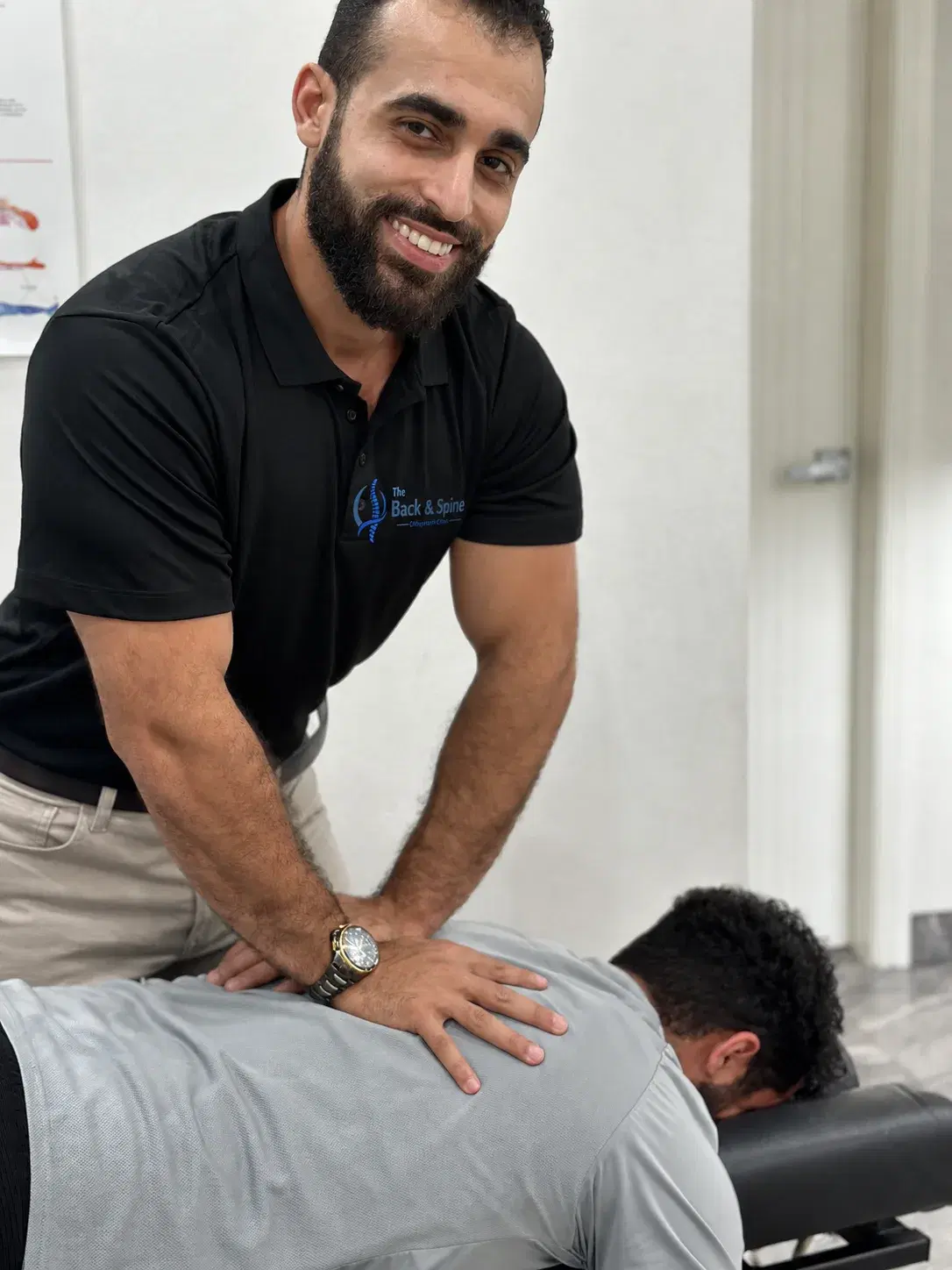
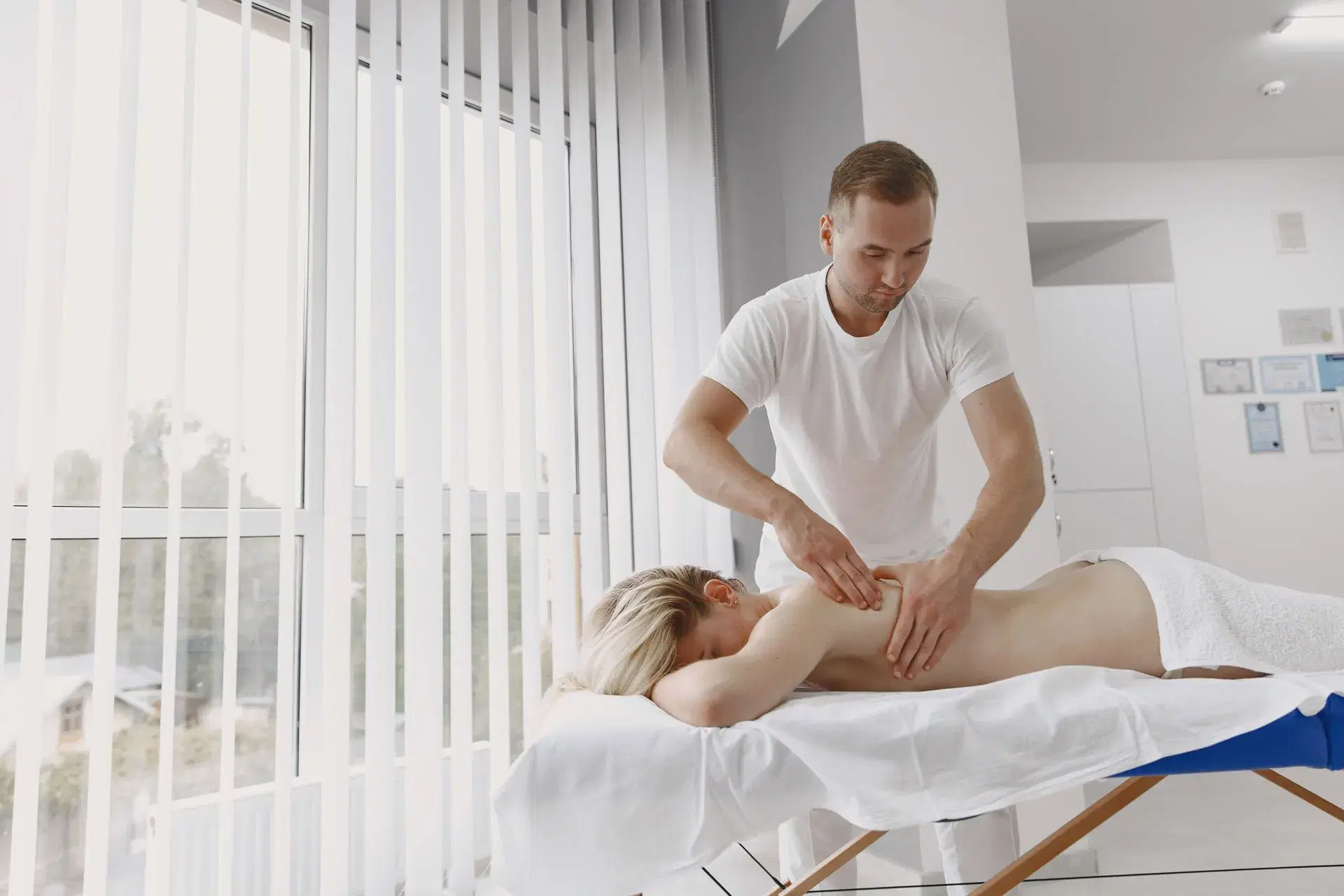
Dr Laith at work, a prone lower-back adjustment.
Disc and nerve rehabilitation
Severe disc and nerve pain is its own problem, and this is the care built for it.
People come to this service with disc and nerve conditions that have become significant rather than minor, and the chiropractic care here is specialised for exactly that. What we work towards is less pain, easier movement, and a day that runs the way it used to.
Common reasons people come in
- “slipped disc”
- “shooting pain down my leg”
- “pins and needles in my leg”
- “pinched nerve”
- “numb fingers”
- “disc herniation on my scan”
What we most often treat
- Bulging and herniated discs, and tears through the disc wall (annular tears)
- Sciatica, and the nerve pain clinicians call radiculopathy
- Arthritis in the spine, and the degenerative change that comes with it
- Back or neck pain severe enough to cut short standing, walking or an ordinary day
How we go about it
Exercise chosen for the injury
Specific movements, picked to bring strength and flexibility back and to get the nerve gliding freely again.
Taking pressure off the nerve
Guidance aimed at relieving the irritation around a nerve, and at the recovery of function that follows.
How you move and hold yourself
Advice and practice on the ergonomics of how you sit, stand and lift, so the same trouble is less likely to return.
Who we see for this
- Pain that traces back to a bulging or herniated disc
- Tingling or numbness from a nerve under compression
- Movement that has not returned since a disc injury
- Discomfort that has become constant and gets in the way
- Everyday things you still cannot do since the injury

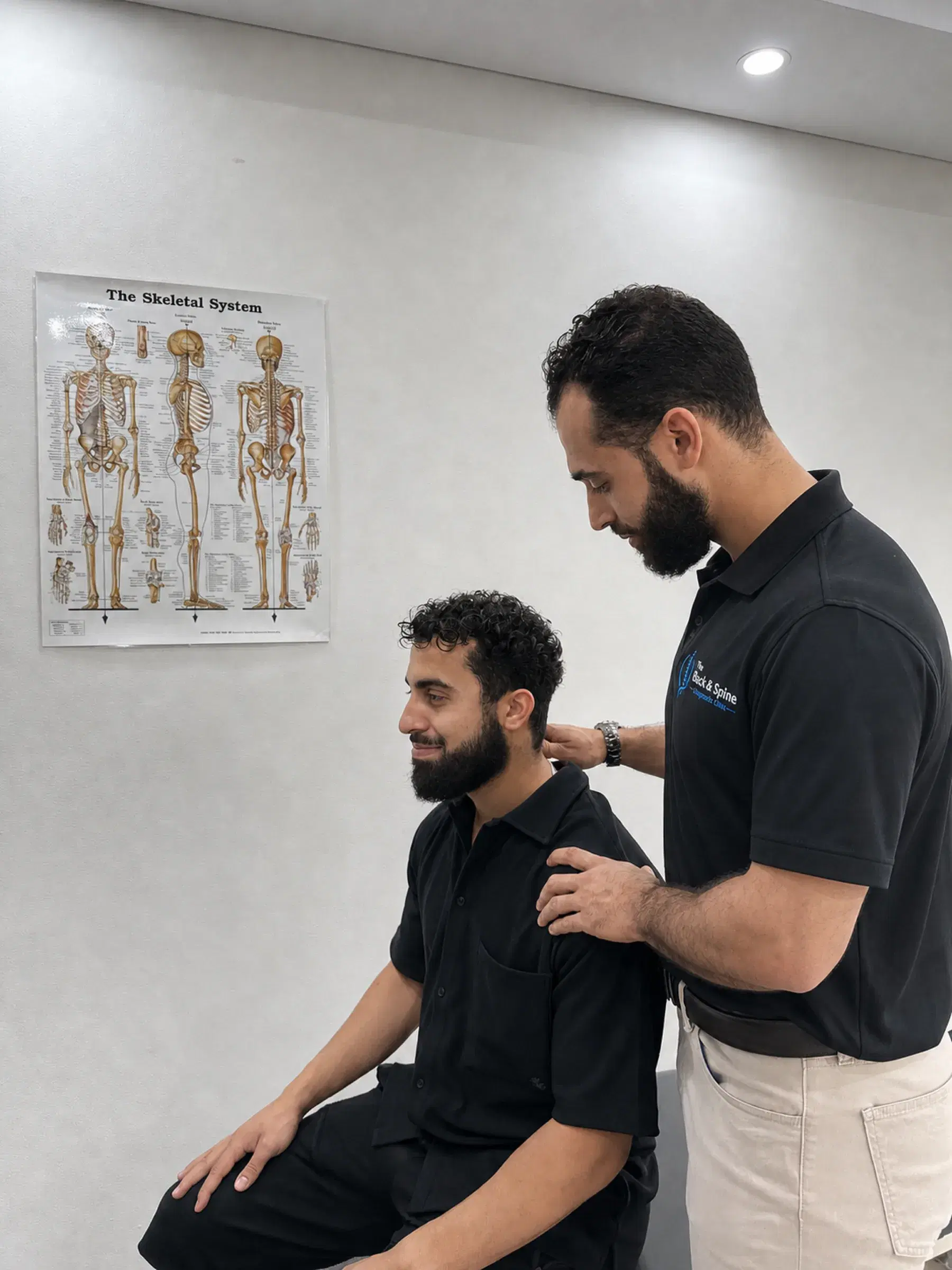
Dr Laith checking the neck and shoulders of a seated patient.
Posture and structural correction
This is alignment and strength work, and the point of it is how your spine holds up over years.
The imbalances this service works on are the ones there is still time to change. We look at posture and structure while the problem is a pattern, rather than after it has turned into chronic pain or an injury.
Common reasons people come in
- “tech neck”
- “hunched at my desk all day”
- “sore by the end of the work day”
- “rounded shoulders”
- “pain between my shoulder blades”
- “one shoulder higher than the other”
The patterns we work on
- A head that sits forward of the shoulders, or "tech neck" as most people call it
- Shoulders rolled forward, and shoulder blades sitting unevenly (scapular imbalance)
- An uneven pelvis, and a curve that comes from posture rather than bone (functional scoliosis)
- A stiff mid-back, and the postural fatigue that arrives with it
How we go about it
Assessment and plain feedback
You find out what your alignment is actually doing, and what to change about it in an ordinary day.
Corrective exercise, kept simple
A short set of guided movements: strength for the muscles that hold you up, and work on the flexibility around them.
Hands-on work where it helps
Gentle manual techniques that ease held tension and make a better movement pattern easier to settle into.
Who we see for this
- People at a desk all day, and students
- Athletes, and anyone who trains regularly
- Anyone who has started noticing discomfort they can trace to posture
- Alignment that is already visible to the eye

Dr Laith with a patient between visits.
Mobility and wellness care
Moving comfortably is not a one-off job, and this is the care that treats it that way.
We see people of every age in this service: stiff, mildly sore, or finding that movement is not as easy as it used to be. The purpose is to keep a spine working well over the long run.
Common reasons people come in
- “stiff every morning”
- “tight shoulders”
- “can't turn my head”
- “knots in my back”
- “sore back after lifting”
- “wear and tear in my spine”
The concerns we see most
- Stiffness through the back or the neck
- Less flexibility, and less range than you used to have
- The ordinary aches of work, of raising children, and of getting older
How we go about it
Mobility work, guided
Gentle movement for balance and flexibility, and for the confidence that comes back with them.
Keeping strength and stability
Straightforward routines that hold on to the muscle strength daily tasks ask for.
Activity that fits your week
Encouragement towards habits that are healthy and easy to keep, because they suit the life you already have.
Who we see for this
- Every age group, from children through to older Australians
- People past the acute stage who are keeping things steady
- Anyone who wants preventative care and a regular hand with movement

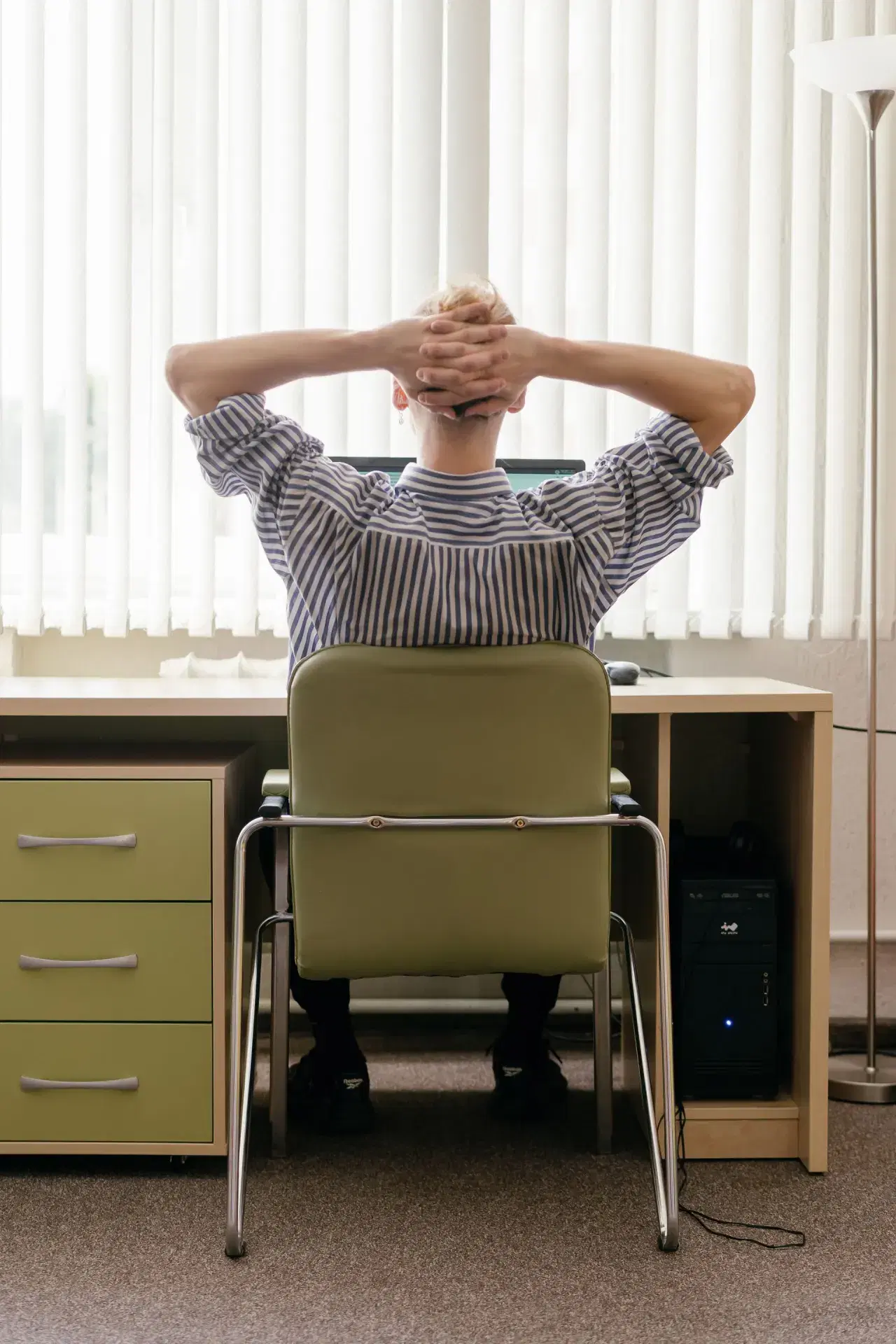
The end of a long desk day.
Headache and neck pain care
Working out where your headaches start, and treating the joints and muscles that trigger them.
We start by working out whether your headaches are coming from your neck, then treat the joints and muscles involved with hands-on care and simple exercises. We also look at the desk, screen and sleep habits that feed the pattern, so the work carries on between visits.
Common reasons people come in
- “headaches from my neck”
- “band around my head”
- “headache behind my eyes”
- “daily headaches at work”
- “stiff neck”
- “woke up with a sore neck”
Headaches and neck pain we treat
- Tension-type and neck-related (cervicogenic) headaches
- Migraine support alongside your GP's care
- Neck pain and stiffness
- Neck and shoulder tension from desk work
How we go about it
Headache assessment
Testing that works out whether your neck joints and muscles are part of the headache pattern, and what sets it off.
Hands-on neck care
Gentle joint and muscle techniques, applied to the areas the assessment points to.
Habit and posture coaching
Practical changes to the desk, screen and phone patterns that keep the cycle going.
Who we see for this
- Office workers with end-of-day headaches
- People with frequent tension-type headaches
- Anyone whose neck stiffness and headaches arrive together
- People managing migraine who want extra support

Not sure which one you need?
Then book the first visit and let us work it out. A thorough assessment at Suite 1, Lower Ground Floor, 225 Macquarie Street, Sydney, your findings, and a clear plan for getting you moving. All on the first day.