

A sore lower back after a run often has less to do with running itself than with what changed around it: more distance, more hills, tired hips, a long day sitting beforehand. The quickest way to narrow it down is to look at what was different in your training over the last month.
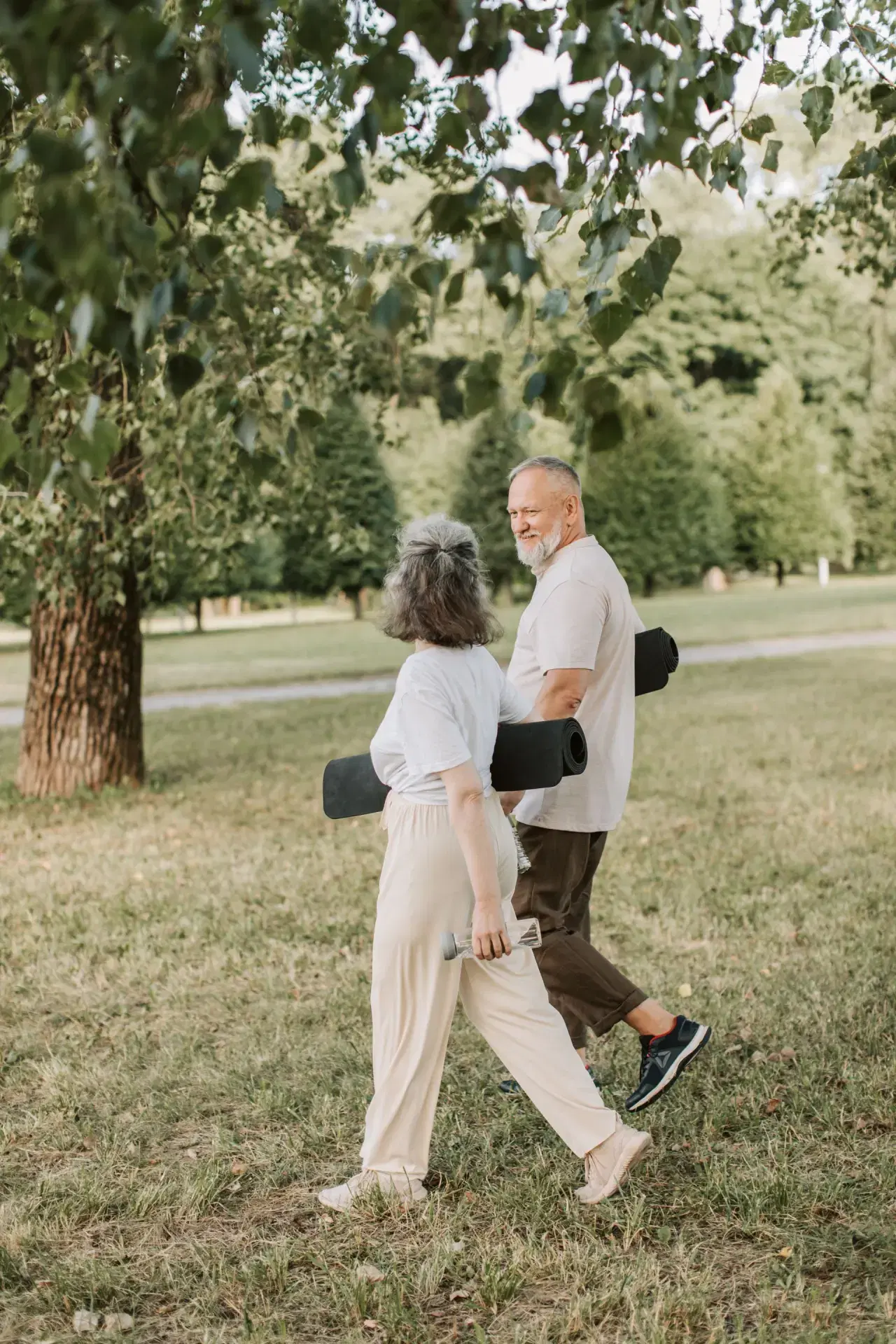
What your lower back does with every stride
Each step sends load up through the leg and into the pelvis, and the trunk has to stay steady while the legs swing. The muscles of the trunk and hips do that quiet work: they resist the twist that comes with every swing of the leg and hold the pelvis level over the foot that is landing. When you are fresh, you do not notice any of it.
Late in a run, or in a week that has asked more of you than usual, the work can shift. As the hips and trunk tire, the lower back can end up with more than its share, and it tends to let you know.
The hips matter in a second way. A stride needs the hip to reach back behind you, and where that range is short, the lower back can arch to make up the difference. A long day sitting keeps the hips bent, so a run after a desk day can feel different from the same run at the weekend.
The last month, as a checklist
Back pain after running tends to follow a change. Go back four weeks and write down what moved. The aim is to find one or two changes, not to put the blame on running.
- Distance and time. A longer long run, an extra day, or a return from a break straight to the old routine instead of a lighter one.
- Hills and speed. Downhill running and intervals load the trunk and hips differently from steady flat running.
- Surface and slope. A cambered road tilts the pelvis the same way for kilometres. A treadmill on an incline, or a new track, changes the picture too.
- Shoes. A new pair, or an old pair that should have gone months ago. Where you can, change one thing at a time so you know which it was.
- Recovery. Runs on consecutive days, fewer rest days, a short night before the run, a hard gym session on either side of it.
- The rest of the day. A desk-heavy week, a long drive or flight, a house move.
If two or three of these shifted together, the total may have risen faster than your body could adapt, which is a different problem from running not suiting your back.
What the timing of the pain suggests
When and where it hurts narrows it down further, though only an examination settles it.
- Late in a long run, both sides, loosening when you walk. This fits a load and fatigue pattern. Look at the weekly total, the recovery between runs and how the hips are holding up.
- From the first steps, one side, in a spot you can point to. Something local may be irritated. Shortening or slowing the run, or pausing it for a few days, shows whether it settles with less load.
- Mostly on hills, or on the way down them. The course is the clue. If flat runs of the same length feel fine and the hilly ones do not, the hills are the lead, not the distance.
- The next morning only. Stiff on waking and loosening within a few minutes of moving is how a hard week often feels. What matters is whether each week is a little better or a little worse than the one before.
- Deep, on one side, and building run by run. Pain in the groin, the buttock or low in the back that gets worse with each run, jars on landing and has started to ache at rest can be a stress injury in bone. Stop running and see your GP promptly. Bone stress needs a scan to confirm, and it is not something to run through.
- Anything that leaves the back. Pain running below the knee, pins and needles, numbness or burning means no running until it has been examined. A foot that slaps, catches or drags goes to a hospital emergency department straight away.
What to change this week
Staying active still applies. The Low Back Pain Clinical Care Standard (Australian Commission on Safety and Quality in Health Care, 2022) encourages anyone with low back pain to keep their usual routine going, work included, wherever they can, and the Royal Australian College of General Practitioners’ handbook entry Advice to stay active for people with acute low back pain (2019) advises staying active rather than resting in bed for an acute episode. Neither tells you how far to run on a sore back. That gets worked out run by run, and the first step is usually less running rather than none.
- Shorten before you stop. A run that ends before the back complains is a different run from one that finishes through it.
- Add walk breaks. Run-walk intervals break the run into shorter spells of impact and keep the habit going.
- Go flatter and easier. An easy pace on a flat, forgiving surface changes the load without a day off.
- Wind back one thing. Pick the likeliest change from the last month and undo it before touching the others. If you cannot tell whether a sore spot is a passing niggle or something more, ask the four niggle questions.
Two movements ask the hips to do their share. The glute bridge is aimed at the buttock and the back of the thigh. The half kneeling hip flexor stretch is aimed at the muscles across the front of the hip, and tucking the pelvis under decides where you feel it. Leave either out if it brings on your back pain. Both give you a read on how your hips are going that day.
When the back has settled enough to run again, start with a brisk walk, then short run-walk spells on flat ground. Hills and speed come once the flat runs leave you no worse the next morning.
Whether to stop, and whether it is the shoes
Do you have to stop running? Not automatically. Leg symptoms, pain that changes the way you run, or pain that is worse every time are reasons to pause. A back ache that stays put and leaves you no worse the next morning points to the load, and the load can be changed.
Is it the shoes? Possibly, if they are new or very worn. Change your shoes and your long run in the same week and you will not know which one it was.
Does running have to go for good? Not on the strength of a sore back. Find what changed this month, because a change can be undone.
Here, running pain gets tested on your feet: how you balance and step down on one leg, how the hips and lower back move, and how strong the hips and thighs are. Nerve tests are added when there are leg symptoms, and imaging is arranged when clinically indicated rather than as a first step.
What the guidelines say
- Australian Commission on Safety and Quality in Health Care, Low Back Pain Clinical Care Standard, 2022. https://www.safetyandquality.gov.au/standards/clinical-care-standards/low-back-pain-clinical-care-standard
- Royal Australian College of General Practitioners, Handbook of Non-Drug Interventions (HANDI): Advice to stay active for people with acute low back pain, 2019. https://www.racgp.org.au/clinical-resources/clinical-guidelines/handi/handi-interventions/musculoskeletal/advice-to-stay-active-for-people-with-back-pain
When to get it looked at
The run can wait. Some things cannot.
Go to a hospital emergency department straight away if you have numbness or altered feeling around the saddle area, meaning the groin, the inner thighs, the buttocks or the genitals; a loss of normal sensation in the genitals, including during sex; trouble starting to pass urine, or any new change in your bladder or bowel control; weakness in both legs, particularly if it is getting worse; new or worsening pain running down both legs; weakness in one leg that is severe or getting worse, or a foot that has started to catch or drag when you walk; or numbness in a leg that is spreading or getting worse quickly.
Go to a hospital emergency department straight away for back or neck pain after a serious fall or a high-impact accident, such as a car accident; back or neck pain with a fever or feeling generally unwell; or new back or neck pain if your immune system is weakened, for instance by long-term steroids or chemotherapy, if you inject drugs, or if you have recently had a spinal injection, spinal surgery or a dental procedure.
Go to a hospital emergency department the same day if you have new clumsiness in both hands, or new unsteadiness on your feet.
See your GP promptly, before booking here, if you have a history of cancer, unexplained weight loss, pain at night that will not settle in any position, known osteoporosis with new severe pain, numbness that is spreading or getting worse slowly, or new, unexplained back pain as an older adult.
If your back keeps cutting your runs short, the same pain turns up after each long run, or you have changed your stride to protect it, it is time to have it checked. A few lines on distance, hills and rest days over the last month will say more than a general description of the pain.