

A dull ache across the lower back that arrives a day or two after a big deadlift session and loosens as you move is often just worked muscle, and you can usually pull again once it has eased, starting lighter. Sharp pain at the moment of a pull is more likely a strain and wants a few easier days first. Pain that runs into the leg means no pulling until it has been examined.
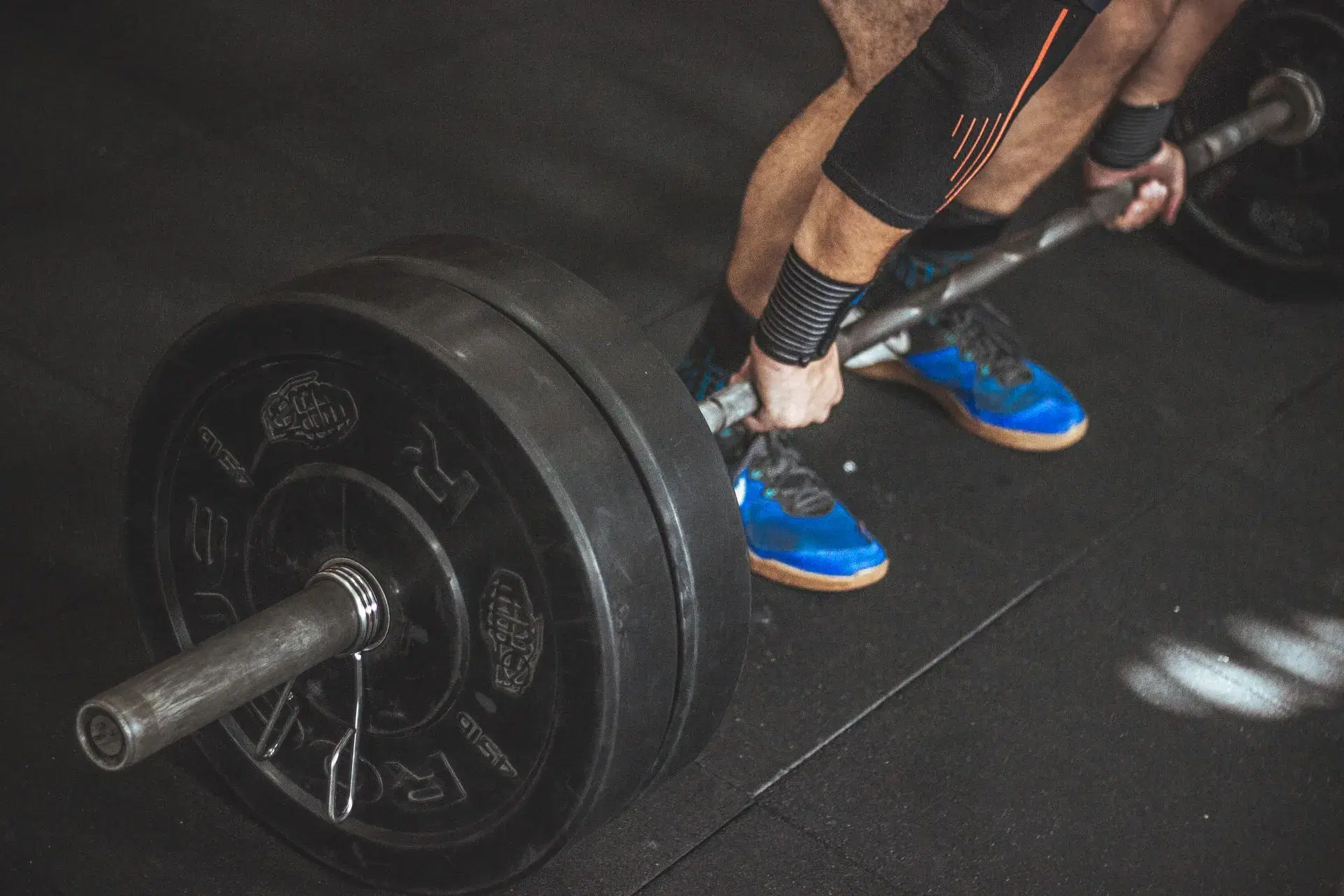
An ache, a strain or a nerve sign
A sore lower back after deadlifts usually fits one of three patterns, and which one decides what you do next. They overlap at the edges, and you can have more than one.
- The next-day ache. A broad, dull tenderness across the lower back, usually on both sides, arriving a day or two after the session. It is worst getting up from a chair, loosens after a few minutes of moving and fades over a few days. That pattern fits worked muscle, and it says more about the size of the session than about an injury.
- The strain. A sharper pain that started at a moment: a rep that felt wrong, a twist while setting the bar down, a lift where the back let go. It sits in a spot you could cover with a hand, often on one side, and it objects to particular movements such as pulling on socks or standing up from the car. The back may feel guarded or catch. A strain is soft tissue asked for more than it could give in one go.
- The nerve sign. Sensation that leaves the back: a line running into the buttock and down the leg, pins and needles, numbness, burning, an electric feeling or a leg that feels heavy. Coughing, sneezing or sitting for long can bring it on. An ache that stays above the knee says less than a sharp or burning line that travels below it. A foot that catches or drags overrides all of this: go to a hospital emergency department straight away.
Only an examination can tell them apart for certain. If your leg is involved, pain running down the leg can mean a nerve in the lower back is irritated or under pressure.
What the first few days are for
For an ache or a modest strain, the first days are about staying in motion without testing the back. Australian guidance on low back pain points the same way. The Low Back Pain Clinical Care Standard (Australian Commission on Safety and Quality in Health Care, 2022) encourages you to stay active and get back to normal, work included, as quickly as you can manage. The Royal Australian College of General Practitioners’ handbook entry Advice to stay active for people with acute low back pain (2019) advises staying active instead of resting in bed for an episode of less than six weeks.
Neither is about lifting. After a bad pull, usual activity means the walk to the station and a day at the desk with a few breaks, and what you can manage changes from one day to the next.
- Carry on with walking at a pace that keeps the back loose, and any other training that leaves the back no worse during the session or the next morning.
- Set aside for now pulling from the floor at weight, and other heavy hinging such as good mornings or sets taken close to failure.
- Resist the test pull. Loading the back to find out whether it is ready tells you little that a bodyweight hinge would not, and it risks a second bad day.
What to look at before the next session
If the ache or the strain came from the lift itself, the reason is often in that session or the weeks before it. Get your training log out, and only count something as the cause if it fits what the log shows.
- The jump. Look at the last three or four weeks. A top set heavier than anything since a break, an extra day, a new rep range, or a second hinge-heavy lift on the same day all add to the load. If the session that hurt came after a jump like that, take that one thing back out rather than changing everything.
- The bar path. A bar that drifts away from your legs gives the back a longer lever to hold. Film one working rep from the side and watch whether the bar stays in touch with the shins and thighs or arcs forward around the knees.
- The start. Many pulls are decided in the first few centimetres. Taking the slack out of the bar before it leaves the floor, and breathing in and bracing beforehand, both change what the back holds at the lowest point. A yank from a loose start is a different lift.
- The last rep. Form tends to drift late in a hard set. If your back complained after a session where the reps got slow and untidy, leave a couple in hand and end the set when one looks different from the rest.
- The rest of the day. Hours of sitting beforehand, a short night or a heavy week at work leave the back less ready than the bar suggests. Note them beside the session in your log.
- The variation. While the standard lift is paused, a bar raised on blocks or a trap bar changes the starting position, and with it what the back is asked to hold.
You can rehearse the hinge with no weight, using a stick and a wall. It is the same pattern that gets a load up off the floor at work or at home, so how you lift there counts as well.
If the pain has left the back
Leg pain, pins and needles or numbness after a deadlift session is a reason to stop pulling until someone has examined you. Loading a nerve that is already irritated to see whether it copes is a poor trade. Numbness around the saddle, trouble passing urine, any change in your bladder or bowel control, weakness in both legs, weakness in one leg that is severe or getting worse, or a foot that catches or drags means a hospital emergency department straight away. A heavy lift is where a large disc problem can announce itself, so the bladder, bowel and saddle signs matter as much as the leg.
Here, the first questions are about where the symptoms sit and what the lift and the weeks around it looked like. Then comes the examination: how the hips and lower back move on their own, whether any position or movement changes where the symptoms are, and the strength, reflexes and sensation of the legs and feet, which say how a nerve is behaving rather than how it feels. The signs that belong with a hospital or a GP get checked every time. Bring a short side-on video of a warm-up set, so the lift can be looked at as well as the back.
The RACGP’s 2022 guidance for GPs, First do no harm: A guide to choosing wisely in general practice. For GPs: Imaging in adults with acute low back pain, advises against requesting imaging for acute low back pain unless an assessment raises a high suspicion of a serious cause. For leg symptoms from the back it adds that imaging is not routinely indicated in radicular syndrome, and is considered in the first six weeks only if the symptoms are severe and not improving and surgery is being considered. Imaging here is arranged when clinically indicated, and it is read next to your history and examination rather than in place of them.
Questions after a heavy pull
Is a rounded back always the problem? A rounded back in a video is a shape, not a diagnosis, and the spine bends many times a day without trouble. What carries more weight is how much load was on the back at that moment and how long it had been since the back did anything similar.
Does it need a scan? Not as a first step. A scan is kept for when the examination raises a real suspicion of something serious, or for leg symptoms that are severe, not settling and heading towards surgery.
When can you pull heavy again? Nobody can give you a date without seeing you. What can be set is an order of steps: one change at a time, judged by the next morning.
What if it only ever hurts the next day? Then the timing is your clue. Pain that follows every heavy session points at the size of the sessions or the gaps between them, and the start position is worth a look too. Take your log along when you get it looked at. Telling whether a sore spot is something to train around or something to have checked comes down to four quick questions.
What the guidelines say
- Australian Commission on Safety and Quality in Health Care, Low Back Pain Clinical Care Standard, 2022. https://www.safetyandquality.gov.au/standards/clinical-care-standards/low-back-pain-clinical-care-standard
- Royal Australian College of General Practitioners, Handbook of Non-Drug Interventions (HANDI): Advice to stay active for people with acute low back pain, 2019. https://www.racgp.org.au/clinical-resources/clinical-guidelines/handi/handi-interventions/musculoskeletal/advice-to-stay-active-for-people-with-back-pain
- Royal Australian College of General Practitioners, First do no harm: A guide to choosing wisely in general practice. For GPs: Imaging in adults with acute low back pain, 2022. https://www.racgp.org.au/clinical-resources/clinical-guidelines/key-racgp-guidelines/view-all-racgp-guidelines/first-do-no-harm/gp-resources/imaging-in-adults-with-acute-low-back-pain
When to get it looked at
Some signs outrank any question about your lifting.
Go to a hospital emergency department straight away if you have numbness or altered feeling around the saddle area, meaning the groin, the inner thighs, the buttocks or the genitals; a loss of normal sensation in the genitals, including during sex; trouble starting to pass urine, or any new change in your bladder or bowel control; weakness in both legs, particularly if it is getting worse; new or worsening pain running down both legs; weakness in one leg that is severe or getting worse, or a foot that has started to catch or drag when you walk; or numbness in a leg that is spreading or getting worse quickly.
Go to a hospital emergency department straight away for back or neck pain after a serious fall or a high-impact accident, such as a car accident; back or neck pain with a fever or feeling generally unwell; or new back or neck pain if your immune system is weakened, for instance by long-term steroids or chemotherapy, if you inject drugs, or if you have recently had a spinal injection, spinal surgery or a dental procedure.
Go to a hospital emergency department the same day if you have new clumsiness in both hands, or new unsteadiness on your feet.
See your GP promptly, before booking here, if you have a history of cancer, unexplained weight loss, pain at night that will not settle in any position, known osteoporosis with new severe pain, numbness that is spreading or getting worse slowly, or new, unexplained back pain as an older adult.
If the back has not settled after a couple of weeks, if the same spot complains after every heavy session, or if you have started to lift differently to avoid it, have it examined. A note of what changed in your training over the past month gives that visit somewhere to begin.