
Keep using the movements you want to keep. Joints, muscles and balance all respond to being used, and they keep responding at every age. Stiffness has far more to do with how much you move in a week than with the number on your birthday card. The work that holds it off is small and regular, not dramatic.
Stiffness is not simply the years passing
Bodies do change over time. Discs hold a little less fluid, cartilage and ligaments stiffen slightly, and muscle needs more of a nudge to stay strong than it did at thirty. Those changes are gradual, and they turn up on the scans of plenty of people who feel perfectly well, one reason we are careful about what an image means. We go through that in do I need an X-ray or scan?
What tends to change quickly is not your anatomy. It is your activity. A sore knee, a wet fortnight, a hospital stay, a summer of minding grandchildren indoors: the daily walk quietly stops. Joints rely on movement to stay comfortable. Muscle shrinks when nothing asks anything of it. Balance is a skill, and skills fade when they are not practised.
Then the loop closes: feeling stiffer and less steady makes people move less, and moving less makes them stiffer again. We see that loop far more often than we see a spine that has simply worn out, and it is the part that responds.
What everyday movement actually rests on
Three things carry most of independent daily life.
Hips and legs. Getting off a low lounge, up from the floor, up the stairs, off the bus. Standing up from a chair is the single movement that most decides whether a person feels independent at home, and it is mostly hips and thighs.
A spine that still turns and bends. Reversing the car, checking over your shoulder before you cross, putting your shoes on, reaching the top shelf, making the bed. When rotation and bending go quietly missing, it shows up as a hundred small workarounds rather than as pain.
Balance. Your brain builds balance from what your inner ear, your eyes and the sensors in your feet and ankles tell it, then relies on your hip and ankle muscles to respond quickly. Every part of that sharpens with practice and dulls without it.
Mobility exercises, and they are gentler than people expect
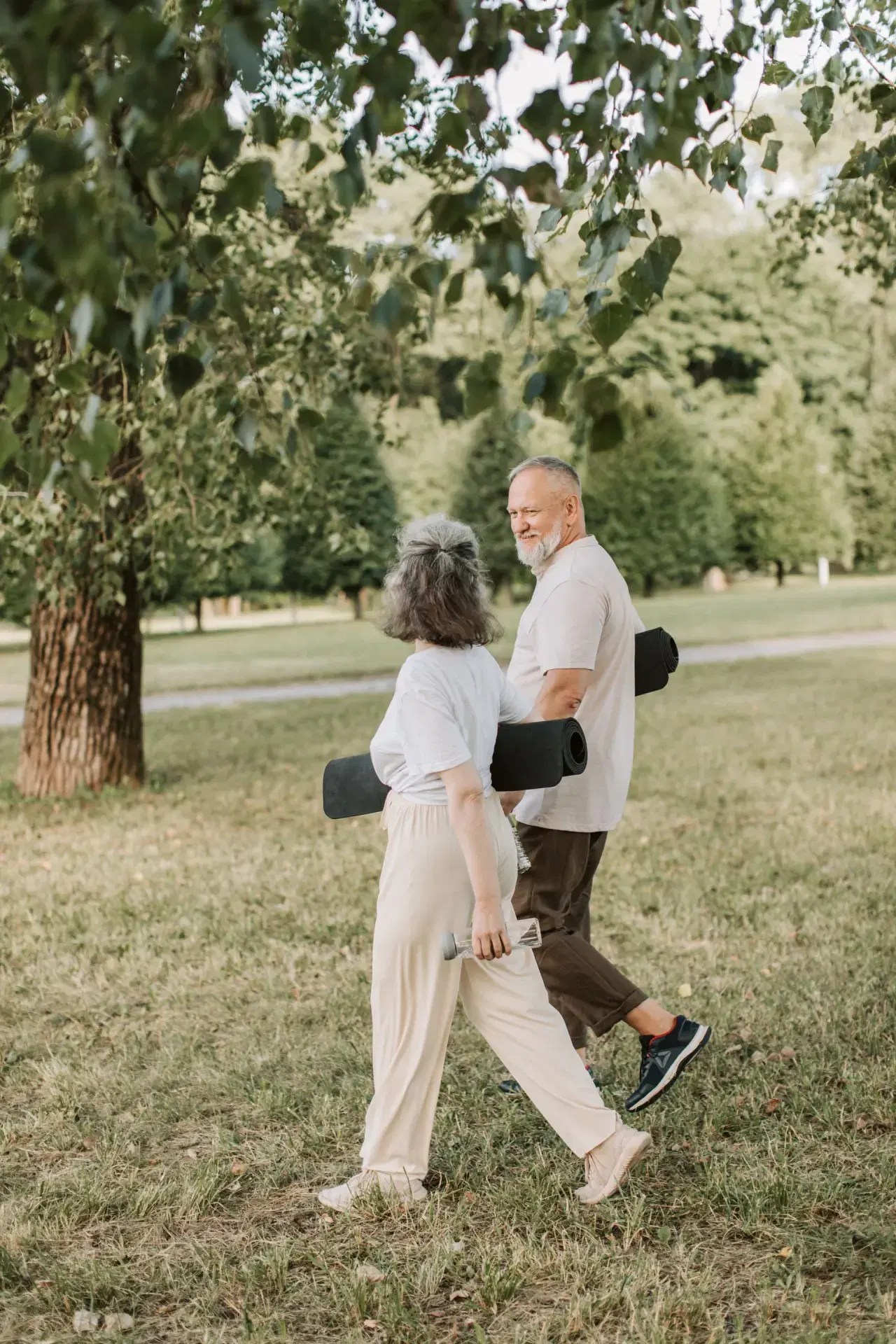
- Walk most days. Short and regular beats one long effort on a Sunday. Ten minutes twice a day is a genuine amount of movement.
- Practise standing up. A few sit-to-stands from a kitchen chair, a few days a week. Use the arms of the chair to begin with if you need them, then fewer.
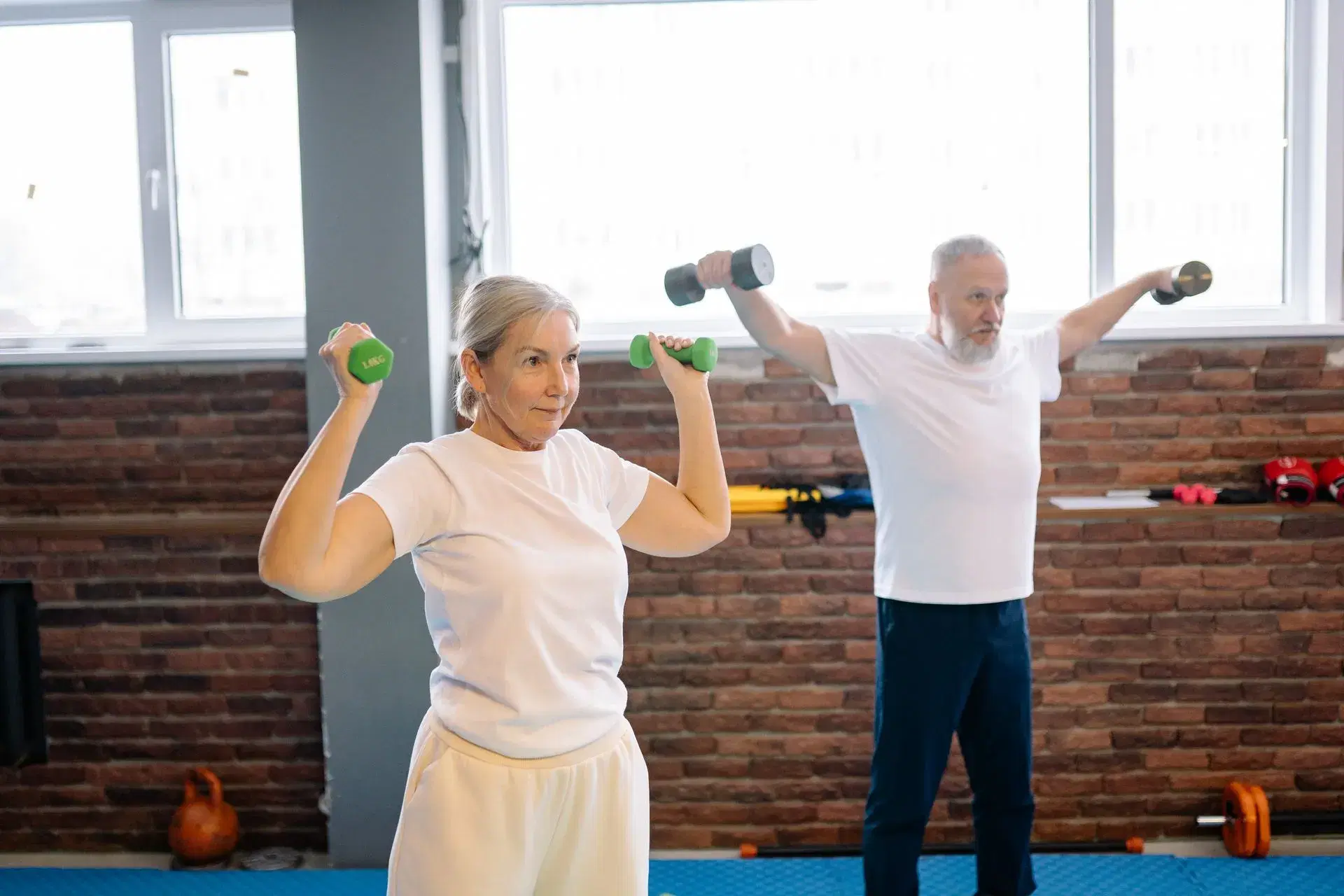
- Ask something of your muscles twice a week. A resistance band, light weights, or the shopping carried rather than trollied. Muscle responds to being asked, at any age.
- Practise balance where it is safe. Stand on one leg at the kitchen bench with the bench within reach. Walk heel-to-toe down the hallway, hand near the wall.
- Break up long sitting. Stand up every half hour or so. The ad break is as good a reminder as any.
- Keep bending and reaching. Your spine is built to bend. Avoiding it teaches the stiffness rather than protecting you from it. If you are lifting anything substantial, the safest way to lift is worth a read.
- Keep the ordinary jobs. Gardening, hanging washing, walking to the shops. Real tasks are training, and they are the ones you will actually keep doing.
- Build up slowly. Feeling worked for a day or two after something new is normal. Sharp pain during the movement is not: ease off or change the movement.
Stop and get it checked if a movement brings on sharp or spreading pain, pins and needles or numbness, or dizziness. If moving brings on chest pain, pressure or tightness, or shortness of breath, stop and call an ambulance. If you fall, follow the advice at the end of this page.
If you have a heart or lung condition, known osteoporosis, or you are recovering from surgery, have a word with your GP about what is suitable before you start something new.
Where our care fits
Mobility and wellness care is the part of what we do that is built for exactly this. It starts with an assessment of how you actually move (hips, spine, balance and what you can manage now) rather than a look at where it hurts today.
From there it is hands-on care for the stiff joints and sore muscles making movement unpleasant, and a short set of exercises that fit into your day rather than requiring one. The pace is yours, and the plan is reviewed with you as you go rather than read off a fixed schedule of visits.
We will be straight with you about what care can do. We cannot undo time, and we would not claim to. What we work towards is helping you move more comfortably and build the strength that independence rests on, with something practical to work on between visits.
When to get it looked at
Call an ambulance if there is any confusion, sudden weakness or numbness in the face, arm or leg on one side, facial drooping, slurred speech, sudden trouble speaking, seeing or understanding, loss of vision, a seizure, or a sudden loss of balance or coordination. Go to a hospital emergency department if you cannot put weight on a leg after a fall.
Go to a hospital emergency department straight away if you have numbness or altered feeling around the saddle area, meaning the groin, the inner thighs, the buttocks or the genitals; a loss of normal sensation in the genitals, including during sex; trouble starting to pass urine, or any new change in your bladder or bowel control; weakness in both legs, particularly if it is getting worse; new or worsening pain running down both legs; weakness in one leg that is severe or getting worse, or a foot that has started to catch or drag when you walk; or numbness in a leg that is spreading or getting worse quickly. Go to a hospital emergency department straight away for back or neck pain after a serious fall or a high-impact accident, such as a car accident; back or neck pain with a fever or feeling generally unwell; or new back or neck pain if your immune system is weakened, for instance by long-term steroids or chemotherapy, if you inject drugs, or if you have recently had a spinal injection, spinal surgery or a dental procedure. Go to a hospital emergency department the same day if you have new clumsiness in both hands, or new unsteadiness on your feet.
See your GP promptly, before booking here, if you have a history of cancer, unexplained weight loss, pain at night that will not settle in any position, known osteoporosis with new severe pain, numbness that is spreading or getting worse slowly, or new, unexplained back pain as an older adult. Also see them about dizziness, light-headedness or repeated falls: blood pressure, medications and the inner ear all play a part in steadiness, and they are worth checking properly.
Otherwise, the ordinary threshold is this. Book an assessment if stiffness has started shaping what you say yes to, if getting out of a chair has become a production, if you are reaching for furniture as you cross the room, or if something has been sore for more than a couple of weeks. You do not need a referral, and you do not need to wait until it is bad. Earlier is simply easier to work with.