
Mobility and wellness care
For stiffness and everyday aches, planned around what you want to keep doing.
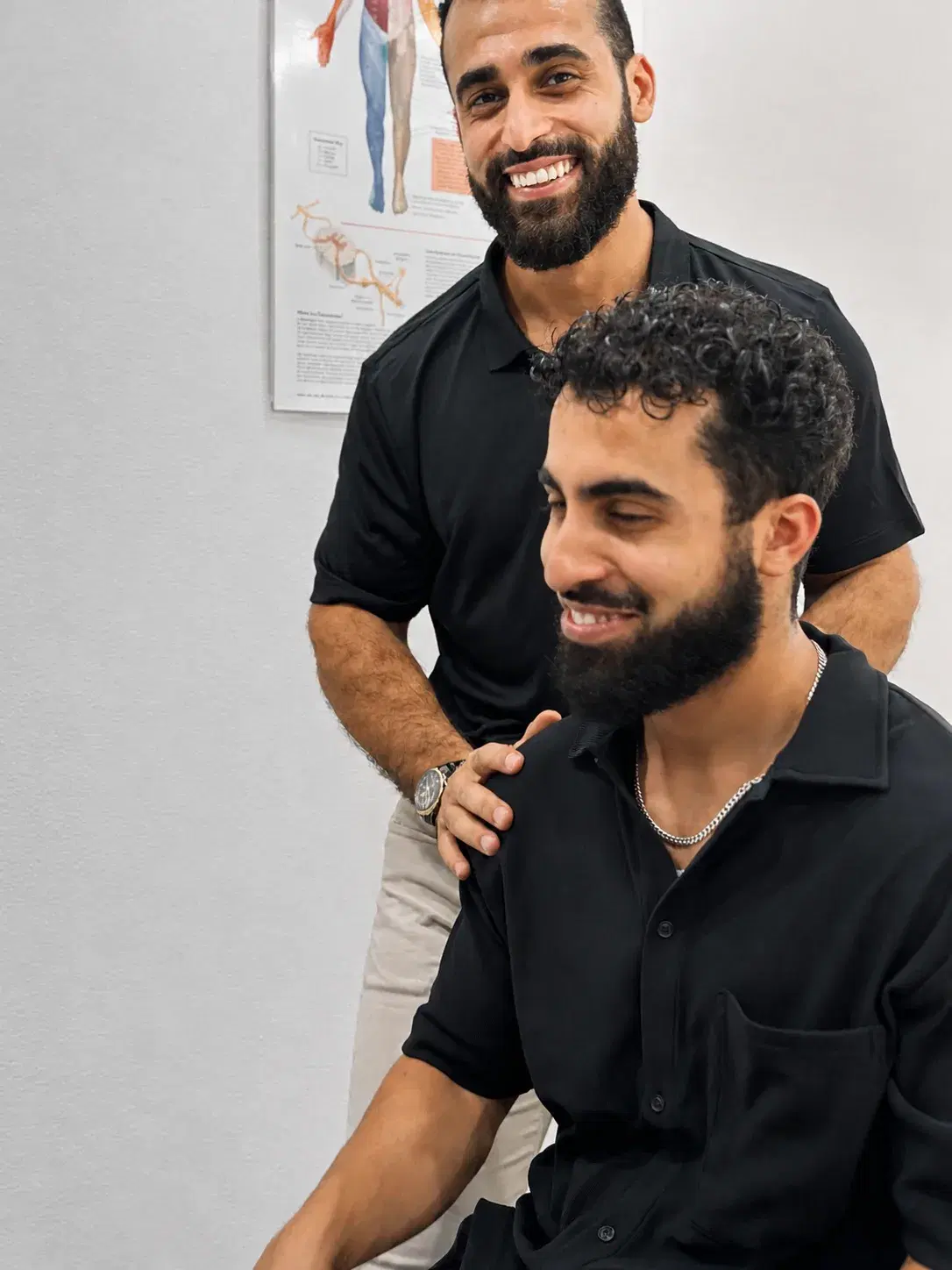
Sound familiar?
- “stiff every morning”
- “tight shoulders”
- “can't turn my head”
- “knots in my back”
- “sore back after lifting”
- “wear and tear in my spine”
What’s happening in your body
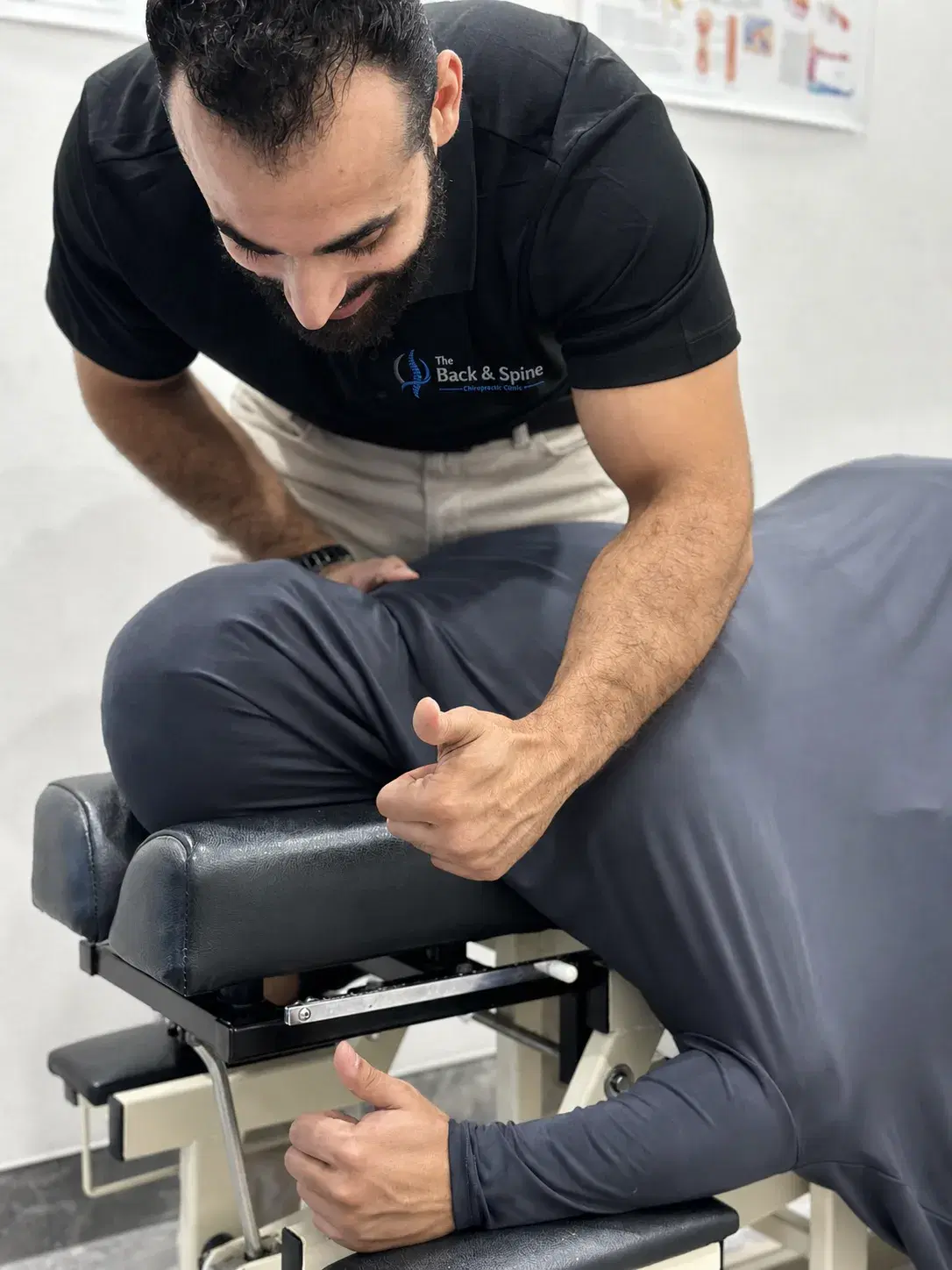
Stiffness is not the same thing as damage.
Your spine is a stack of moving joints, each one wrapped in a capsule and cushioned by a disc. Those joints have very little blood supply of their own. They are fed by movement: every bend and turn pushes fluid in and out of the cartilage, the way squeezing a sponge draws water through it. Hold one position for hours and that exchange slows right down. The capsule tightens, the muscles around the joint hold on, and the first few movements afterwards feel gluey. It is why a long drive, a long meeting or a long night’s sleep so often ends in stiffness.
The same thing plays out over years. Discs lose water content and joint surfaces change with age. Those are findings that turn up on the scans of plenty of people who have no pain at all. What tends to separate a comfortable spine from a sore one is not how it looks on an image. It is how well it moves, and how strong the muscles around it are.
The concerns we see most
- Stiffness through the back or the neck
- Less flexibility, and less range than you used to have
- The ordinary aches of work, of raising children, and of getting older
The one on that list people ask about most is lower back pain, and it has a page of its own.
If the pattern is mostly desk-driven, with rounded shoulders and soreness by five o’clock, read posture care instead.
How we go about it
Mobility work, guided
Gentle movement for balance and flexibility, and for the confidence that comes back with them.
Keeping strength and stability
Straightforward routines that hold on to the muscle strength daily tasks ask for.
Activity that fits your week
Encouragement towards habits that are healthy and easy to keep, because they suit the life you already have.
What care looks like week to week
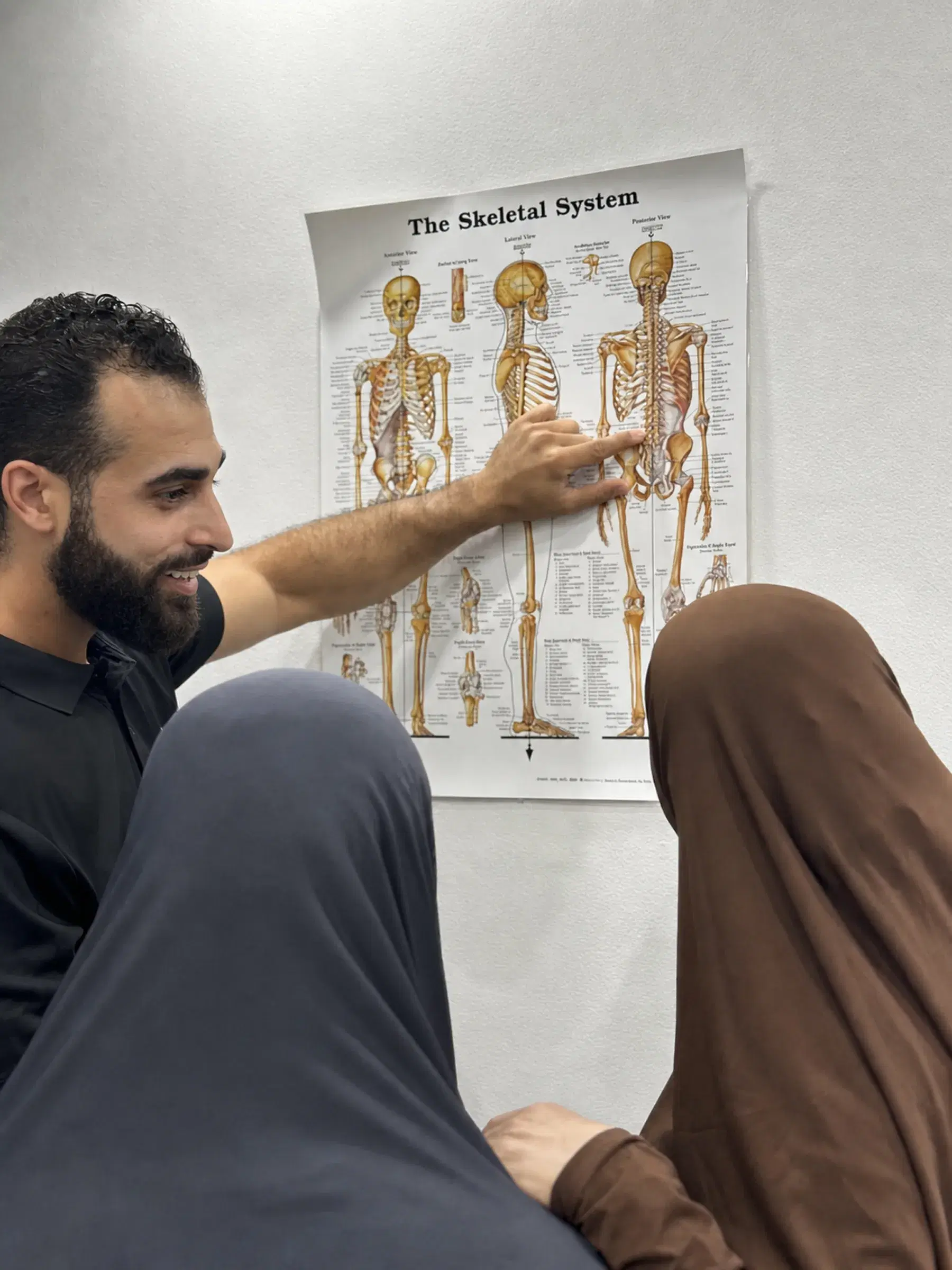
Early visits
We start by working out what is actually stiff and what is only tight because something else is stiff. Hands-on work does most of the job here: adjusting or gentle mobilising, plus soft-tissue work on the muscles holding the pattern.
As things settle
Movement and exercise take over from the treatment table. You get a few simple things to do at home, minutes rather than a program you have to plan around, and we change them as you get stronger.
Spacing visits out
When you are moving well, visits spread out. Some people finish here and come back if something flares.
None of this runs to a timetable. Two people with the same stiff lower back can need different things, depending on age, work, health history and what they want to get back to, so your plan is paced to you and reviewed as you progress.
The red flags we screen for
Every proper assessment starts with a safety screen: the short list of signs that need a doctor involved first.
Go to a hospital emergency department straight away if you have numbness or altered feeling around the saddle area, meaning the groin, the inner thighs, the buttocks or the genitals; a loss of normal sensation in the genitals, including during sex; trouble starting to pass urine, or any new change in your bladder or bowel control; weakness in both legs, particularly if it is getting worse; new or worsening pain running down both legs; weakness in one leg that is severe or getting worse, or a foot that has started to catch or drag when you walk; or numbness in a leg that is spreading or getting worse quickly. Go to a hospital emergency department straight away for back or neck pain after a serious fall or a high-impact accident, such as a car accident; back or neck pain with a fever or feeling generally unwell; or new back or neck pain if your immune system is weakened, for instance by long-term steroids or chemotherapy, if you inject drugs, or if you have recently had a spinal injection, spinal surgery or a dental procedure.
Go to a hospital emergency department straight away if you have weakness in one arm that is severe or getting worse, or numbness in an arm that is spreading or getting worse quickly. Go to a hospital emergency department the same day if you have new clumsiness in both hands, or new unsteadiness on your feet.
See your GP promptly, before booking here, if you have a history of cancer, unexplained weight loss, pain at night that will not settle in any position, known osteoporosis with new severe pain, numbness that is spreading or getting worse slowly, new, unexplained back pain as an older adult, or pins and needles, numbness or weakness in an arm or hand. Morning stiffness that lasts longer than about half an hour, or back pain that wakes you in the second half of the night, can be inflammatory, especially if it eases with movement but not with rest or began before your mid-forties, and your GP should know about it.
Common questions
How often would I need to come in?
That depends on what we find and what you want out of it. Visits are usually closer together while something is settling, and spread out as it does. We set the cadence that fits your case and review it with you openly.
Do I have to be adjusted? I don’t like the cracking.
No. A traditional adjustment is one option among several, not a requirement. Gentle joint mobilisation, which is slow rhythmic movement with no thrust and no click, instrument adjusting and drop-piece techniques all cover similar ground with far less force. Tell Dr Laith Musallam, chiropractor, that you would rather not be adjusted, and he will work another way.
Why does my back hurt first thing in the morning?
Usually because it has spent the night in one or two positions. The joints of your spine are fed by movement, so after hours of stillness the first few movements of the day feel stiff and gluey. Stiffness that loosens within half an hour or so of getting moving fits that pattern. Morning stiffness that lasts longer than about half an hour, or back pain that wakes you in the second half of the night, can be inflammatory, especially if it eases with movement but not with rest or began before your mid-forties, and your GP should know about it. Pain at night that will not settle in any position is one of the red flags listed above.
Can I keep training, walking or doing yoga while I’m having care?
Usually yes, and we would rather you did. Movement is the point of this service, not a risk to be managed. If something you are doing is feeding the problem, Dr Laith Musallam, chiropractor, will tell you which part to change and for how long, rather than asking you to stop altogether. Responses vary, so we adjust the advice as we see how you go.
Take the first step towards better movement.
Suite 1, Lower Ground Floor, 225 Macquarie Street, Sydney. No referral needed to book.