

A chiropractor assesses how your spine and joints are working, explains what the findings point to, and then uses hands-on care, exercise and advice to work towards less pain and easier movement. Recognising the problems that belong with a GP or a hospital is part of the job too.
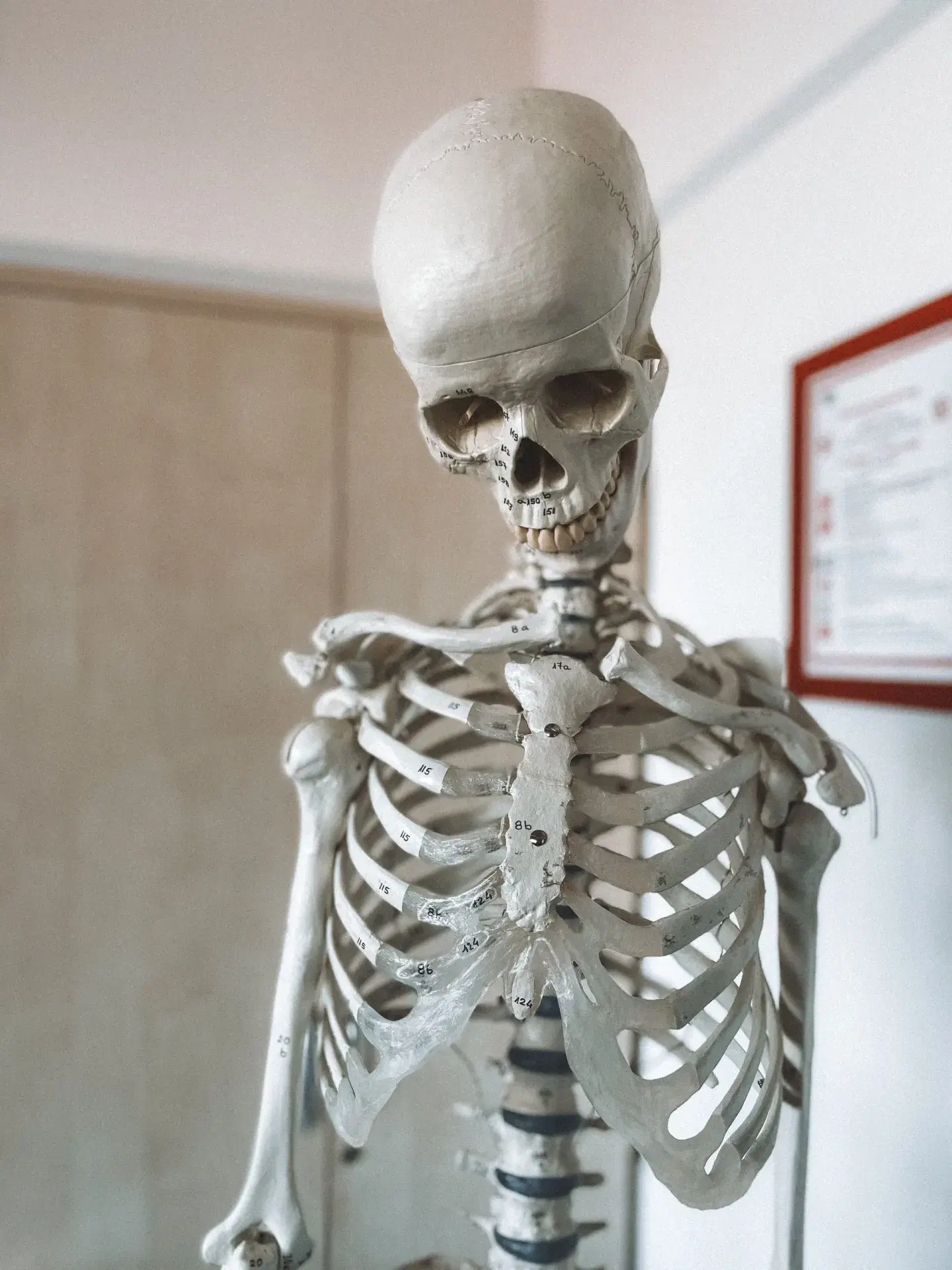
The first part of the job is listening
None of it involves hands. It is a conversation: where the pain sits, what you were doing when it began, what makes it worse and what eases it, how it is affecting your sleep and your work, and what you have already tried. The answers decide which tests are worth doing, so the same sore lower back can lead to quite different examinations in two different people.
The questions also screen. A few of them are there to catch problems that belong with a GP or a hospital, so they get asked even when nothing sounds unusual. The Australian Commission on Safety and Quality in Health Care’s Low Back Pain Clinical Care Standard (2022) puts the same two things at the start of care for low back pain: an initial assessment that checks for a specific or serious cause, and attention to the human side of the problem, meaning stress, mood, sleep and worry about the pain itself.
Your first chiropractic visit runs in that order: the questions first, then the examination, then an explanation.
What the examination looks at
Next comes the examination, and it is shaped by what you described. For a back, that usually means watching how you stand and move, how far the spine travels in each direction, and which movements bring the pain on and which do not. Joints are checked for how freely they move and which ones are tender. The muscles around them are checked for tenderness and for strength.
If anything is travelling into an arm or a leg, the nerves are tested as well: reflexes, strength in particular muscles, and feeling over the skin. Those tests describe how a nerve is behaving, which a story alone cannot. Imaging is arranged when clinically indicated and is not a routine part of the job. The Australian standard gives it a limited role in diagnosing low back pain.
The examination ends in an explanation, because a finding is not much use until you understand it. Findings are explained the same day, including what is still uncertain, so you leave knowing what was found as well as what was done.
Hands-on care, in the forms used here
Hands-on care is the part you may already have a picture of: a quick thrust by hand that can make a joint click, known as an adjustment. Here a traditional adjustment is one option among several, not a requirement. Three other techniques are used as well, and which one is chosen depends on the area being worked and on you.
- Gentle joint mobilisation. A joint is moved slowly by hand, inside the range it already has.
- Instrument adjusting. A small hand-held instrument gives a light, quick tap at one joint.
- Drop-piece technique. A section of the table drops a short distance as a light push is made by hand.
Soft-tissue work on tight muscles sits alongside these, and taping is offered too. Massage works on the same muscles, and choosing between a chiropractor and a massage comes down to whether you want the examination and the joints included as well. The care here comes in four kinds: disc and nerve rehabilitation, posture care, mobility and wellness care, and headache and neck pain care.
None of it is automatic. You can decline any part of it without it being awkward, and a joint can be worked without any click at all, which is what people mean by chiropractic without the crack.
Exercise, advice and the plan
The hours between appointments far outnumber the hours inside them, so a good part of the job is deciding what you do in the rest of the week. That can be a few movements chosen for the way your problem behaves, changes to how you sit, lift or train, and advice about carrying on with ordinary life. For low back pain the Australian standard points the same way: it encourages people to stay active and keep up usual activity, work included, or get back to it as soon as they can.
Movements are chosen after the examination and not before it, and each one is aimed at something specific: a muscle group that tires first, a joint that has stopped moving through its range, a nerve that is sensitive to being stretched. What you are given is small enough to fit around a working day, and it changes as the plan is reviewed with you.
Everyone moves through this differently, so the plan is paced to your body, reviewed with you as you progress, not read off a fixed schedule of visits.
Recognising what belongs elsewhere
The territory is the musculoskeletal system: the joints, muscles and nerves of the back and neck, and the aches that spread from them into an arm, a leg or the head. Lower back pain, neck pain and sciatica all fall inside it.
Some problems that arrive as back or neck pain are not coming from the spine, and some need care a chiropractor cannot give. Spotting them is part of the job, and so is saying so plainly. A hospital emergency department comes first for the serious signs, among them any new change in your bladder or bowel control, numbness or altered feeling around the saddle area, weakness in both legs, and back or neck pain after a serious fall or a high-impact accident, such as a car accident. A GP comes first for a history of cancer, unexplained weight loss or pain at night that will not settle in any position.
Diagnoses outside the spine, and medicines, sit with your GP, and the chiropractor’s work runs alongside that care and never in place of it. If the examination does not point to the spine, or the picture is unclear, the plan changes: your GP, or a referral onward, comes ahead of more hands-on care.
Chiropractors in Australia are registered health practitioners, and the public register lets you check one by name, which is where choosing a chiropractor starts. If you are weighing up a chiropractor, physio or osteopath, the better question is what the first appointment will cover. As for when to see a chiropractor, it depends on what the pain is doing, and asking about the risks and the evidence is fair before anyone starts.
What the guidelines say
- Australian Commission on Safety and Quality in Health Care, Low Back Pain Clinical Care Standard, 2022. https://www.safetyandquality.gov.au/standards/clinical-care-standards/low-back-pain-clinical-care-standard
When to get it looked at
Call an ambulance if there is any confusion, sudden weakness or numbness in the face, arm or leg on one side, facial drooping, slurred speech, sudden trouble speaking, seeing or understanding, loss of vision, a seizure, or a sudden loss of balance or coordination.
Call an ambulance or go to a hospital emergency department straight away if a headache comes on suddenly and severely (the worst you have ever had), if a headache arrives with fever, a stiff neck or a rash, or if a headache follows a knock to the head.
Go to a hospital emergency department straight away if you have numbness or altered feeling around the saddle area, meaning the groin, the inner thighs, the buttocks or the genitals; a loss of normal sensation in the genitals, including during sex; trouble starting to pass urine, or any new change in your bladder or bowel control; weakness in both legs, particularly if it is getting worse; new or worsening pain running down both legs; weakness in one leg that is severe or getting worse, or a foot that has started to catch or drag when you walk; or numbness in a leg that is spreading or getting worse quickly.
Go to a hospital emergency department straight away for back or neck pain after a serious fall or a high-impact accident, such as a car accident; back or neck pain with a fever or feeling generally unwell; or new back or neck pain if your immune system is weakened, for instance by long-term steroids or chemotherapy, if you inject drugs, or if you have recently had a spinal injection, spinal surgery or a dental procedure.
Go to a hospital emergency department straight away if you have weakness in one arm that is severe or getting worse, or numbness in an arm that is spreading or getting worse quickly.
Go to a hospital emergency department the same day if you have new clumsiness in both hands, or new unsteadiness on your feet.
See your GP promptly, before booking here, if you have a history of cancer, unexplained weight loss, pain at night that will not settle in any position, known osteoporosis with new severe pain, numbness that is spreading or getting worse slowly, new, unexplained back pain as an older adult, or pins and needles, numbness or weakness in an arm or hand.
With none of those signs, the ordinary reason to book is back or neck pain that keeps returning or has started to change how you work, sleep or move. From there it is questions, an examination, an explanation and a plan, and you can decline any part of it.