
Usually because sitting puts weight straight through it. Tailbone pain tends to be sharpest when you lean back into a chair, sit on something hard, or get up after sitting for a while. It sits at the very bottom of your spine, and a desk-heavy day gives it a lot of sitting to object to.
What the tailbone is
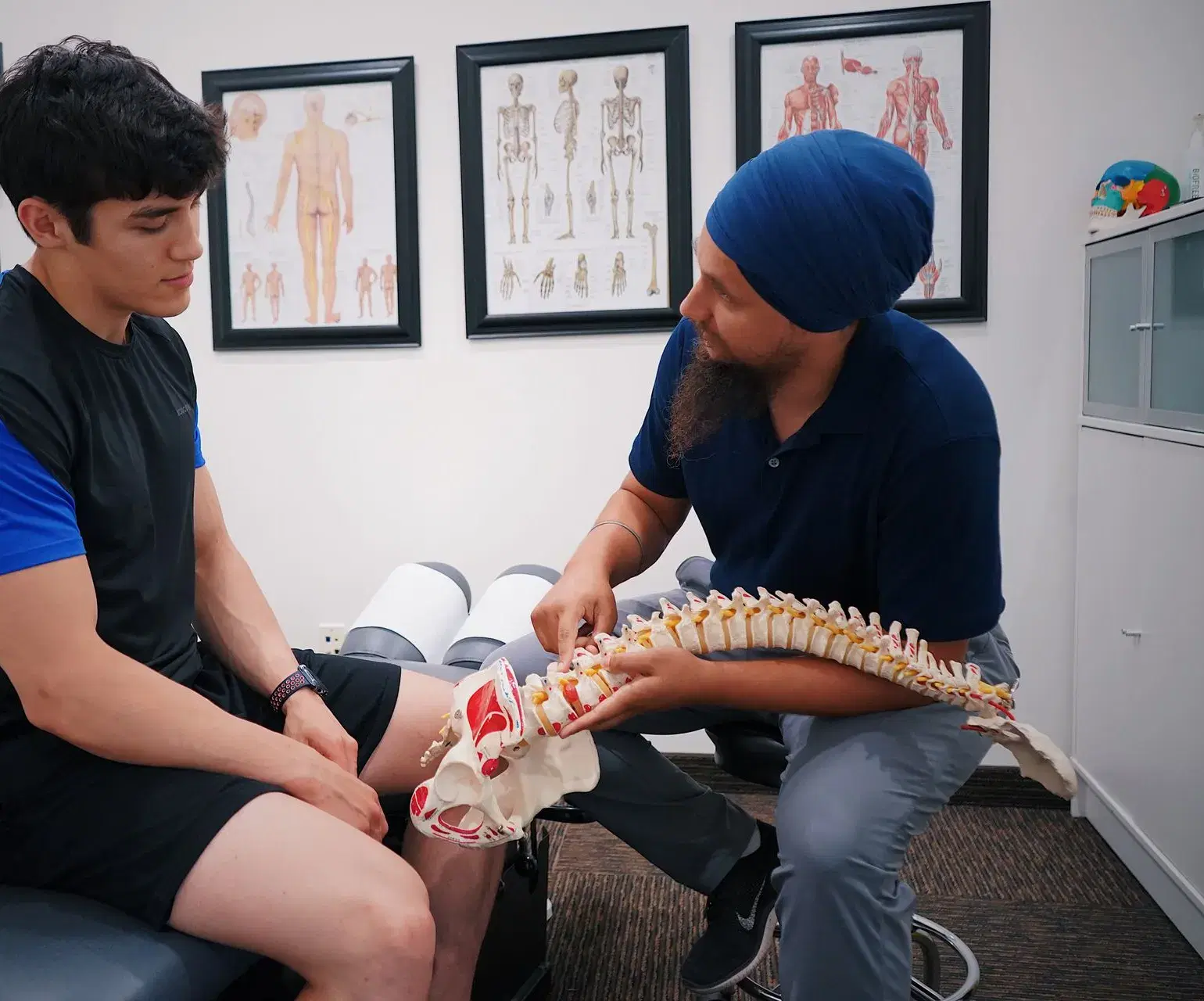
Your tailbone, or coccyx, is the last part of your spine. It is a small, roughly triangular bone made of three to five little segments, usually joined together, and it hangs from the bottom of the sacrum, the broad flat bone wedged between your two hip bones at the back of the pelvis. The joint between them lets the tailbone shift a little as you sit and stand.
It is a small bone with a surprising amount attached to it. Ligaments bind it to the sacrum on every side. Part of the gluteus maximus, the big muscle that shapes your buttock, anchors along its edge, and the muscles that form the floor of the pelvis attach to its sides and its tip. So it sits exactly where a seat meets you, with muscles pulling on it from above, from the side and from below.
Why sitting makes it worse
When you sit upright, most of your weight goes down through your two sit bones, the rounded points at the bottom of the pelvis that you can feel if you sit on your hands. The tailbone sits between and a little behind them, and in a tall sitting position it carries only a small share.
Lean back and that changes. As you slump or recline, the pelvis rolls backwards, the tailbone swings down toward the seat, and it starts to take more of your weight. A deep lounge, a car seat that tips you back and a soft couch all put you in that shape.
A hard seat adds to it. A padded surface gives a little and spreads the load across a wider area. A timber bench, a stadium seat or a hard stool pushes back only at the bony points, and the tailbone is one of them. Getting up can bring on a sharp moment of its own, as the pelvis tips forward and the load moves off the area all at once.
On a desk-heavy day in the city the sitting adds up without anyone choosing it: the train in, the desk, a meeting room chair, lunch on a stool, the train home. None of that is harmful in itself. A sore tailbone simply notices every hour of it, and the leaning back most.
This guide does not try to tell you what started yours. That takes a history and an examination, and a few starting points, a fall among them, belong with your GP first. They are set out at the end.
What can make sitting easier
These are the changes people with a sore tailbone commonly reach for: things to try with how and where you sit, not treatment, and none of them comes with a promise.
- Sit tall or lean slightly forward. With your weight on the sit bones and your feet flat, the tailbone stays clear of the seat. At a desk, pull the chair right in so you are not reaching for the keyboard and drifting back into the backrest.
- Try a cushion with a cut-out. A wedge cushion with a notch cut from the back edge leaves a gap where the tailbone would otherwise meet the seat. Some people prefer a ring shape. Which suits you is personal, and the one that goes to the office matters more than the one left on the couch.
- Break the sitting up. Stand for phone calls, walk to the far kitchen, take the stairs to the meeting. Getting up before it starts to hurt, rather than after, gives the area a change of load through the day.
- Choose the seat when you can. A firm chair you can sit upright in over a sofa that tips you back, and a padded seat over a hard edge. On a long drive, sit the seat back up and stop to get out.
None of these should hurt. Stop and get it checked if the pain spreads into a leg, if you notice pins and needles or numbness, if a leg feels weak, or if the pain climbs rather than eases. The warning signs at the end of this guide come before any of it.
If the ache reaches up into your lower back as well, the desk side of the same day is covered in why your lower back hurts after sitting all day.
What an assessment looks at
The tailbone does not work on its own, so an assessment does not stop at it. Dr Laith Musallam, chiropractor, starts with the history: when it began, what makes it worse and what eases it, how much of your day is spent sitting, and your general health. Questions about falls, fevers and lumps are part of that, because those go to your GP first.
Then the examination looks at the area around it:
- your lower back, and whether it is part of the pain;
- your pelvis, including the joints where the sacrum meets the hip bones;
- your hips and the muscles around them, the glutes included;
- how you sit, at a desk and in the car, and what changes when you shift.
Any hands-on work here is external only, around the lower back, pelvis and hips. What is proposed is explained before anything happens. An adjustment is never automatic, and you can decline any part of it without it being awkward.
Much of the work is about load: how you sit, how the area around the tailbone moves, and what you can change at your desk. That is the ground mobility and wellness care covers. If your lower back turns out to be the bigger part of it, the page on lower back pain sets out how that is assessed.
A few questions people ask
Is tailbone pain serious? A tailbone that is sore when you sit and easier when you stand is a pattern an assessment can work with. What makes it more than that is the short list of warning signs below, with where each one goes. Read that list first.
Is it my tailbone or my lower back? The tailbone sits very low, where the buttock crease begins, and it is often tender to press right there. The lower back sits higher, across the small of the back. The two can turn up together, which is why the assessment looks at both.
Do I need an X-ray? Not as a matter of routine. Imaging is suggested when clinically indicated, and pain that started with a fall onto the tailbone goes to your GP first, who decides what is needed. There is more on when an image changes the plan in our guide on whether you need a scan first.
Can I keep exercising? Movement that stays within comfort is reasonable to keep doing, and walking keeps your weight off the tailbone. Cycling, spin classes and rowing machines sit you on it, so ease off those or change the seat if they flare it. Stop and get it checked if exercise sends pain into a leg or brings on pins and needles, numbness or weakness.
When to get it looked at
A few signs mean a sore tailbone needs medical care before anything else.
Go to a hospital emergency department straight away if you have numbness or altered feeling around the saddle area, meaning the groin, the inner thighs, the buttocks or the genitals; a loss of normal sensation in the genitals, including during sex; trouble starting to pass urine, or any new change in your bladder or bowel control; weakness in both legs, particularly if it is getting worse; new or worsening pain running down both legs; weakness in one leg that is severe or getting worse, or a foot that has started to catch or drag when you walk; or numbness in a leg that is spreading or getting worse quickly.
Go to a hospital emergency department straight away for back or neck pain after a serious fall or a high-impact accident, such as a car accident; back or neck pain with a fever or feeling generally unwell; or new back or neck pain if your immune system is weakened, for instance by long-term steroids or chemotherapy, if you inject drugs, or if you have recently had a spinal injection, spinal surgery or a dental procedure.
The back signs above go to an emergency department because the Australian guidance on low back pain puts them there: the Low Back Pain Clinical Care Standard, published by the Australian Commission on Safety and Quality in Health Care in 2022, and the Royal Australian College of General Practitioners’ 2022 guidance for GPs on imaging in adults with acute low back pain both send suspected cauda equina syndrome, suspected spinal infection, a fracture after a high-impact injury and severe or rapidly worsening nerve weakness for emergency assessment. Both are public: the Low Back Pain Clinical Care Standard and the RACGP’s imaging in adults with acute low back pain.
See your GP promptly, before booking here, if the pain started with a fall onto your tailbone, or if there is a tender lump, redness, swelling or discharge near the top of the buttock crease.
See your GP promptly, before booking here, if you have a history of cancer, unexplained weight loss, pain at night that will not settle in any position, known osteoporosis with new severe pain, numbness that is spreading or getting worse slowly, or new, unexplained back pain as an older adult.
Otherwise, it is reasonable to book an assessment when sitting has become something you plan your day around, or when the pain keeps coming back. We look at how you sit and move, and explain what we find on the day.