

What sits at the front of the hip
The hip flexors are the muscles that lift the thigh towards the trunk, or tip the trunk forward over the thigh. The main one is the psoas, which runs from the sides of the lower spine down through the pelvis, and it joins the iliacus, which lines the inside of the pelvis, in a shared tendon across the front of the hip joint. The straight muscle at the front of the thigh crosses the hip too, and so does a long, strap-like muscle called sartorius.
Because the psoas attaches to the lower spine itself, the front of the hip and the lower back are neighbours in a more literal way than most muscle groups. That is part of why a pull at the front of the hip and back stiffness can turn up on the same day.
What eight hours of sitting does, and what it does not
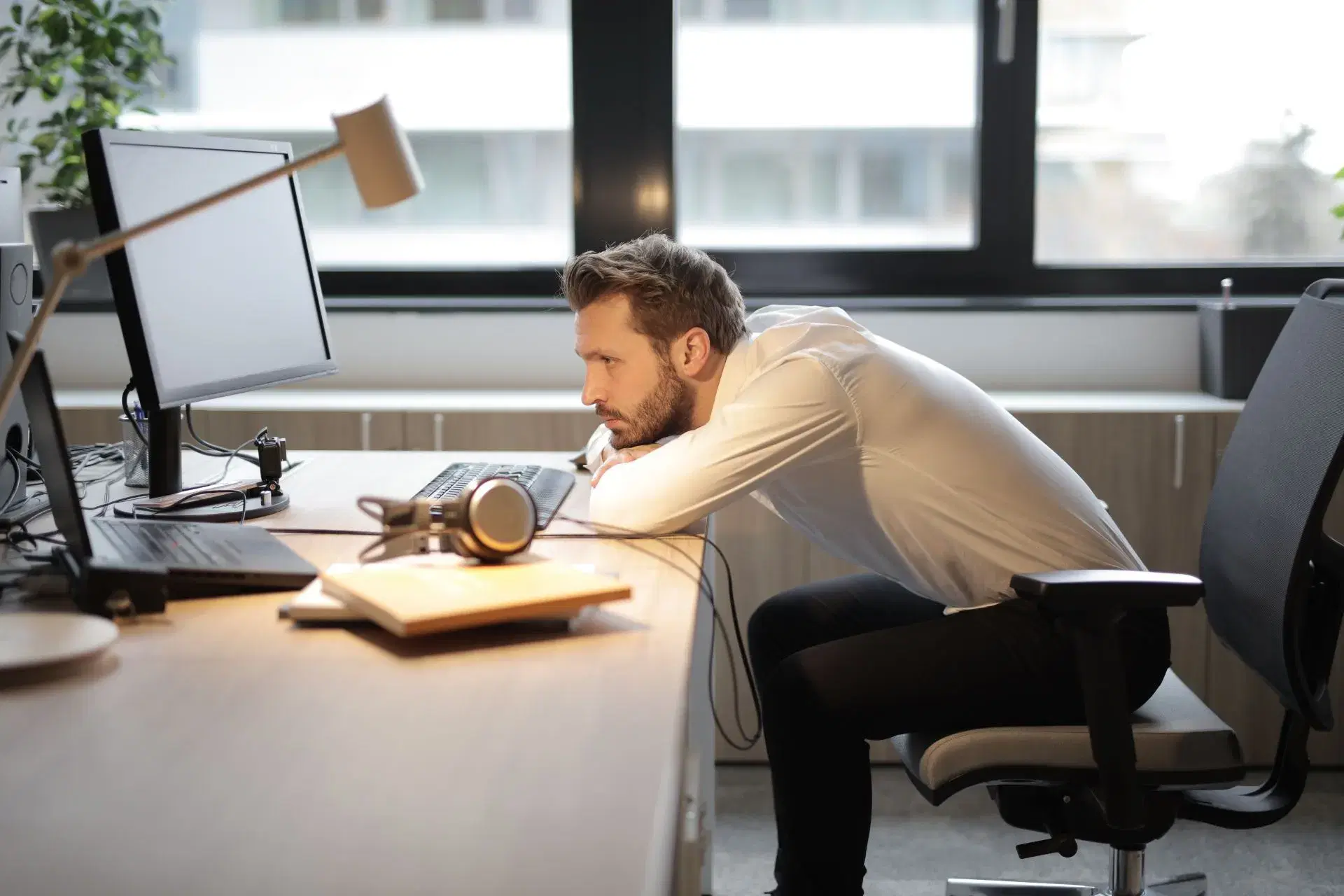
Sitting holds the hip bent for hours, so these muscles spend the day at one length and not doing very much. When you stand, the hip has to straighten from a position it has been in for a long time, and the front of it pulls. The sensation is real and needs no explanation beyond a body that has been still.
It does not follow that the muscle has become shorter. Muscle length can be measured, and a feeling of tightness is not a measurement. The pull can come from a muscle slow to adjust, from a joint held in one position, or from an area that has simply become more sensitive.
Four things that all get called tight
- The muscle really is limited in how far it lengthens, and a test of how far the hip straightens shows it.
- The muscle is sore from work, such as a new run, long hills or an extra round of lunges, and hurts when it is stretched or loaded.
- The hip joint is limiting the movement, and the tightness is simply where the limit is felt.
- The lower back is stiff or sore and the nearby muscle is guarding it.
An assessment tells them apart by measuring: how far the hip straightens with the pelvis held still, whether the front of the hip is tender, what the joint does in other directions, and how the lower back moves.
A snap or catch at the front of the hip is not tightness. A clicking hip is a sound or a catch as something slides past the joint, and it is worth a look when it hurts, locks or gives way.
The tidy story about the pelvis
A familiar explanation says tight hip flexors tip the pelvis forward, arch the lower back and cause pain there. It is tidy, and it is also a story rather than a finding about you. A photo of how you stand is not a diagnosis, and the angle of a pelvis differs from one person to the next.
The wider question of whether posture causes back pain has been looked at closely. A 2020 systematic review of systematic reviews in the Journal of Biomechanics, titled “No consensus on causality of spine postures or physical exposure and low back pain”, found that posture has been associated with low back pain but that the reviews do not establish that it causes it. More useful questions are how long you sit without moving and what your back does when you stand up. Those are the questions behind lower back pain from sitting.
Breaking up a working day
What you do next should suit the cause. If a stretch suits it, start with the hip flexor stretch, done half kneeling. A small floor movement such as the pelvic tilt shows how the pelvis and lower back move together.
Whatever the cause, many people find variety easier on the hip: standing for a call, walking to the printer the long way, taking stairs and letting the hip straighten fully for a few steps. None of it is a programme, and none of it is compulsory.
What the sensation might be pointing to
- A pull across the front of the hip on standing tall after a long sit
- Common to the muscles at the front of the hip and to the lower back, and a measure of how far the hip straightens separates them.
- A pinch deep in the groin crease when the knee comes up towards the chest
- Leans towards the hip joint, since a muscle that is merely short tends to pull rather than pinch.
- An ache across the front of the thigh after a hill walk or a run
- Often the large thigh muscle that crosses the hip, working harder than it is used to.
- A sharp pull after a kick or a sprint, with a sore spot you can press
- A strain, which is an injury rather than tightness and is read differently.
- A snap or catch at the front of the hip
- A tendon sliding over bone as the leg lifts and lowers, which is a different thing from a short muscle.
- Tightness with tingling or pain down the front of the thigh
- A nerve from higher in the lower back, or one pressed where it crosses the front of the hip, may be part of it, which is why the back is examined as well as the hip.
When to get it looked at
Go to a hospital emergency department straight away if you have numbness or altered feeling around the saddle area, meaning the groin, the inner thighs, the buttocks or the genitals; a loss of normal sensation in the genitals, including during sex; trouble starting to pass urine, or any new change in your bladder or bowel control; weakness in both legs, particularly if it is getting worse; new or worsening pain running down both legs; weakness in one leg that is severe or getting worse, or a foot that has started to catch or drag when you walk; or numbness in a leg that is spreading or getting worse quickly.
Go to a hospital emergency department straight away for back or neck pain after a serious fall or a high-impact accident, such as a car accident; back or neck pain with a fever or feeling generally unwell; or new back or neck pain if your immune system is weakened, for instance by long-term steroids or chemotherapy, if you inject drugs, or if you have recently had a spinal injection, spinal surgery or a dental procedure.
Go to a hospital emergency department the same day if you have new clumsiness in both hands, or new unsteadiness on your feet.
A front-of-hip pull that arrives with a swelling in the groin, a fever, or an inability to put weight on the leg after a fall is not tightness. Groin swelling is a question for a GP, and the other two mean a hospital emergency department straight away.
See your GP promptly, before booking here, if you have a history of cancer, unexplained weight loss, pain at night that will not settle in any position, known osteoporosis with new severe pain, numbness that is spreading or getting worse slowly, or new, unexplained back pain as an older adult.
Weeks of tightness, tightness that keeps company with back or groin pain that is changing, or a sharp pull or deep pinch that has not gone away, are the reasons to have the hip measured instead of assumed. That means checking how far it straightens, then comparing the joint and the back against what the front of the hip is doing.