

Back pain after flying is usually a back held still for hours, as at a desk but with fewer chances to get up. Small movements, a cushion low in the hollow of your back and a walk when the sign allows are the things to try. A swollen calf is different and goes to a doctor straight away.
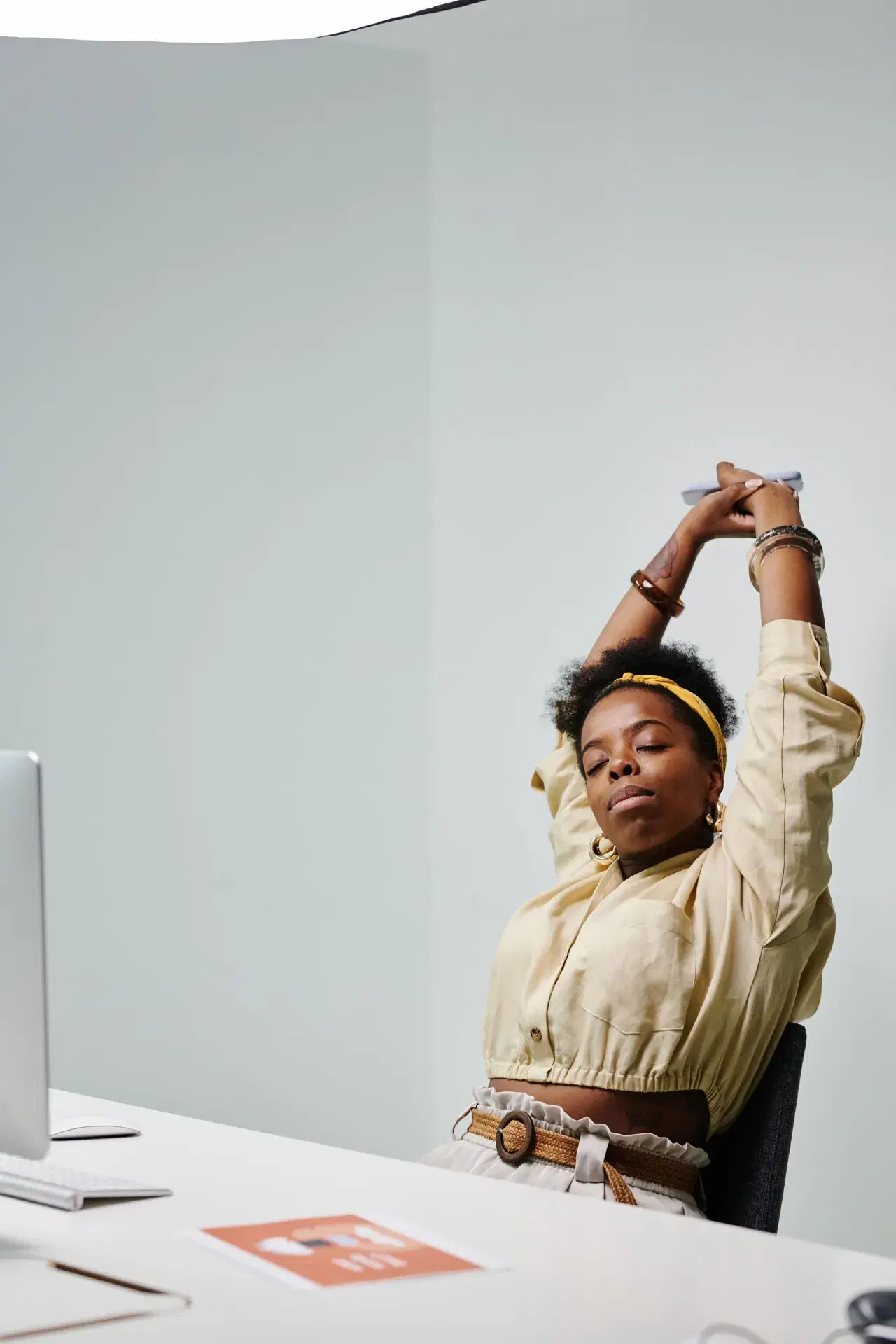
Why a plane seat is hard on a back
A plane seat is a desk chair with the choices taken away. The backrest sits at a slight recline you can barely adjust, the cushion tips your hips back a little, and the seat in front limits how far you can shift. For hours the lower back is held in one flattened shape, and when you doze the head drops forward as well.
Then there is the length of it. A long-haul flight can run longer than a working day at a desk, and the usual breaks are missing: no walk to the kitchen, no standing for a call. The muscles that hold you upright tire and the joints you rarely move stiffen, which is what you feel when you stand to collect your bags.
Carry-on bags matter more than they look. Lifting one into the overhead locker is a lift above shoulder height at the start of the flight, and getting it down asks the same of a back that has not moved for hours. Ask for a hand if the bag is heavy, and hold it close to your body as you lift.
Seat-sized movements, and where a cushion goes
Small movements for a small space, at your own pace and with the seat belt on if the sign is lit. Keep them gentle, and stop if any of them brings on sharp pain, pins and needles or numbness.
- Pelvic rocking. Sit near the front of the seat, put a hand on your lower back and tip the pelvis gently forward and back a few times. It asks the lower back to move through a small range instead of holding one shape.
- A turn from the ribs. With your feet flat, turn your chest slowly to one side, using the armrest as a light guide, then to the other. Turn from the ribs and not by wrenching the neck round. A seated spinal twist is a short turn, not a haul on the armrest, and both sit bones should stay level on the seat. If one lifts, you have gone far enough.
- Figure 4, where there is room. Rest one ankle across the opposite knee and lean forward from the hips until you feel a pull in the buttock. It needs legroom, so it suits an aisle seat or a bulkhead, and it is one to skip if the knee or hip is sore. The same move on an office chair is a seated figure 4 stretch.
- Ankle circles and heel raises. These move the calves, which a long flight leaves still.
- Shoulder rolls, then a reach forward. Roll the shoulders back a few times, then reach both arms forward and let the upper back round, so the whole back gets a change from the slouch.
- Standing, when the sign allows. Walk the length of the cabin, or stand near the galley and shift your weight from one foot to the other, so the hips and knees straighten for a few minutes.
A small cushion belongs low, in the hollow above your belt line, not up at shoulder height. A rolled jumper or a thin cushion will fill that gap, and the test is how it feels, not how it looks. Take it away if it pushes you forward. A bag under your feet raises your knees, which can feel good for a while, but a high stack tips the pelvis back and flattens the lower back again, so keep it low and swap to flat feet now and then.
A swollen calf is not a back problem
Sitting still for hours, a flight included, is one of the situations in which a clot can form in a deep vein of the leg. The sign to know is swelling in one leg, usually the calf, often with pain or tenderness, warmth or redness. It can begin during the flight or in the days and weeks after it, when the trip is no longer on your mind. Pain that travels down the leg from the back does not usually leave a calf swollen and warm.
See a doctor straight away if one leg, usually the calf, becomes swollen, painful or tender, warm or red, during a long flight or in the days and weeks after it. If no doctor can see you that day, go to a hospital emergency department. Call an ambulance for sudden shortness of breath, chest pain or coughing up blood, with or without a sore leg.
You cannot tell at home whether swelling is a clot, which is why the advice is the same for everyone: have it seen without delay. If it starts in the air, tell the cabin crew.
Landing, and the first day after
Stiffness when you land is the long sit catching up with you, and the answer is to move. Walk through the terminal rather than sitting at the gate. Carry bags in close or use a trolley, and keep the first lifts light. If the stiffness has turned into a sore back, keep moving. The Royal Australian College of General Practitioners’ handbook entry Advice to stay active for people with acute low back pain (2019) recommends staying active instead of resting in bed for a low back pain episode of less than six weeks, and says that means carrying on with normal daily activities as much as possible.
The first night in a new bed is another change. A bed you do not know and a body clock out of step can leave the back feeling worse the next morning than it did on landing. A few minutes of gentle movement on waking, then a walk outside, is a reasonable start.
The same long sit turns up in other places: a desk day holds the back in much the same shape, and so does a long drive.
Before you fly with a sore back
Should you fly if your back already hurts? Usually, if it is the ordinary stiff kind. Numbness around the saddle, a bladder or bowel change, or leg weakness that is severe or getting worse means a hospital emergency department straight away, not the airport. A swollen calf means a doctor straight away. Pain that is new and severe needs seeing before you go. If you are unsure, ask your GP before you travel, and do the same if you have had a clot in a leg or a lung before, or recent surgery.
Is an aisle seat worth choosing? An aisle seat makes getting up easier, and getting up is the point. The trade is people brushing past, so pick whichever seat you will actually move from.
Does a travel pillow or lumbar cushion make a difference? It changes where the pressure sits, which can feel better or worse. Try it, and take it out if it is not helping.
If you fly for work, what should you mention at an appointment? How often, for how many hours and in what sort of seat, plus when the stiffness arrives and how long it stays. A plane seat leaves the hips bent and the trunk still, so the examination tests how far your hips straighten and how your mid back turns.
What the guidelines say
- Royal Australian College of General Practitioners, Handbook of Non-Drug Interventions (HANDI): Advice to stay active for people with acute low back pain, 2019. https://www.racgp.org.au/clinical-resources/clinical-guidelines/handi/handi-interventions/musculoskeletal/advice-to-stay-active-for-people-with-back-pain
When to get it looked at
If something serious starts mid-flight, tell the cabin crew straight away.
See a doctor straight away if one leg, usually the calf, becomes swollen, painful or tender, warm or red, during a long flight or in the days and weeks after it. If no doctor can see you that day, go to a hospital emergency department. Call an ambulance for sudden shortness of breath, chest pain or coughing up blood, with or without a sore leg.
Go to a hospital emergency department straight away if you have numbness or altered feeling around the saddle area, meaning the groin, the inner thighs, the buttocks or the genitals; a loss of normal sensation in the genitals, including during sex; trouble starting to pass urine, or any new change in your bladder or bowel control; weakness in both legs, particularly if it is getting worse; new or worsening pain running down both legs; weakness in one leg that is severe or getting worse, or a foot that has started to catch or drag when you walk; or numbness in a leg that is spreading or getting worse quickly.
Go to a hospital emergency department straight away for back or neck pain after a serious fall or a high-impact accident, such as a car accident; back or neck pain with a fever or feeling generally unwell; or new back or neck pain if your immune system is weakened, for instance by long-term steroids or chemotherapy, if you inject drugs, or if you have recently had a spinal injection, spinal surgery or a dental procedure.
Go to a hospital emergency department the same day if you have new clumsiness in both hands, or new unsteadiness on your feet.
See your GP promptly, before booking here, if you have a history of cancer, unexplained weight loss, pain at night that will not settle in any position, known osteoporosis with new severe pain, numbness that is spreading or getting worse slowly, or new, unexplained back pain as an older adult.
Landing stiff is ordinary. A back that stays sore for days after every flight, or an ache that has begun to reach into a leg, needs looking at.