

Yes. The top few joints of your neck share nerve pathways with your head and face, so a problem down there can be felt up here. The clinical name is a cervicogenic headache, a headache coming from the neck. We see it often in people who spend their day at a screen.
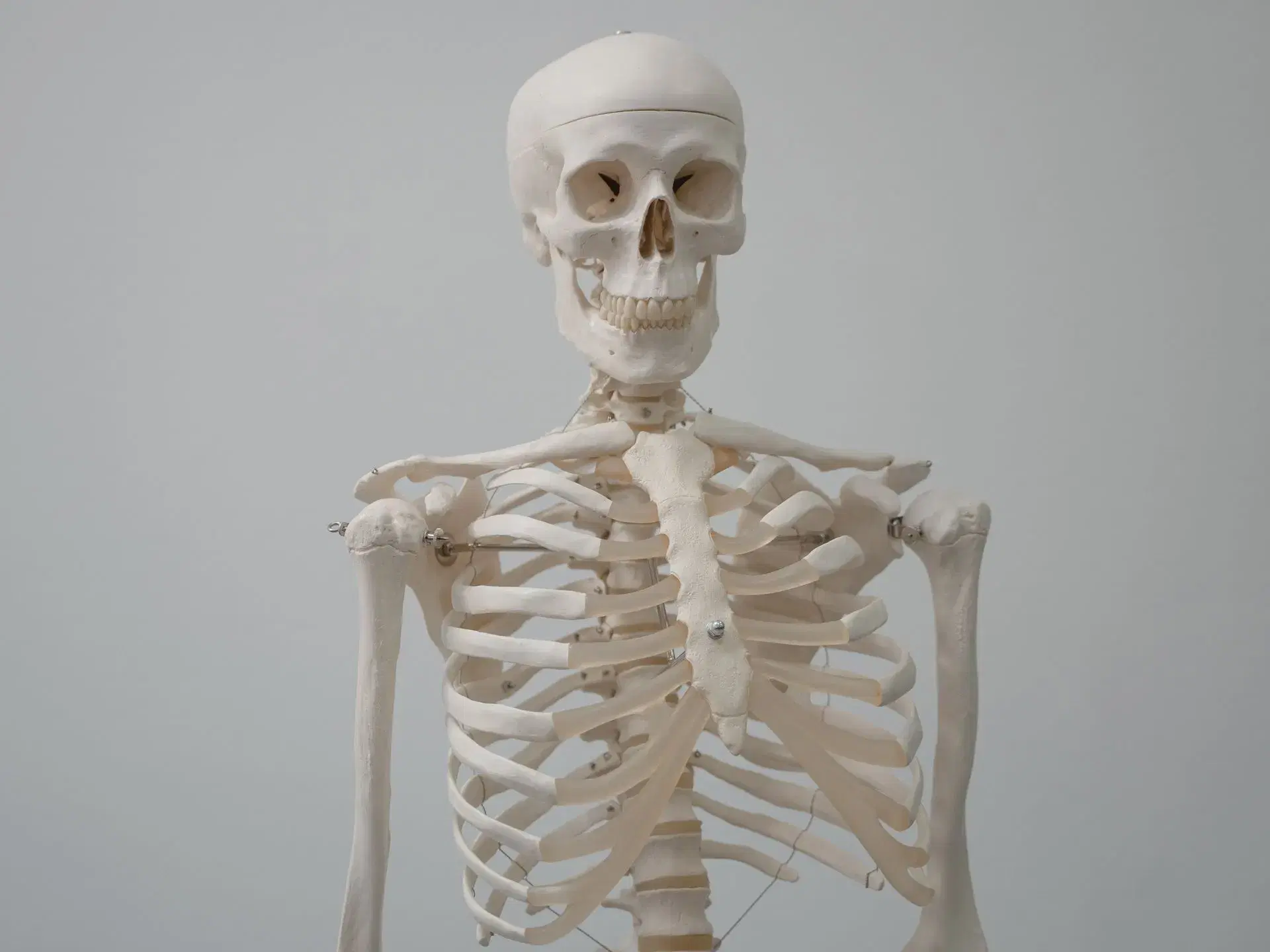
How a neck problem turns into head pain
The nerves coming from the top three levels of your neck meet the nerve that supplies your face and scalp at a shared junction in the brainstem. Signals arriving from an irritated joint or muscle in your upper neck pass through that same junction, and the brain can read them as pain in your head.
This is called referred pain, and it is not unusual. The body is quite happy to feel a problem somewhere other than where it started. It is the reason a headache can be genuine, severe, and still have nothing wrong inside your head at all.
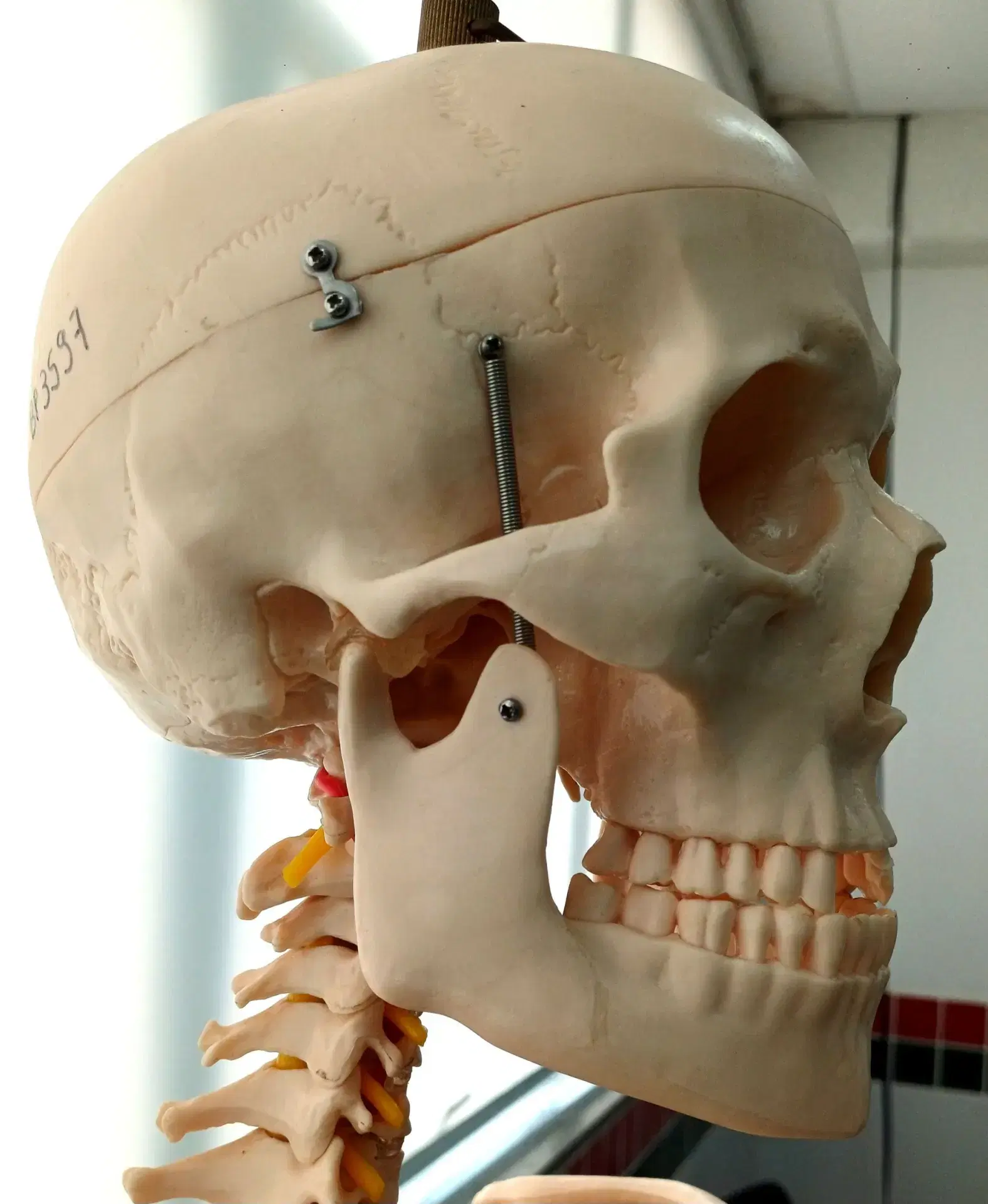
What a neck-related headache tends to feel like
There is a pattern most of them follow:
- Usually on one side, and usually the same side each time.
- Starts at the base of the skull and spreads over the top of the head or in behind the eye.
- A steady ache or a pressing band rather than a throb.
- Brought on or made worse by holding your neck in one position: a long meeting, a long drive, a night on the wrong pillow.
- Comes with a stiff, tender neck, and often with less turn to one side.
- Usually no nausea, and usually no sensitivity to light or sound.
That is a pattern, not a self-test. Plenty of headaches sit between categories, and telling them apart properly takes an examination.
Where the other common headaches fit
Tension-type headaches are the common ones: a band around the head, usually both sides, tied to long days, fatigue and stress. There is a lot of overlap with neck-related headaches, because the same desk day feeds both. How the two tend to differ is set out in tension headaches and your neck.
Migraine is different again: often throbbing, often one-sided, and frequently with nausea or sensitivity to light and sound. Here is the part that confuses people: neck pain is a very common feature of migraine too. So a sore neck alongside a headache does not prove the neck is the source.
Many people have more than one type of headache, and they can turn up in the same week. Diagnosing migraine and prescribing for it is your GP’s job, not ours. What we can do is assess whether your neck is contributing and treat it if it is, alongside your GP’s care, never instead of it. We do not treat migraine itself, and you should be wary of anyone who says they can make it go away.
What care usually involves
The first job is working out whether the neck is actually involved. That means checking how the top of the neck moves, whether pressure on those joints reproduces your usual headache, testing the muscles that hold your head up, and screening for the causes that belong with your GP.
If the neck is part of it, care usually combines gentle joint and muscle work at the upper neck and shoulders, exercises for the deep neck muscles that fatigue under a long day, and honest coaching on the screen, phone and desk habits feeding the cycle, which is where posture care overlaps with headache care. It is also worth looking at the ordinary contributors: sleep, water, caffeine, jaw clenching, and whether your glasses are still the right prescription.
Keeping a simple headache diary for a few weeks (when they start, how long they last, what you were doing) is one of the most useful things you can bring to any appointment. It shows us the pattern, and the assessment works out exactly how much of it starts in your neck, so the plan targets what is actually going on.
If the neck stiffness is the bigger complaint, neck stretches for a stiff neck has gentle movements to try, and you may also want why does my neck hurt after a day at my desk?
When to get it looked at
Headaches are one area where the red flags really matter.
Call an ambulance if there is any confusion, sudden weakness or numbness in the face, arm or leg on one side, facial drooping, slurred speech, sudden trouble speaking, seeing or understanding, loss of vision, a seizure, or a sudden loss of balance or coordination. Call an ambulance or go to a hospital emergency department straight away if a headache comes on suddenly and severely (the worst you have ever had), if a headache arrives with fever, a stiff neck or a rash, or if a headache follows a knock to the head.
See your GP first if you have a brand-new type of headache, if your usual headache has changed its pattern, if your first bad headaches have started after the age of 50, if they are worse lying down or when you cough or strain, if you are taking pain relief for headaches more than a couple of days most weeks, or if you think you may have migraine and have never been assessed.
Otherwise, if you are getting headaches several times a month, if they come with a stiff neck, or if they build across the working week, that is a reasonable point to have your neck properly assessed. We will tell you what we find, and whether we are the right people to help.