

When back pain runs down your leg, it usually means a nerve in your lower back is irritated or under pressure. That nerve travels from your spine into your leg, so you feel the pain along its path, even though the problem sits higher up. Most people call it sciatica.
What sciatica actually is
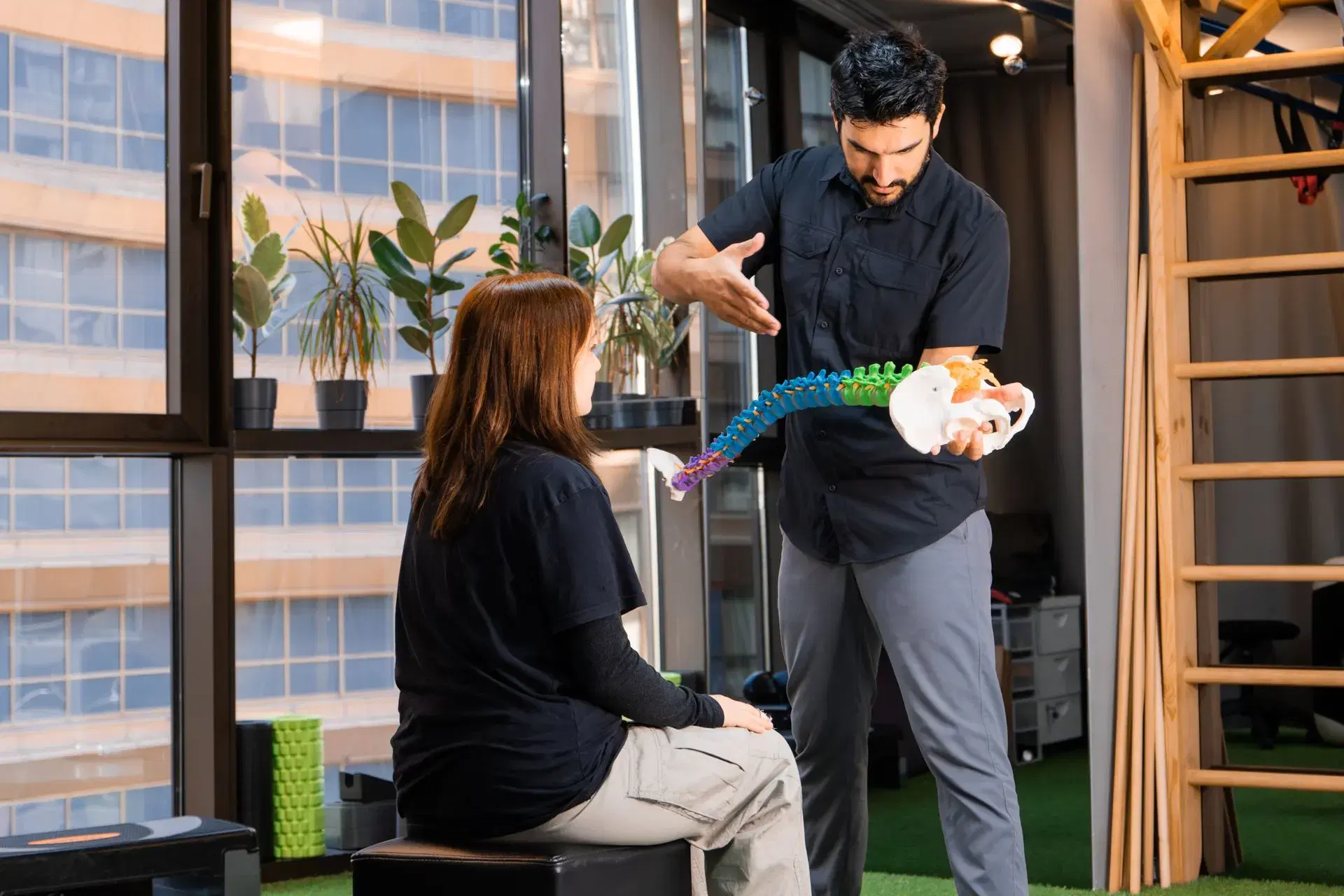
Sciatica is a description of a symptom, not a diagnosis on its own. The clinical words behind it are radicular pain, meaning pain coming from an irritated nerve root where it leaves the spine, and radiculopathy, when that root stops working properly and the leg goes numb or weak.
The sciatic nerve is the largest nerve in your body. It forms from nerve roots that leave the lowest part of the spine, joins up in the pelvis, then runs through the buttock and down the back of the thigh. Just above the back of the knee it splits into two branches that supply the calf, the shin and the foot. Irritate one of those roots up in your back, and the message you feel can travel the whole length.
That is why some people have a barely sore back and a very sore calf. The pain is felt where the nerve goes, not where the trouble is.
It tends to feel different to ordinary muscular back pain. People describe it as sharp, burning or electric, sometimes with pins and needles, numbness or a heavy, tired feeling in the leg. It is usually in one leg rather than both.
What irritates the nerve
There are a few common reasons, and they often overlap.
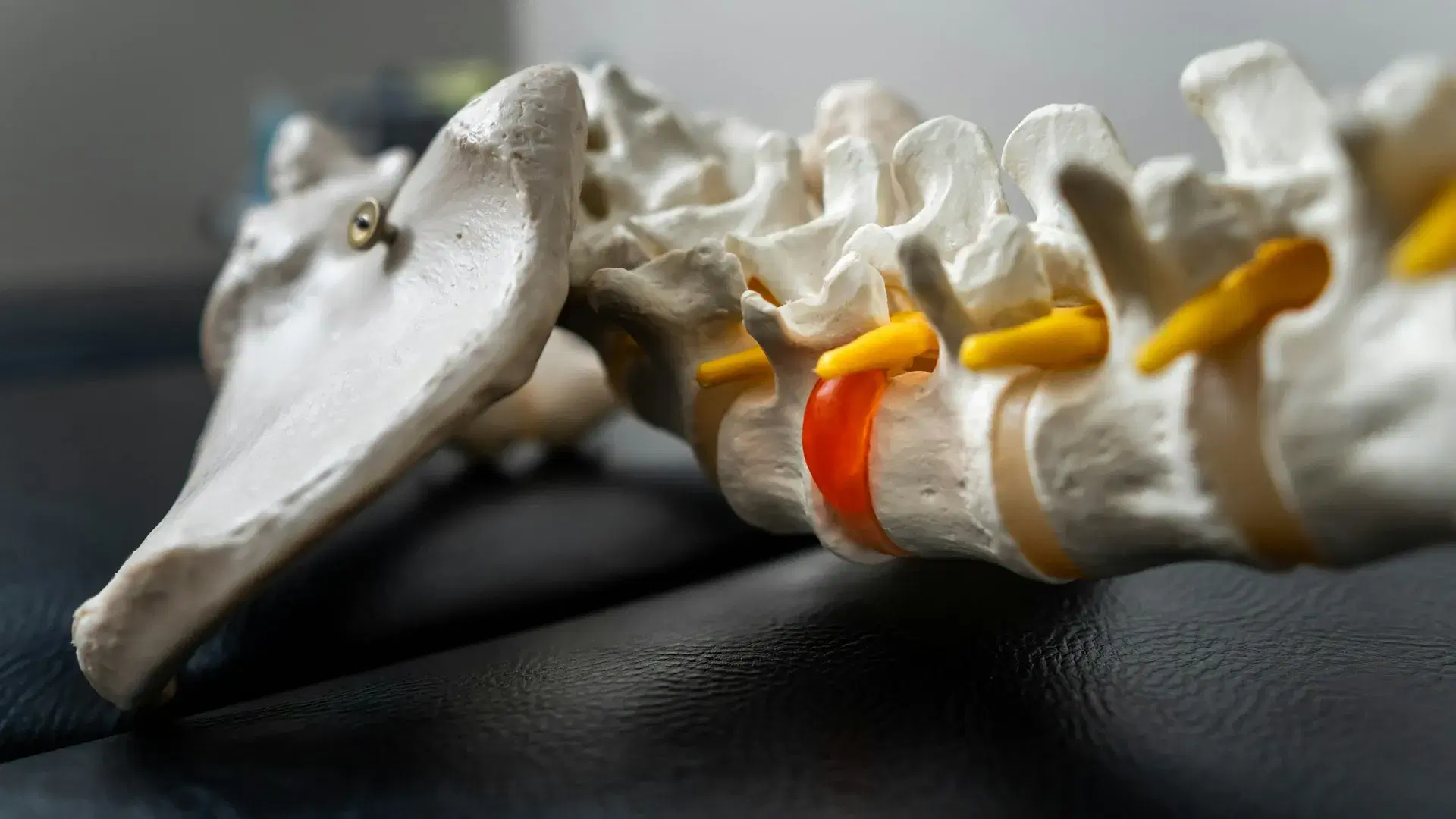
- A disc bulge or herniation. The disc sits between two bones of your spine. If its outer wall gives way a little, the material inside can press against a nerve root and inflame it. There is more on this in what’s actually happening when a disc bulges.
- Wear-and-tear changes. Over the years, the small openings the nerves pass through can narrow. Standing and walking often make this version worse.
- A stiff, irritated joint. Inflammation around a joint can affect a nerve sitting right beside it.
- Muscle involvement lower down. Sometimes tight muscles deep in the buttock get involved with the nerve as it passes through.
It is worth knowing that pressure is only half the story. A lot of the pain comes from inflammation around the nerve, not squashing alone. That is one reason people can improve well before anything looks different on a scan.
Why you can be sore in one position and fine in another
Most people with sciatica have a direction that eases it and a direction that stirs it up.
For many, sitting and bending forward are the aggravators (the drive home, the low lounge, tying shoelaces), and standing or gentle walking bring relief. For others, particularly where the openings have narrowed with age, it is the opposite: walking brings the leg pain on, and sitting or leaning on a trolley settles it.
Finding your easing direction is one of the first things we look for at an assessment, because it shapes everything else: how you sit at work, how you sleep, and which exercises are worth your time.
What the plan usually involves
- Keep moving within what your body will tolerate. Short, frequent movement through the day, instead of long spells in bed or one big effort.
- Use the positions that ease it. Lying on your side with a pillow between the knees, a break from sitting every half hour, a short walk between tasks.
- Hands-on care, only as part of a plan that includes exercise. Gentle joint work and soft tissue treatment on the surrounding muscles.
- Exercises. Nerve-gliding movements, then strengthening work.
- Time. How long nerve pain takes to settle varies from person to person, and the plan flexes with your progress.
We also spend time explaining what is happening, because sciatica is frightening in a way that ordinary back pain is not. Knowing why your calf hurts when your back does not makes it much easier to keep moving.
When to get it looked at
Some symptoms need medical care before anything else. Go to a hospital emergency department straight away if you have:
- numbness or altered feeling around the saddle area, meaning the groin, the inner thighs, the buttocks or the genitals
- a loss of normal sensation in the genitals, including during sex
- trouble starting to pass urine, or any new change in your bladder or bowel control
- weakness in both legs, particularly if it is getting worse
- new or worsening pain running down both legs
- weakness in one leg that is severe or getting worse, or a foot that has started to catch or drag when you walk
- numbness in a leg that is spreading or getting worse quickly
Go to a hospital emergency department straight away for back or neck pain after a serious fall or a high-impact accident, such as a car accident; back or neck pain with a fever or feeling generally unwell; or new back or neck pain if your immune system is weakened, for instance by long-term steroids or chemotherapy, if you inject drugs, or if you have recently had a spinal injection, spinal surgery or a dental procedure. Go to a hospital emergency department the same day if you have new clumsiness in both hands, or new unsteadiness on your feet.
See your GP promptly, before booking here, if you have a history of cancer, unexplained weight loss, pain at night that will not settle in any position, known osteoporosis with new severe pain, numbness that is spreading or getting worse slowly, or new, unexplained back pain as an older adult.
Otherwise, the ordinary threshold is simpler than people expect. If leg pain has been there more than a week or two, is disturbing your sleep or your work, or keeps coming back, it is worth having it assessed properly. We will examine your back, test the nerve, and tell you plainly what we think is going on. That work is what disc and nerve rehabilitation is for.