Yes, working alongside your surgical team, in the right order. Your surgeon and their protocol lead the early weeks, and once you are cleared, this is exactly the work we do: rebuilding the movement, strength and confidence the operation and the months around it took away.
Why you stiffen up and lose condition
Three things are usually going on after an operation, and they get muddled together.
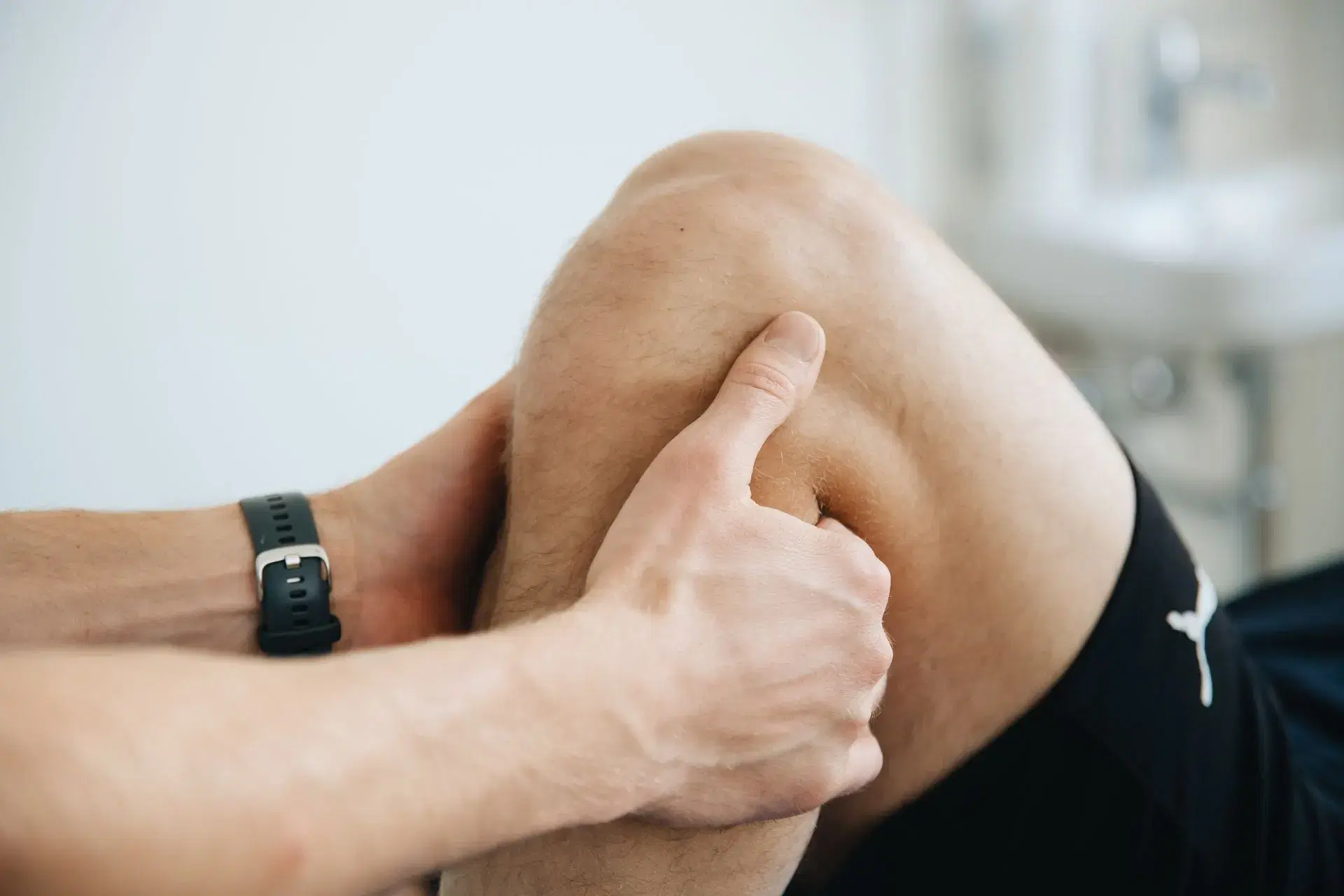
The first is stiffness at the site itself. Surgery means going through skin, fat, muscle and sometimes bone, and the body repairs that with scar tissue. Scar tissue is strong, but it is less stretchy than what it replaced, and in the early weeks it settles into whatever position you spend most of your time in. A knee that sits bent in a recliner for three weeks gets very good at being bent.
The second is deconditioning, the plain word for what happens to muscles that stop being asked to do anything. Strength falls away faster than most people expect, and it goes everywhere, not just at the operated area. After a lower back operation we often find the deep muscles that support the spine gone quiet, hips tight from all the sitting, and general fitness well down.
The third is caution, and nobody warns you about that one. After months of pain and then an operation, of course you move carefully. That is sensible early and unhelpful later, because the body reads “I am not being asked to do this” as “I no longer need to be able to do this.”
Why gentle, graded movement is the way back
Movement is the treatment for most of the above, and the word that matters is graded: small amounts, often, built up in steps your body can actually tolerate.
Tissue responds to load. Ask a healing area to do slightly more than it did last week, give it time to recover, and it adapts: scar remodels along the lines it is used in, joints get their range back, muscle returns. Too much and it flares. Nothing at all and it stiffens further. The whole skill is in the middle.
In practice that tends to mean short and often beats long and occasional. Range first, then strength, then speed. Some soreness during and after is expected. Sharp pain that is still there the next day usually means the step was too big. Walking is badly underrated. And your surgeon’s restrictions, whatever they are, are not suggestions.
How long any of this takes varies with the operation, your age, what you were doing beforehand and what else is going on in your body, which is why the plan is built around you and reviewed as you progress, not read off a calendar.
The order of operations: surgeon first, then us
Recovery works best when everyone plays their position, and the order matters.
For the first weeks after an operation, the program belongs to your surgeon and the protocol they set. The surgeon knows what was done, what is holding it together and what it can safely take: how far you may bend, how much weight goes through the leg, when the brace comes off. That plan is specific to the operation you had, and following it closely is the fastest route to the stage where we take over.
That handover point (cleared by your surgeon, formal protocol finished) is where the work in the rest of this article begins, and you can email us at any stage before it to plan ahead. Wound care, medication and any question about the hardware itself stay with your medical team throughout; everything that moves stays with us.
What we do once you’re cleared
Once your surgeon is happy and formal rehabilitation has finished or nearly finished, this becomes our territory, and it is where most people have the furthest still to go.
What tends to help is the work around the operated area rather than on it. After a lower back fusion, the segments above and below, the hips and the mid-back are all doing more than they used to, and they often complain about it. After a hip or knee replacement, the back and the other leg have usually spent months compensating. Rebuilding general movement and capacity is ordinary mobility and wellness care, and if a nerve is still grumbling months on, disc and nerve rehabilitation may be the better fit. We can also help with the practical side, like lifting again without setting things off.
And we work safely, always: a fused or instrumented segment is never manipulated, a recently operated joint is treated with the respect it needs, and your surgeon’s restrictions are built into your plan rather than worked around. Your GP and surgical team stay in the loop from the first visit.
Bring your operation report and any imaging if you have them. What was done matters more here than a new scan would, for the reasons in do I need an X-ray or scan.

When to get it looked at
Some post-surgical symptoms are medical emergencies. Go to a hospital emergency department the same day for pain, swelling, warmth or redness in one calf, or shortness of breath or chest pain, which can point to a clot. A wound that opens, or sudden severe pain after a fall, needs the same urgency.
Go to a hospital emergency department straight away if you have numbness or altered feeling around the saddle area, meaning the groin, the inner thighs, the buttocks or the genitals; a loss of normal sensation in the genitals, including during sex; trouble starting to pass urine, or any new change in your bladder or bowel control; weakness in both legs, particularly if it is getting worse; new or worsening pain running down both legs; weakness in one leg that is severe or getting worse, or a foot that has started to catch or drag when you walk; or numbness in a leg that is spreading or getting worse quickly. Go to a hospital emergency department straight away for back or neck pain after a serious fall or a high-impact accident, such as a car accident; back or neck pain with a fever or feeling generally unwell; or new back or neck pain if your immune system is weakened, for instance by long-term steroids or chemotherapy, if you inject drugs, or if you have recently had a spinal injection, spinal surgery or a dental procedure. Go to a hospital emergency department the same day if you have new clumsiness in both hands, or new unsteadiness on your feet.
Contact your surgeon or GP promptly if you have a fever or chills, a wound that is red, hot, swollen or leaking, pain that is climbing rather than easing, new pins and needles or numbness, or a leg that gives way under you. Those signs belong with the team that did the operation.
Once you are cleared, the ordinary threshold is simpler. If you are months on, still stiff, still guarding and still not back to the walking, work or training you want, that is worth having assessed. Email us with what you had done and when, and we will map out where your recovery is up to and what the next stage of it looks like, built around your operation, your body and what you want to get back to.