

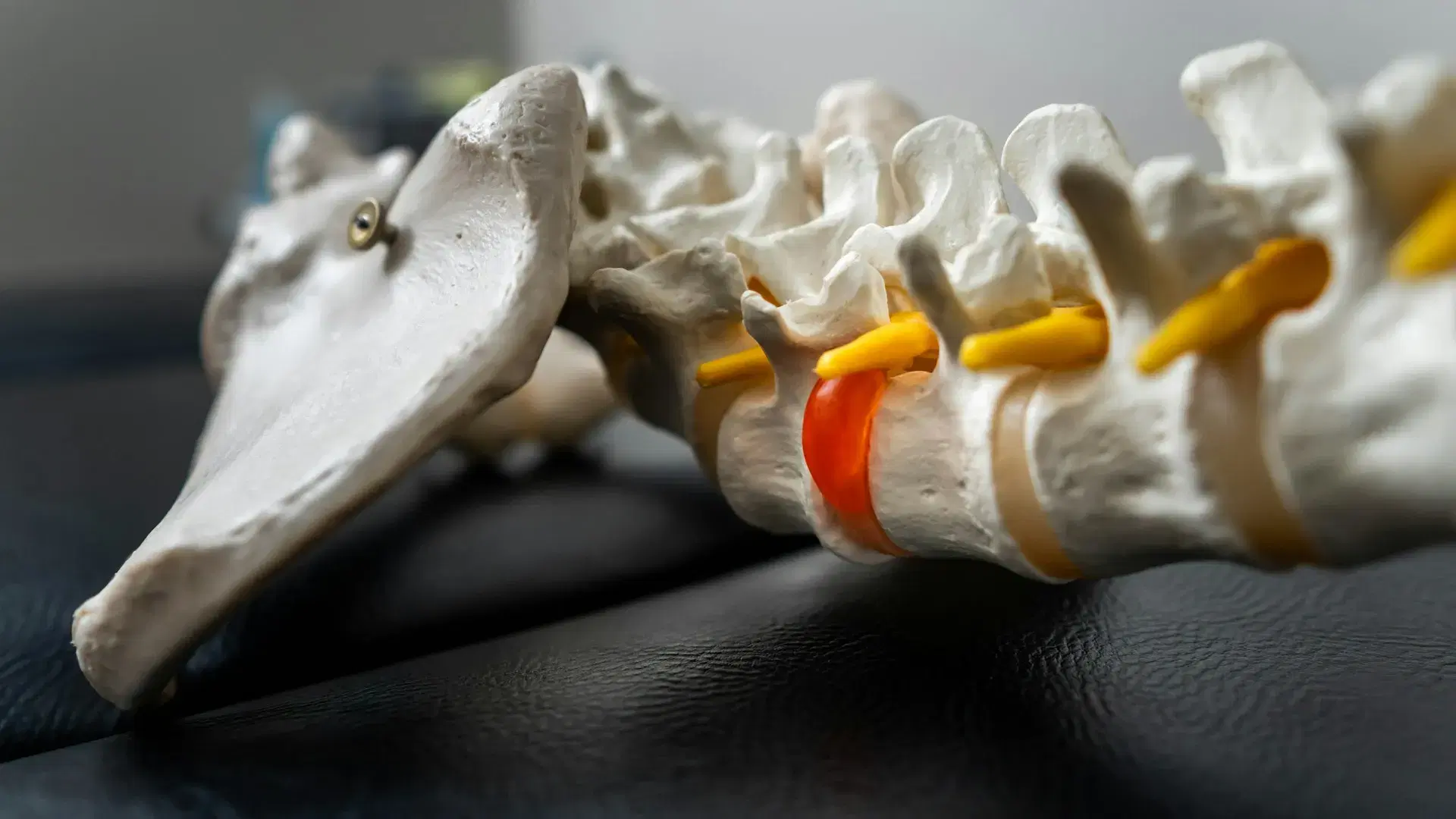
What a sneeze does to the trunk in half a second
A sneeze is a short, hard effort. The belly and chest muscles contract together, the breath is drawn in, held briefly and forced out, and the pressure inside the abdomen and chest jumps. The muscles of the back brace against it in an instant, with no warning, often when you are bent slightly forward or turned, at a basin or reaching into a boot. A back that is not ready for a sudden, unplanned effort feels it.
Coughing, laughing and straining on the toilet do the same thing with less drama. A back that hurts on all of them is reacting to pressure and effort, and the sneeze is only the loudest example.
Did the sneeze start it, or only find it?
There are two quite different stories behind the same sharp pain.
- The sneeze started it. Something went in the moment: a sharp pain in the muscle beside the spine, a catch that locked the back, sometimes a sense of something giving way. The pain lingers and the back is stiff for days. This is the pattern of a pulled back muscle, a ligament or a joint that caught.
- The sneeze only found it. The back was already sore, perhaps for days or weeks, and a sneeze, a cough or straining is the only thing that makes it flash. Pain that comes with those and is otherwise absent can fit a sensitive disc or nerve root, so mention it even though it is brief.
One exception matters. In bones thinned by osteoporosis or long-term steroid use, a hard sneeze or cough can crack a vertebra. New, severe pain straight after a sneeze in that setting means seeing your GP promptly, before booking here.
When it shoots down the leg
Pain that travels from the back into the buttock or leg on a sneeze or a cough suggests that a nerve root in the lower back is irritated. It is the pattern of sciatica, and a bulging disc is one common reason. The leg is what tips it: when only a muscle is involved, the pain usually stays in the back, or the buttock at most.
A scan is not usually the next step. The Royal Australian College of General Practitioners’ 2022 guidance for GPs does not make a scan routine for nerve pain from the spine. In the first six weeks it is only considered when symptoms are severe, not getting better and surgery is a real option. A scan, when clinically indicated, follows an examination of the nerves, muscles and joints.
A cough that comes with other signs
A cough that has lasted weeks, or a heavy chest infection, can strain the muscles between the ribs and the muscles of the back. The pain then sits around the ribs and is sharp on breathing in as well, the same catch as rib pain when breathing. A cough with a fever, or pain on a deep breath with feeling generally unwell, may be coming from the chest rather than the spine. With back or rib pain on top of that, go to a hospital emergency department straight away. Coughing up blood means a doctor the same day, or an ambulance if it is more than a streak or you are short of breath. Pain on one side under the ribs with burning or blood when you pass urine can be a kidney: a GP the same day, and with a fever an emergency department straight away.
If a sneeze or a cough comes with chest pain or pressure, or you are struggling to get your breath, call an ambulance.
Getting through a sneeze with a sore back
You cannot plan a sneeze, but you can sometimes choose where you are for it. Some people find that standing tall with a hand on a bench or a thigh, or sitting back in a chair with the knees bent, takes the surprise out of it. Bending forward over a basin is the position that catches a back out. None of this changes what lies behind the pain, and a back that flinches at every sneeze is a reason to have it examined.
What the pattern may be saying
Two of these can be going on at once.
- Sharp and sudden in a muscle beside the spine, sore for days afterwards
- Fits a strained muscle or ligament, or a joint that caught.
- Flashes only during the sneeze, with nothing between sneezes
- Fits a sensitive disc, joint or nerve root that reacts only to the pressure. Easy to forget by the time anyone asks, so write it down.
- Flashes into the buttock or down the back of the leg
- Fits an irritated nerve root in the lower back. The leg gets tested for strength, reflexes and sensation.
- Sharp at the ribs, and sore on breathing in as well
- Fits the ribs and the muscles between them, especially after a heavy cough.
- A cough with a fever, a chest that hurts to breathe, or feeling unwell
- Not a back pattern. With a fever or feeling unwell, go to a hospital emergency department straight away. Chest pain on breathing that no doctor has checked means calling triple zero (000) if in any doubt.
- Pain on one side under the ribs, with burning when passing urine
- Can be a kidney. Burning or blood when you pass urine needs a GP the same day; with a fever, go to a hospital emergency department straight away.
When to get it looked at
Chest pain or pressure with a sneeze or a cough, or struggling to get your breath, means calling an ambulance.
Go to a hospital emergency department straight away if you have numbness or altered feeling around the saddle area, meaning the groin, the inner thighs, the buttocks or the genitals; a loss of normal sensation in the genitals, including during sex; trouble starting to pass urine, or any new change in your bladder or bowel control; weakness in both legs, particularly if it is getting worse; new or worsening pain running down both legs; weakness in one leg that is severe or getting worse, or a foot that has started to catch or drag when you walk; or numbness in a leg that is spreading or getting worse quickly.
Go to a hospital emergency department straight away for back or neck pain after a serious fall or a high-impact accident, such as a car accident; back or neck pain with a fever or feeling generally unwell; or new back or neck pain if your immune system is weakened, for instance by long-term steroids or chemotherapy, if you inject drugs, or if you have recently had a spinal injection, spinal surgery or a dental procedure.
Go to a hospital emergency department the same day if you have new clumsiness in both hands, or new unsteadiness on your feet.
See your GP promptly, before booking here, if you have a history of cancer, unexplained weight loss, pain at night that will not settle in any position, known osteoporosis with new severe pain, numbness that is spreading or getting worse slowly, or new, unexplained back pain as an older adult.
If you have started bracing for every sneeze, or the pain keeps coming back, or it has begun to run into a leg, come in and have it looked at. Say whether the sneeze started the pain or only found it, and whether anything went down the leg. Those two answers decide where the examination starts.