

What a breath asks of your ribs
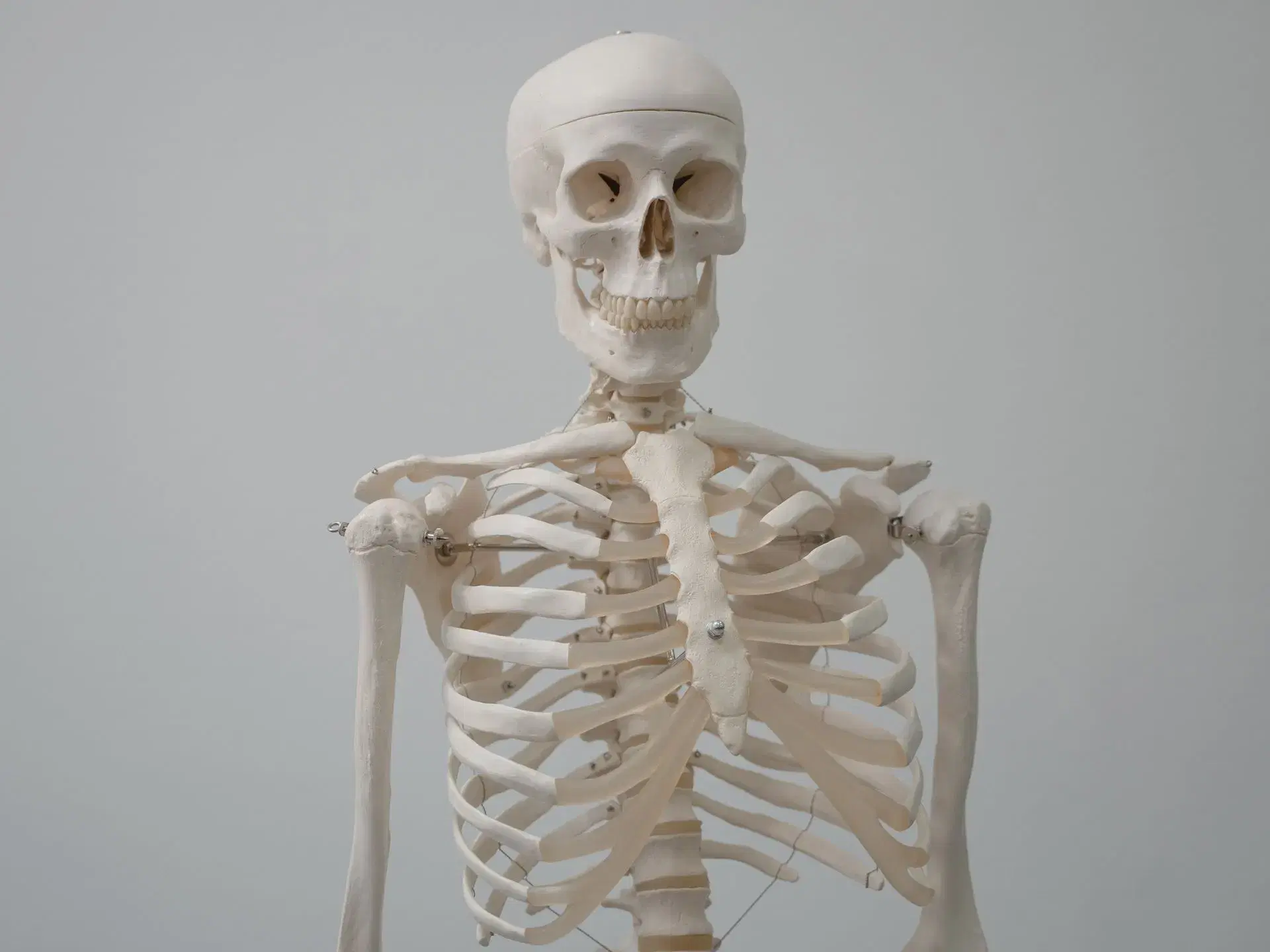
Each rib is hinged to the spine at the back and, for most of them, joined to the breastbone through cartilage at the front. When you breathe in, the ribs swing up and out, the upper ones lifting forward like a pump handle and the lower ones out to the side like the handle of a bucket, while the muscles between them tighten and the diaphragm flattens beneath. All of that movement passes through the small joints beside the spine.
A joint that is irritated, or a muscle between the ribs that has been strained, tends to give itself away at the extreme of that movement. The catch comes at the top of a deep breath, a yawn, a laugh or a sneeze, then fades when you breathe shallowly. That is why people find themselves taking small, careful breaths, and why the breath can feel rationed.
Rule out the chest before the ribs
If this chest pain is new and no doctor has checked it, or it feels different from a pain you have been told about, take it as new chest pain and call triple zero (000) for an ambulance if you are in any doubt about its cause. Pain that moves with the breath can come from the lungs, their lining and the heart as well as the ribs, so the joints can wait until the chest has been ruled out.
Call an ambulance if pain between the shoulder blades comes with chest pain, pressure or tightness, shortness of breath, sweating, nausea or dizziness, or pain spreading into the arm, jaw or neck.
Call an ambulance if pain in the chest or upper back comes on suddenly and severely and feels sharp, ripping or tearing.
Call an ambulance if arm, jaw or neck pain comes with chest pain, pressure or tightness, shortness of breath, sweating, nausea or dizziness.
If moving brings on chest pain, pressure or tightness, or shortness of breath, stop and call an ambulance.
Call an ambulance too for sudden breathlessness, or for sharp chest pain that starts abruptly, particularly after a long flight or an operation, alongside a swollen, tender calf, while taking the contraceptive pill or hormone therapy, during cancer care or after a clot in the past, because a clot in the lung or a collapsed lung can begin this way. Rib or back pain with a fever or a general feeling of being unwell goes to a hospital emergency department straight away. Coughing up blood needs a doctor the same day, and an ambulance if there is more than a streak of it or you are short of breath. Pain that is sharp on every breath and comes with a cough that brings up phlegm can come from the lungs or their lining, and needs a doctor the same day.
How a joint or muscle pattern usually behaves
The catch tends to sit at a spot you could nearly cover with one finger, more often towards the back or the side than the front. It changes with what you do: twisting to reach the back seat, rolling over in bed, lifting an arm overhead. Pressing beside the spine, or along the rib, can bring on the same sharp spot, and it fades quickly when you stop moving.
A joint pattern often has a quiet gap in it. In the right position you can breathe deeply without trouble, then catch again when you shift. Pain from the lung or its lining is more constant, and it follows the breath whatever you are doing with the rest of your body. Neither pattern is proof: a spot that is sore to press does not rule out a cause inside the chest.
Why a cough makes it sharper
A cough is a sudden, forceful squeeze of every muscle around the ribcage, followed by a deep breath in, and it asks a lot of a rib joint that is already sore. Ribs can ache after a long chest cold simply because of the number of coughs, even when the illness itself is clearing. A hard bout of coughing can also crack a rib, more easily in bones thinned by osteoporosis, so a spot that is very sore on the rib itself is one for a doctor. A cough that lingers belongs with a GP in its own right.
Holding a pillow firmly against the sore side as you cough gives the ribcage something to brace against.
Breathing without bracing
Short, guarded breaths feel like protection, but they leave the ribs barely moving and the lungs harder to clear. Once a doctor has checked new chest pain, and with no warning sign present, it is reasonable to breathe slowly into the side of the ribcage, within comfort, a few times each hour, while you turn your trunk gently or slide an arm up a wall. Stop at the point where the sharp catch starts, not after it.
At night, lying on the less sore side with a pillow hugged against the chest keeps the top arm from pulling on the ribs. If the sore spot is at the front, beside the breastbone, the picture is closer to costochondritis, and a rib that feels as if it has caught or slipped is usually a sore, stiff joint where the rib meets the spine rather than a rib out of place.
How far each side of the ribcage rises
The history covers fever, cough, recent travel or surgery, and what the pain does with position and breath. Hands-on testing looks at how far each side of the ribcage rises on a deep breath, whether pressing a rib joint beside the spine brings on your pain, and how the mid back, shoulder and neck move around it. Most ribs meet the thoracic spine at two small joints, and those are the joints being tested.
A pattern that does not fit a joint or muscle goes to a GP. A scan is not routine, and is arranged when clinically indicated.
Pain on a breath, by where it sits and what comes with it
Pain on a breath can belong to more than one story, and it is not something to decide for yourself.
- A sharp spot at the back or side that catches at the end of a deep breath and changes with position
- Fits a rib joint or the muscles between the ribs, and is where an examination begins.
- Sharp or aching at the front, beside the breastbone, tender to press
- Close to the costochondritis picture, once a doctor has checked the chest.
- Sharp on every breath, with a fever, a productive cough or feeling unwell
- Points to the lungs or their lining. With a fever or feeling unwell, go to a hospital emergency department straight away; a productive cough without either needs a doctor the same day.
- Sudden breathlessness, or sharp pain after a long flight or an operation
- Can mean a clot in the lung or a collapsed lung. Call an ambulance.
- Pressure or tightness in the chest, breathlessness, sweating
- Needs an ambulance, not an assessment.
- Sharp pain in the centre of the chest, worse lying flat and easier leaning forward
- Can come from the lining around the heart, and belongs with a doctor the same day, or an ambulance if you are in any doubt about its cause.
- A band of pain round one side that follows a single rib
- Follows the nerve under that rib. A rash or tingling along the band needs a doctor the same day.
When to get it looked at
Call an ambulance if pain between the shoulder blades comes with chest pain, pressure or tightness, shortness of breath, sweating, nausea or dizziness, or pain spreading into the arm, jaw or neck.
Call an ambulance if pain in the chest or upper back comes on suddenly and severely and feels sharp, ripping or tearing.
Call an ambulance if there is any confusion, sudden weakness or numbness in the face, arm or leg on one side, facial drooping, slurred speech, sudden trouble speaking, seeing or understanding, loss of vision, a seizure, or a sudden loss of balance or coordination.
Call an ambulance if arm, jaw or neck pain comes with chest pain, pressure or tightness, shortness of breath, sweating, nausea or dizziness.
If moving brings on chest pain, pressure or tightness, or shortness of breath, stop and call an ambulance.
Go to a hospital emergency department straight away for back or neck pain after a serious fall or a high-impact accident, such as a car accident; back or neck pain with a fever or feeling generally unwell; or new back or neck pain if your immune system is weakened, for instance by long-term steroids or chemotherapy, if you inject drugs, or if you have recently had a spinal injection, spinal surgery or a dental procedure.
Go to a hospital emergency department straight away if you have numbness or altered feeling around the saddle area, meaning the groin, the inner thighs, the buttocks or the genitals; a loss of normal sensation in the genitals, including during sex; trouble starting to pass urine, or any new change in your bladder or bowel control; weakness in both legs, particularly if it is getting worse; new or worsening pain running down both legs; weakness in one leg that is severe or getting worse, or a foot that has started to catch or drag when you walk; or numbness in a leg that is spreading or getting worse quickly.
Go to a hospital emergency department straight away if you have weakness in one arm that is severe or getting worse, or numbness in an arm that is spreading or getting worse quickly.
Go to a hospital emergency department the same day if you have new clumsiness in both hands, or new unsteadiness on your feet.
See your GP promptly, before booking here, if you have a history of cancer, unexplained weight loss, pain at night that will not settle in any position, known osteoporosis with new severe pain, numbness that is spreading or getting worse slowly, new, unexplained back pain as an older adult, or pins and needles, numbness or weakness in an arm or hand.
New chest pain that no doctor has checked, and sudden breathlessness, mean calling an ambulance if you are in any doubt. Rib or back pain with a fever or a general feeling of being unwell goes to a hospital emergency department straight away, and a cough that brings up blood needs a doctor the same day. Rib pain that is steadily getting worse, that follows a blow to the chest, or that comes with a cough that will not clear needs a doctor before anything else. Once a doctor has put the pain down to the ribs or the chest wall, a catch at the end of a deep breath that shifts with position and keeps returning instead of easing fits an examination of how the ribs and the spine behind them move.