Lifting an arm is a team effort
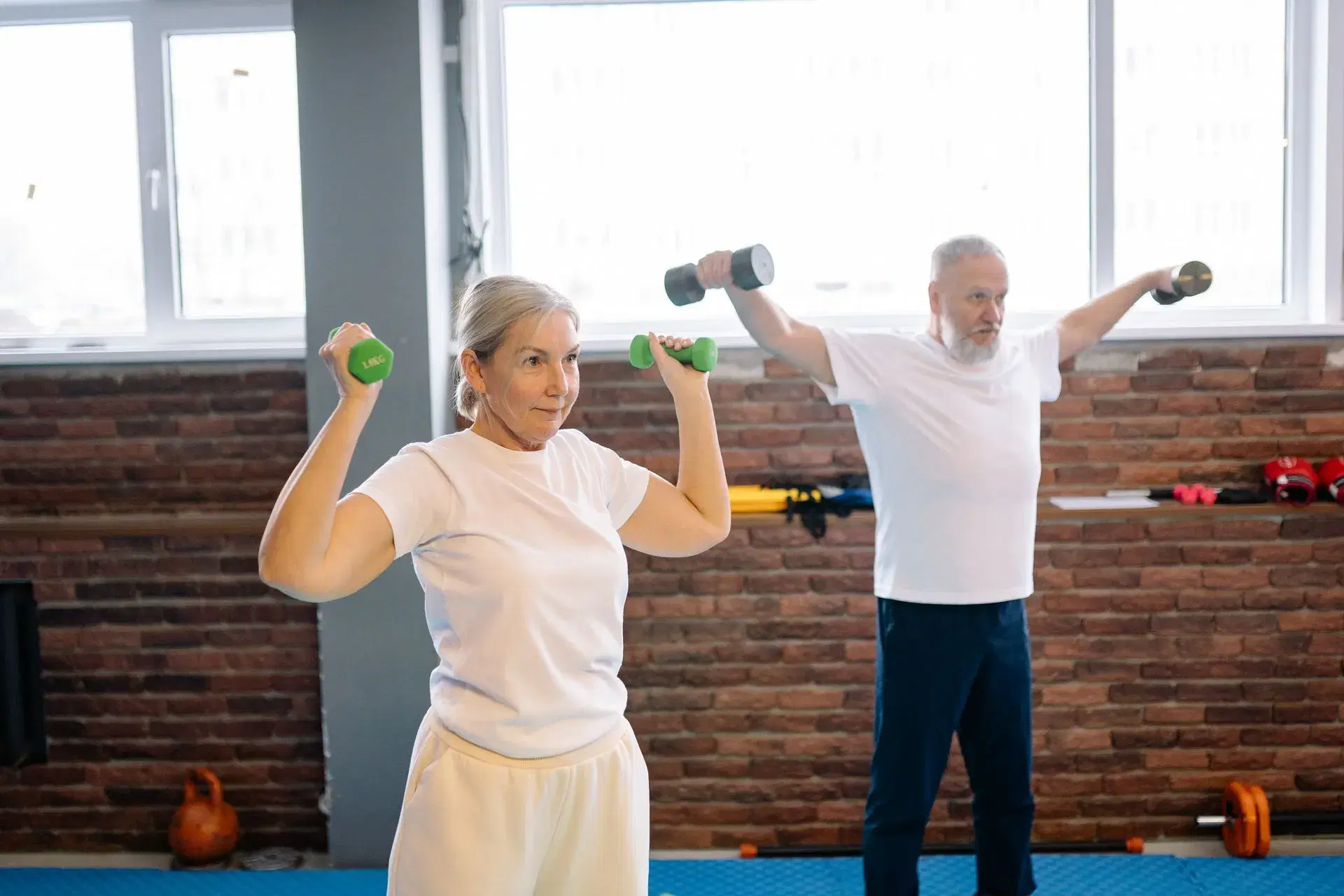
Raising an arm overhead is shared between two moving parts. The ball-and-socket joint lets the upper arm bone rotate and lift, and the shoulder blade, which rests on the ribcage rather than joining the spine, tilts up and swings round to carry the socket upward. The collarbone and the upper back make small contributions too. The shoulder blade’s share grows as the arm climbs, so a problem in any one of these parts tends to show at a particular height and not at every height.
A catch at one height: the painful arc
Pain that comes on as the arm nears shoulder height, stays while it passes that height and lets go as the arm goes higher is called a painful arc. The usual reading is that the tendons and the bursa are being pressed in the space under the bony roof of the shoulder blade, which is tightest in that middle range, although a sore tendon can behave this way with little pinching at all. Lowering the arm often catches at the same place on the way down.
Pain only at the very top of the lift, with a tender spot on top of the shoulder near the collarbone, is a different pattern. It points to the small joint between the collarbone and the shoulder blade, which takes the load when the arm is fully raised or reaching across the chest.
When it will not rise, even with help
Lift the arm with your other hand supporting the elbow and notice what changes. If it rises further with help, the limit is pain or weakness in the muscles that do the lifting. If it stops at the same place whoever does the lifting, the limit is usually stiffness in the joint capsule, the sleeve around the ball and socket, which is the pattern called a frozen shoulder. Arthritis of the joint can stop it too. A stiff capsule tends to take away turning the arm outwards first, so combing your hair or reaching back for a seatbelt can be among the first things to go. Having someone else move the arm settles which it is, and it matters because a stiff shoulder and a sore one are not looked at the same way. A stiff shoulder often aches at night too.
Frozen shoulder is more common in people with diabetes or a thyroid condition, so tell your GP about a shoulder that has stiffened for no clear reason. A shoulder that suddenly will not lift after a fall, a hard pull or a pop can mean a torn tendon, a dislocation or a break, and that means an emergency department straight away.
How the shoulder blade joins in
For the arm to go overhead, the blade has to tilt upward and rotate. If it lags, or tips forward, the bony roof comes down onto the tendons earlier in the lift, which is one reason a catch can appear without anything being wrong in the joint itself. You can see how well the muscles that steer it, the lower and middle trapezius and serratus anterior, are working by watching the blade from behind as the arm goes up and comes down. A blade that lifts off the ribs as the arm goes up is a sign you can see, and it is called a winged shoulder blade.
Scapular retraction and wall angels are aimed at the muscles that steer the blade, and a doorway chest stretch is aimed at the front of the chest. They are worth trying once someone has watched your blade move.
Pain from the neck that shows when you lift
The nerve roots to the shoulder and upper arm leave the neck, so a neck problem can show up as shoulder pain with the arm raised. The usual pointers are pain at any height rather than one height, a stiff neck, tingling below the elbow and a change when you move your head. If the arm pain settles when you rest your hand on top of your head, that points to the neck. Weakness in lifting the arm with little pain is another way a nerve problem can show, and new weakness in the arm means seeing your GP promptly, before booking here, or an emergency department straight away if it is severe or getting worse. A pinched nerve in the neck can follow that route all the way down to the fingers.
Reaching and lifting while it catches
Try the lift with no weight and only as far as is comfortable, once with the thumb pointing down and once with the palm turned up, and see whether the catch moves. Notice what changes, because it is a useful thing to tell whoever looks at the shoulder. Where you can, keep everyday loads between waist and shoulder height, bring shelves and screens down so the arm does not have to climb into the catching range, and use two hands for anything heavy. The catching range is a boundary to keep an eye on, not one to push through.
Where it catches, and what that tends to point to
Two of these often turn up together, so take each one as a starting point.
- Catches around shoulder height, then lets go higher up
- The painful arc, which points to the tendons and the bursa under the bony roof of the shoulder.
- Sharp only at the very top of the lift, tender at the top of the shoulder
- The joint between the collarbone and the shoulder blade.
- Will not rise past one point even when helped, and turning outwards is limited too
- A stiff capsule, the frozen shoulder pattern, as opposed to a sore or weak shoulder.
- Rises when helped but not on its own, or feels weak and heavy
- Weakness in the muscles that lift the arm, from a tendon or a nerve. New weakness in the arm means seeing your GP promptly, before booking here, or an emergency department straight away if it is severe or getting worse.
- Suddenly will not lift after a fall, a hard pull or a pop
- Can be a torn tendon, a dislocation or a break. Go to an emergency department straight away.
- Hurts at any height, with a stiff neck or tingling in the arm
- It may come from the neck, so the neck gets checked as well.
- The shoulder blade lifts off the ribs or tips forward as the arm rises
- The blade is not steering the socket well, the pattern called a winged shoulder blade.
When to get it looked at
Call an ambulance if there is any confusion, sudden weakness or numbness in the face, arm or leg on one side, facial drooping, slurred speech, sudden trouble speaking, seeing or understanding, loss of vision, a seizure, or a sudden loss of balance or coordination.
Call an ambulance if arm, jaw or neck pain comes with chest pain, pressure or tightness, shortness of breath, sweating, nausea or dizziness.
Go to a hospital emergency department straight away for back or neck pain after a serious fall or a high-impact accident, such as a car accident; back or neck pain with a fever or feeling generally unwell; or new back or neck pain if your immune system is weakened, for instance by long-term steroids or chemotherapy, if you inject drugs, or if you have recently had a spinal injection, spinal surgery or a dental procedure.
Go to a hospital emergency department straight away if you have weakness in one arm that is severe or getting worse, or numbness in an arm that is spreading or getting worse quickly.
Go to a hospital emergency department straight away if a shoulder suddenly will not lift after a fall, a hard pull or a pop, or if it looks out of shape.
Go to a hospital emergency department the same day if you have new clumsiness in both hands, or new unsteadiness on your feet.
See your GP promptly, before booking here, if you have pins and needles, numbness or weakness in an arm or hand, a history of cancer, unexplained weight loss, pain at night that will not settle in any position, or known osteoporosis with new severe pain.
Note the height where it catches, and whether turning the palm up changes it. A catch that turns up at the same height every time is a good reason to come in. So is a shoulder that has gone stiff and will not reach as far as the other, once your GP has seen it.