

Yes, in the plain sense that it keeps you moving, and staying active is what Australian guidance for low back pain encourages. Begin with a distance the back tolerates, on flat ground, and add a little at a time. For some backs walking is what sets the pain off, and that is worth having looked at.
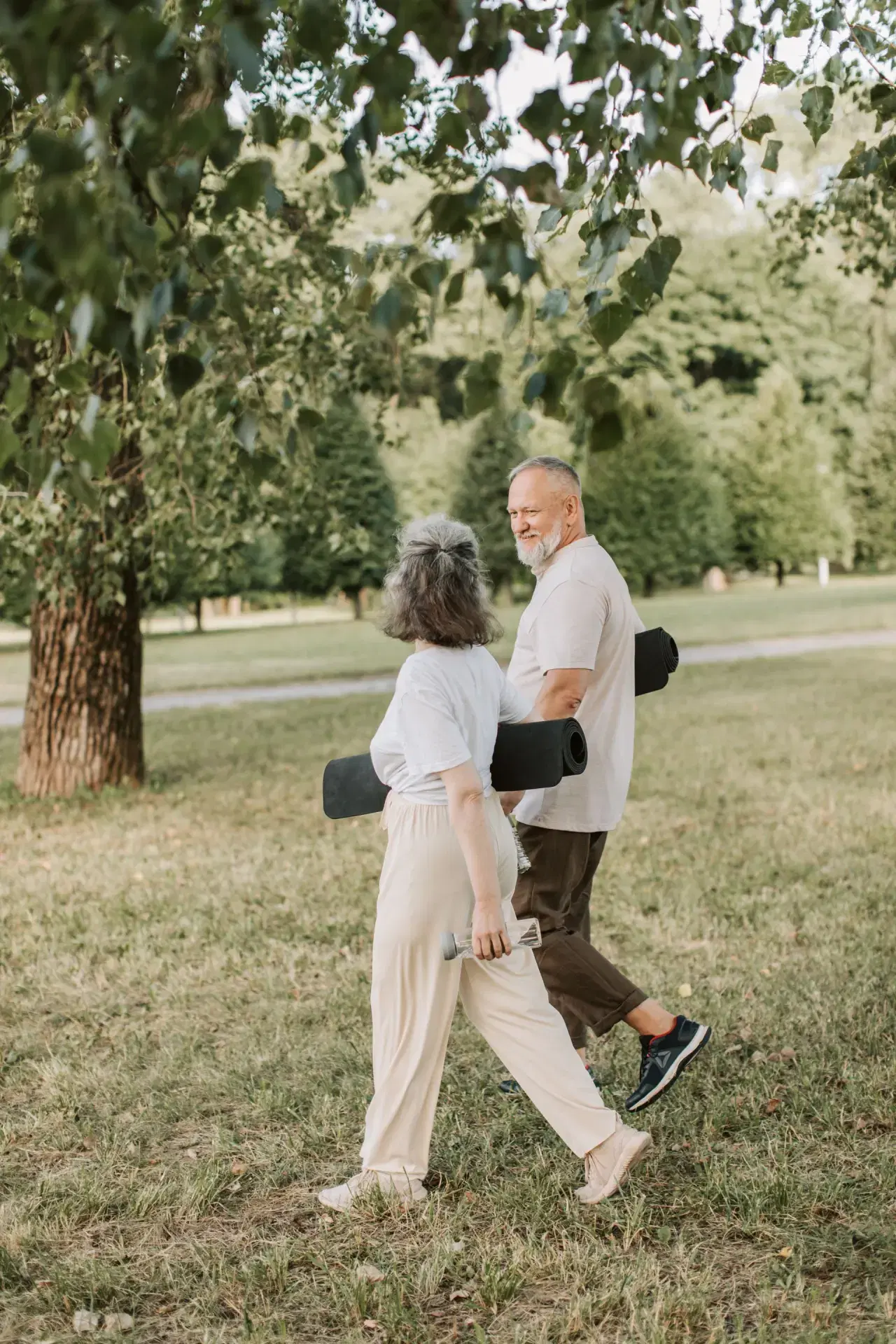
What walking asks of a sore back
Walking is a small movement repeated over and over. Each step swings the pelvis, turns the lower back a little and loads the spine lightly, which is why a walk can feel like a gentle way to get a still back moving, and why it can also stir up one that is irritated.
The Australian Commission on Safety and Quality in Health Care’s Low Back Pain Clinical Care Standard (2022) encourages people with low back pain to stay active and to carry on with usual activity, work included, or get back to it as soon as they can.
The Royal Australian College of General Practitioners’ 2022 guidance for GPs on imaging in adults with acute low back pain adds that the outlook for non-specific low back pain is good, and that it usually improves within four weeks if you use simple pain strategies, avoid bed rest and keep up your usual activities. Walking is among the easiest usual activities to keep going.
That is guidance for clinicians about backs in general. It does not say how far to walk. That comes down to what your back tolerates today.
Pacing a walk: how far, how fast and on what
Begin with a distance the back tolerates today, not the distance you managed before it started hurting. That may be to the end of the street and back. Several short walks through the day are a good way to start, because the back is moving often and is never asked to do much at once.
A pace at which you could still hold a conversation is a fair starting point, with the arms swinging loosely. If you catch yourself hurrying to get it over with, slow down rather than walking through it.
- Flat, firm paths. A footpath or a shopping centre floor is the place to begin. Each step lands the same way, which keeps the walk predictable.
- Grass and sand. The ground gives underfoot and asks more of the ankles and the back. Save them for when flat paths feel comfortable.
- Hills and stairs. They change the load on the back differently going up and coming down. Add them once flat ground is comfortable, and note which direction is the sore one.
- A treadmill or an indoor loop. You can stop within seconds, which is useful on days when you do not trust the back. Hold the rail lightly if you use one.
- Shoes. Flat, cushioned shoes you could wear for an hour. If a different pair changes how the walk feels, write that down.
Add a little at a time: another block or a few more minutes, every few days rather than every day. If a walk went well, repeat it once before you lengthen it.
As a rough guide, some soreness during or after a walk is common. An ache that is no worse than when you set out, or that is back to its starting level within an hour of stopping, is the back coping. Pain that sharpens or spreads into a leg as you walk, or that is clearly worse the next morning, means that walk was too much for now. Shorten it or move to flatter ground, and go back to the last distance that did not do that. If pain keeps spreading into a leg, have it looked at. If a leg turns weak or numb, that is no longer a pacing question: stop the walk. Weakness that is severe or getting worse, or numbness that is spreading quickly, goes to a hospital emergency department straight away.
Walking when the back is having a bad day
On a bad day the aim is to keep moving, not to hit the usual distance. A lap of the house or a few minutes up and down the hallway counts. Keeping the habit in place means the next good day does not start from nothing.
Carrying changes the picture. A heavy bag on one shoulder pulls the trunk to one side, a loaded backpack adds weight to every step, and a dog on a lead can turn a gentle walk into a jerk at the end of the arm. For now, walk with your hands free, or share a load evenly across both sides.
A sore spell has no set length, and improving is not the same as being gone. Once a sore back has gone four weeks without a clear change, it is time to have it examined, because how long back pain lasts depends partly on what is keeping it going. A sit on a bench halfway round is part of pacing and a day in bed is not: avoiding bed rest is one of the college’s three conditions for that four-week improvement, which leaves little doubt about whether to rest or keep moving.
The backs that walking makes worse
For some backs walking is itself the trigger: heaviness or tingling in the buttocks or legs that builds with distance and settles on sitting or leaning forward. It is one of the signs of a narrowed spinal canal, called spinal stenosis, and how far you get before it starts is the main clue in lower back pain when walking. New or worsening pain running down both legs goes to a hospital emergency department straight away.
A cramp or a squeeze in the calf or thigh that comes on with distance and passes within minutes of standing still points at the circulation in the legs rather than the back, and it goes to a GP first. Where walking brings on leg symptoms, the examination tests the legs as well as the spine, and imaging is arranged when clinically indicated, which means once the examination has turned up a reason for it.
What the guidelines say
- Australian Commission on Safety and Quality in Health Care, Low Back Pain Clinical Care Standard, 2022. https://www.safetyandquality.gov.au/standards/clinical-care-standards/low-back-pain-clinical-care-standard
- Royal Australian College of General Practitioners, First do no harm: A guide to choosing wisely in general practice. For GPs: Imaging in adults with acute low back pain, 2022. https://www.racgp.org.au/clinical-resources/clinical-guidelines/key-racgp-guidelines/view-all-racgp-guidelines/first-do-no-harm/gp-resources/imaging-in-adults-with-acute-low-back-pain
When to get it looked at
Go to a hospital emergency department straight away if you have numbness or altered feeling around the saddle area, meaning the groin, the inner thighs, the buttocks or the genitals; a loss of normal sensation in the genitals, including during sex; trouble starting to pass urine, or any new change in your bladder or bowel control; weakness in both legs, particularly if it is getting worse; new or worsening pain running down both legs; weakness in one leg that is severe or getting worse, or a foot that has started to catch or drag when you walk; or numbness in a leg that is spreading or getting worse quickly.
Go to a hospital emergency department straight away for back or neck pain after a serious fall or a high-impact accident, such as a car accident; back or neck pain with a fever or feeling generally unwell; or new back or neck pain if your immune system is weakened, for instance by long-term steroids or chemotherapy, if you inject drugs, or if you have recently had a spinal injection, spinal surgery or a dental procedure.
Go to a hospital emergency department the same day if you have new clumsiness in both hands, or new unsteadiness on your feet.
See your GP promptly, before booking here, if you have a history of cancer, unexplained weight loss, pain at night that will not settle in any position, known osteoporosis with new severe pain, numbness that is spreading or getting worse slowly, or new, unexplained back pain as an older adult.
Have the back looked at if walking has become something you avoid, if leg or back symptoms begin at about the same distance and settle when you sit or lean forward, or if the distance you can manage keeps shrinking.