

Keep moving, gently. For a recent episode of low back pain, Australian guidance advises staying active instead of resting in bed, which means carrying on with ordinary daily activities as far as you can. A bad day is that advice in smaller pieces: short, repeated bouts of movement, with the heavy and awkward jobs set aside for now.
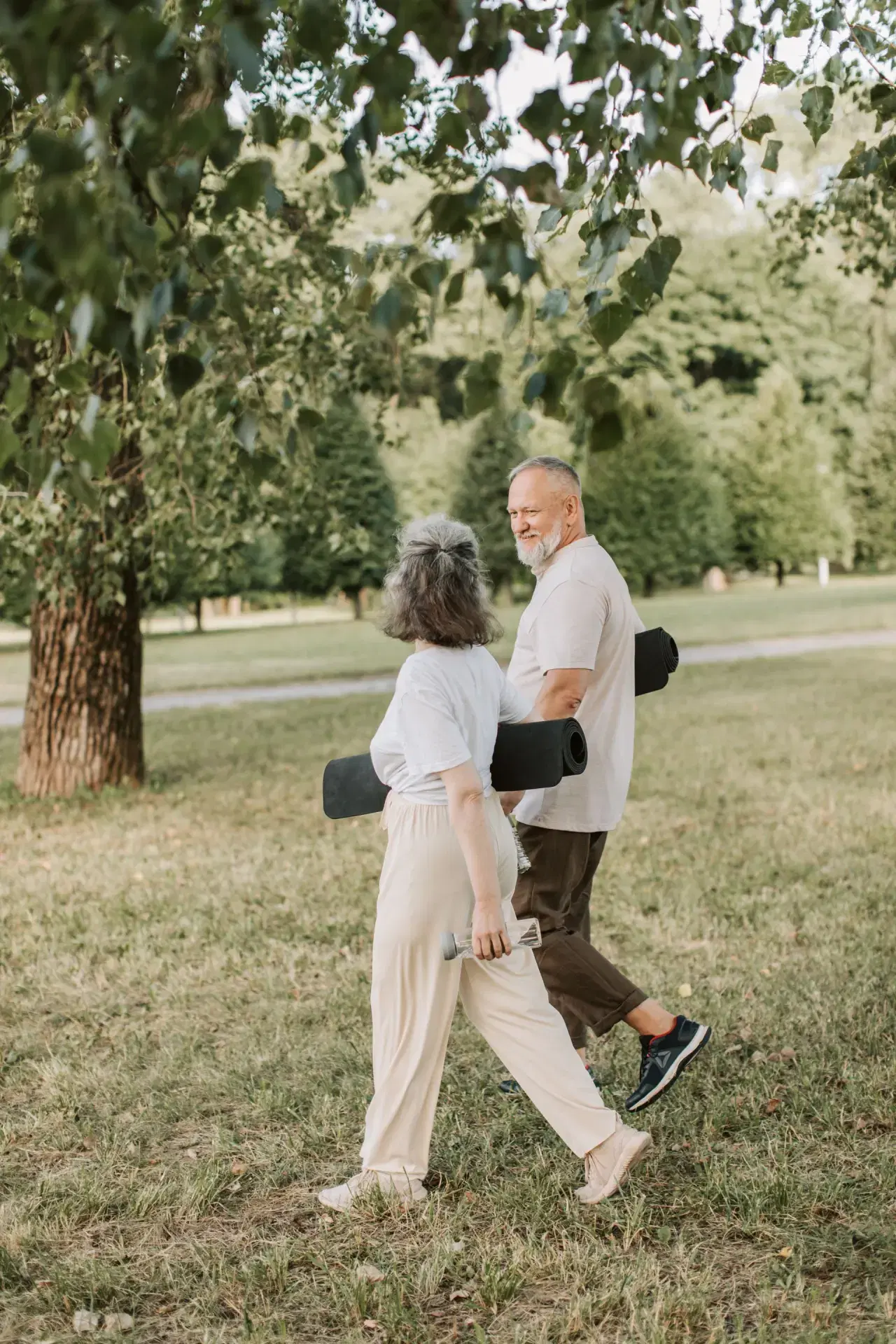
What the guidance means by staying active
The Royal Australian College of General Practitioners’ handbook entry Advice to stay active for people with acute low back pain (2019) advises staying active, not resting in bed, for a low back pain episode of less than six weeks. It spells out what that means: continuing with normal daily activities as much as possible, including going to work.
The Low Back Pain Clinical Care Standard (Australian Commission on Safety and Quality in Health Care, 2022) says much the same: stay active and get back to your usual day, work included, as soon as it is practical.
That advice is about low back pain. It says nothing about the neck, and it does not ask you to push through pain or reach a number of steps.
“Usual activity” depends on your usual day. For a day spent mostly sitting, staying active means breaking the sitting up and keeping the stairs and the lunchtime walk. For a day spent mostly on your feet, it means changing tasks so that no single job runs for hours, with short sits in between. For a day built around training or heavy work, keep moving in ways the back tolerates and let the heavier parts wait.
A bad day, in order
Spread movement through the day in small doses instead of saving it for one big effort. None of it is a prescription, and any of it can be shorter.
- On waking. Give yourself a minute before standing. Roll to one side, swing your legs over the edge and push up with your arms, so that the first movement of the day stays small and unhurried.
- Before you leave the house. Walk to the end of the street and back. The aim is a first small dose of ordinary movement, not distance.
- At the desk or in the car. Stand up roughly every half hour, even for a minute, and walk to the window or the kitchen. In the car, stop when you can instead of pushing through the whole trip. The point is that no one position lasts all morning.
- Midday. Walk as far as you can without the pain climbing as you go, even if that is only to the corner. Repeat the same walk tomorrow, and add a little only once that distance feels ordinary.
- In the evening. Break up long stretches on the sofa the way you broke up the desk: stand, walk to another room, sit back down somewhere different.
- At night. If you wake sore, standing and walking to the end of the hallway is reasonable. There is no need to lie rigid waiting for it to pass. Pain at night that will not settle in any position is one for your GP.
A rough check, not a rule: if the pain lifts a little while you move and drops back soon after you stop, the dose was probably about right. If it stays raised into the evening or the next morning, cut the dose, not the day. A shorter walk still counts.
If a flare lands in the middle of a good run, go back one step rather than to the start: the shorter walk, the more frequent breaks, the lighter day. Then build up again on the same terms as before.
What to set down for now
Only for now, while the back is irritable: heavy or awkward lifts, twisting with a load in your hands, training sessions that take the spine to its limit, long drives without a stop, and testing the back every few hours to see whether it is better yet.

That last one catches people out. Bending over to see whether it still hurts tells you very little, and it keeps your attention on the back. Tomorrow’s walk tells you more.
The advice is to stay active instead of resting in bed. A short lie-down between walks is not bed rest. Planning a day or two in bed is.
When the heavy jobs come back, bring them back one at a time and in a lighter form: carry the shopping before the heavy box, do a light session before the usual one.
Rest and a brace are not the same thing, and whether a back brace is worth wearing for lower back pain depends on what it is meant to do, so ask before buying one. If a disc bulge has been diagnosed, ask about exercising with a disc bulge before you go back to training.
When the bad days stop being ordinary
Stay-active advice is for a back with nothing that needs a hospital or your GP first. Even without them, there are quieter reasons to have the back examined: pain that is not settling with ordinary movement after a couple of weeks, pain that climbs with every walk instead of levelling off, being unable to manage even the small steps of a bad day, like a stand every half hour or a walk to the end of the street, or the same pain coming back each time you restart the same activity.
An assessment looks at what is limiting you and sets the pace with you. If it started with a sudden twist or lift, it may well be a pulled back muscle. And if you are wondering how long back pain lasts, the first month usually tells you a lot.
Questions from a bad day
Is it all right to go to work? The guidance counts work as part of staying active. Shorter stretches at the desk with regular breaks, and the heavier tasks swapped or shared for now, adjust the day without cancelling it. That is most of what working with back pain comes down to.
What if sitting is the worst part? Break it into smaller pieces: stand, walk to the window, sit back down in a slightly different position. Half an hour is a starting point for each stretch of sitting, and shorter works too.
Should you stretch? The stay-active advice does not ask you to stretch. If you want to anyway, it helps to know which lower back stretches are worth doing.
What if mornings are the worst part? That is the reason for the minute before standing and the short walk before you leave the house. Stiffness that loosens within half an hour or so of getting moving fits a night spent in one or two positions. Morning stiffness that lasts longer than about half an hour, or back pain that wakes you in the second half of the night, is one for your GP, especially if it eases with movement but not with rest, or began before your mid-forties.
Is walking enough? It is the simplest form of the advice, and the guidance sets no distance or time. Start with a distance that leaves the back no worse that evening and the next morning, and build from there: walking with back pain is judged over days, not in one outing.
What about pain relief? Ask a pharmacist or your GP, who can check it against what else you take. If the pain is too severe to manage even a short walk or a stand every half hour, ring your GP.
What the guidelines say
- Royal Australian College of General Practitioners, Handbook of Non-Drug Interventions (HANDI): Advice to stay active for people with acute low back pain, 2019. https://www.racgp.org.au/clinical-resources/clinical-guidelines/handi/handi-interventions/musculoskeletal/advice-to-stay-active-for-people-with-back-pain
- Australian Commission on Safety and Quality in Health Care, Low Back Pain Clinical Care Standard, 2022. https://www.safetyandquality.gov.au/standards/clinical-care-standards/low-back-pain-clinical-care-standard
When to get it looked at
Keep-moving advice is for an ordinary bad back. Some signs mean a hospital or your GP comes first.
Go to a hospital emergency department straight away if you have numbness or altered feeling around the saddle area, meaning the groin, the inner thighs, the buttocks or the genitals; a loss of normal sensation in the genitals, including during sex; trouble starting to pass urine, or any new change in your bladder or bowel control; weakness in both legs, particularly if it is getting worse; new or worsening pain running down both legs; weakness in one leg that is severe or getting worse, or a foot that has started to catch or drag when you walk; or numbness in a leg that is spreading or getting worse quickly.
Go to a hospital emergency department straight away for back or neck pain after a serious fall or a high-impact accident, such as a car accident; back or neck pain with a fever or feeling generally unwell; or new back or neck pain if your immune system is weakened, for instance by long-term steroids or chemotherapy, if you inject drugs, or if you have recently had a spinal injection, spinal surgery or a dental procedure.
Go to a hospital emergency department the same day if you have new clumsiness in both hands, or new unsteadiness on your feet.
See your GP promptly, before booking here, if you have a history of cancer, unexplained weight loss, pain at night that will not settle in any position, known osteoporosis with new severe pain, numbness that is spreading or getting worse slowly, or new, unexplained back pain as an older adult.
If you have kept moving for a couple of weeks and the pain is no better, have it examined. The same goes for pain that stops you managing a short walk or a stand every half hour. Describe an ordinary day of walks and breaks when you book, because the pacing is worked out from that.