

Start from the position you already sleep in and change the pillows before you change the position. Each way of lying has a gap or a twist that a pillow can fill, and which one your back objects to is something a few nights will show you.
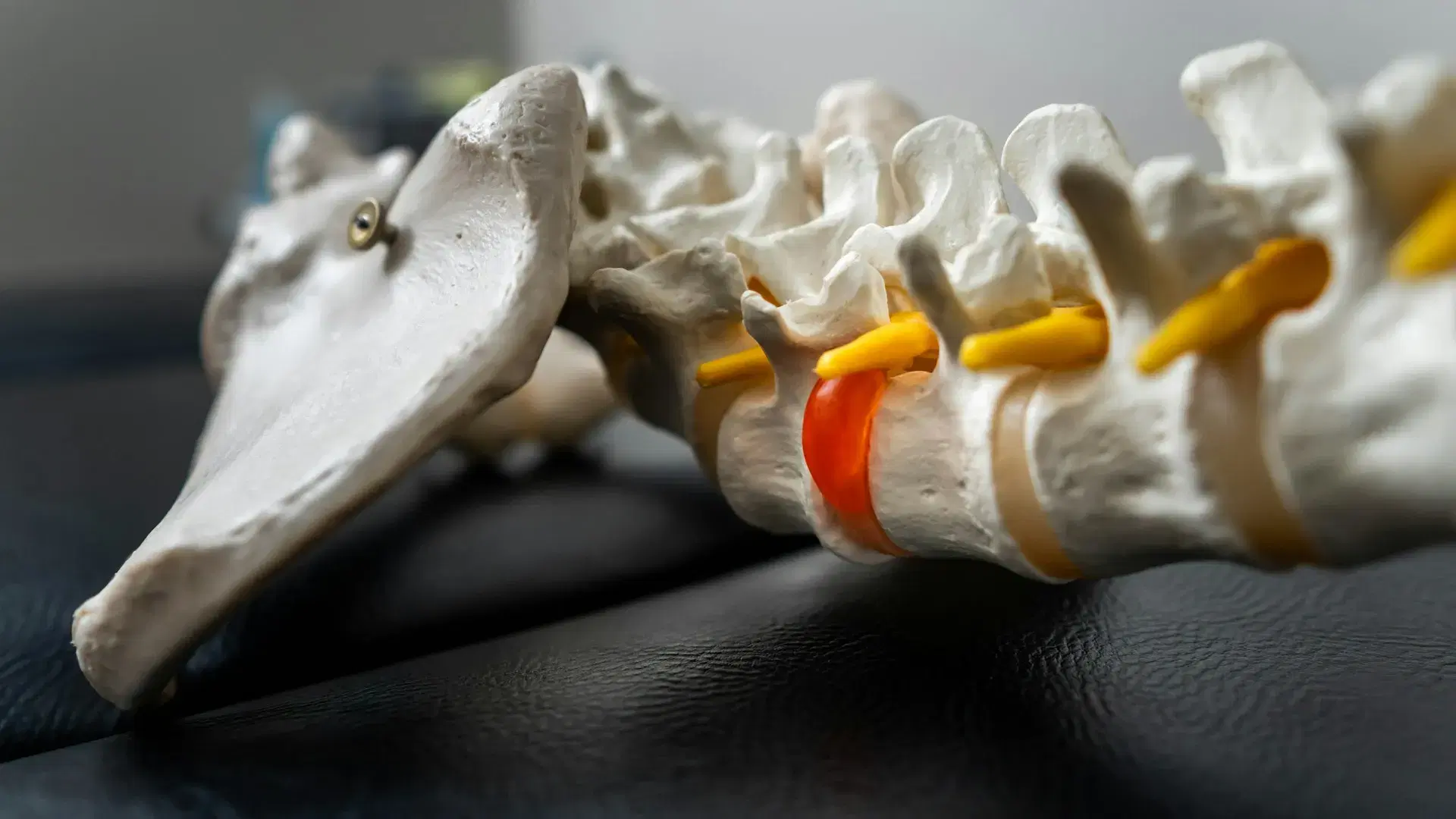
Why the position you already use is the place to start
A sore back makes a brand-new sleeping position tempting, and as a first move it is hard to keep up. You turn over several times a night without knowing it, and once you are asleep the body drifts back to its habit. Forcing a different position from the first night tends to cost you sleep, and broken sleep makes the next day’s ache harder to put up with.
So the job is smaller than it sounds. Keep the position, find where your body is hanging unsupported or being twisted in it, and fill that space with a pillow. Each way of lying has its own gap.
On your back, the spine lies in a line, but the small of the back usually hangs clear of the mattress and straight legs keep the muscles across the front of the hips held long. On your side, the spine stays in a line only while the top leg is held level with the hip. Let that knee drop forward and the pelvis rolls with it, twisting the lower back. On your front, the back is held in an arch and the neck is turned to one side for hours.
Pillow placement for back sleepers and side sleepers
Lying on your back. Put a pillow, or a firm bolster, under both knees so the hips and knees bend a little. The legs stop pulling on the pelvis, and the lower back is no longer held in as deep an arch. That rounds the back slightly, and not every back likes it, so lower the height if the mornings are worse. If a hand slips easily into the hollow under the small of your back, a small rolled towel there fills it. Give that a few nights, and drop it sooner if it feels as though it is pushing you into a curve. It is meant to fill a gap, not to make a curve.
Lying on your side. The pillow between the knees is the one that matters. It needs to be firm and thick enough to keep the top knee level with the hip, so the pelvis does not roll forward. A thin cushion folds flat under the weight of a leg, while a folded pillow or a bolster holds its height. Add a second pillow to hug against your chest, so the top arm has somewhere to rest and the upper back is not dragged round. On a firm mattress a hollow can open under the waist, and a small folded towel there fills it. A softer mattress often does that job itself.
Start with the hips and knees a little bent. A tight curl rounds the lower back, which some backs like and others do not, so let the next few mornings decide. If one side of your back is the sore one, try lying on each side for a few nights. Lying on the sore side can press on the hip beneath it, and lying on the other side leaves the sore side on top, where the pillow between the knees matters more.
Whichever way you lie, the pillow under your head is a separate question. Its job is to keep the head level with the spine, and a stack that props the head up does the opposite. A few folded towels will find the right height, and that is the first step in choosing a pillow for neck pain.
Is there a worst position for lower back pain?
Not one that is wrong for every back. Lying flat on the front asks the most of it, because the lower back is held in an arch and the neck is turned for hours, but plenty of people sleep that way without trouble. The test is what your back says over a few nights.
If the front is where you fall asleep and the back complains, try a thin, flat pillow under your hips and lower tummy so the arch is not held, and use a very thin pillow under your head, or none. If that does not suit, you do not have to stop being a front sleeper overnight. A quarter turn is a smaller change: from your front, roll partway onto one side, with the top knee drawn up on a pillow and another pillow under your chest. You are mostly on your side, and it still feels like the position you know.
Waking in a different position from the one you fell asleep in is ordinary, so judge by how the back feels when you wake, not by where you find yourself.
Getting in and out of bed with a sore back
The twist and the sit-up are the two moves a sore back objects to, and a bed makes both tempting. Rolling first avoids them.
- Lie on your back near the edge of the bed with your knees bent and your feet flat.
- Roll onto your side towards the edge, moving the shoulders and hips together as one piece, with the knees following, so the waist does not twist.
- Let both legs slide over the edge. Their weight swings you upright while you push with your top hand and your lower elbow.
- Sit on the edge for a moment with your feet on the floor. Stand by pushing through your legs with your chest leaning forward, and use the bed or your hands on your thighs if you need them.
Getting in is the same sequence in reverse: sit on the edge, lower yourself onto your elbow and hip, bring your legs up as you go, and settle on your side or roll onto your back. To move across the bed in the night, bend your knees and push through your feet rather than dragging yourself along with your arms.
What to notice over a few nights
Change one thing at a time, and give it a few nights. Write down two things each morning: how the first minutes out of bed felt, and whether your back woke you in the night. One night is a poor test, because a hard day beforehand can colour the night after it.
Two patterns are not pillow questions, and both go to a GP. One is pain that wakes you and will not settle however you lie. The other is stiffness that takes more than about half an hour to loosen on most mornings for weeks on end, particularly if moving eases it and rest does not.
The first minutes out of bed are worth timing, because back pain after sleeping is easiest to read by the clock. Back pain when lying down is worth sorting by position: pain that eases when you shift is following the position, and pain that does not change with position at all is the kind for a GP. If you suspect the bed rather than the position, start with mattress choice and back pain.
If you do have the back looked at, the questions begin with what you sleep in and how the first minutes out of bed go. The examination then tests which ways of bending and leaning your back objects to and how your hips move, since those decide which gap a pillow is meant to fill. The screening questions come too, including whether pain wakes you whichever way you lie, which no pillow can answer.
When to get it looked at
Go to a hospital emergency department straight away if you have numbness or altered feeling around the saddle area, meaning the groin, the inner thighs, the buttocks or the genitals; a loss of normal sensation in the genitals, including during sex; trouble starting to pass urine, or any new change in your bladder or bowel control; weakness in both legs, particularly if it is getting worse; new or worsening pain running down both legs; weakness in one leg that is severe or getting worse, or a foot that has started to catch or drag when you walk; or numbness in a leg that is spreading or getting worse quickly.
Go to a hospital emergency department straight away for back or neck pain after a serious fall or a high-impact accident, such as a car accident; back or neck pain with a fever or feeling generally unwell; or new back or neck pain if your immune system is weakened, for instance by long-term steroids or chemotherapy, if you inject drugs, or if you have recently had a spinal injection, spinal surgery or a dental procedure.
Go to a hospital emergency department the same day if you have new clumsiness in both hands, or new unsteadiness on your feet.
See your GP promptly, before booking here, if you have a history of cancer, unexplained weight loss, pain at night that will not settle in any position, known osteoporosis with new severe pain, numbness that is spreading or getting worse slowly, or new, unexplained back pain as an older adult.
If no warning sign applies, a back that wakes you most nights but settles when you shift, or mornings that are still sore after a few weeks of trying pillow and position changes, is the point to have it examined.