

Often yes, with a changed day rather than a full one. The Australian standard for low back pain encourages people to stay active and keep working, or get back to work, as soon as they reasonably can. Anything that needs a hospital or your GP comes first, so rule that out before anything else.
What the standard says about work
The Australian Commission on Safety and Quality in Health Care published its Low Back Pain Clinical Care Standard in 2022. It encourages anyone with low back pain to stay active and keep up their usual activity, work included.
The catch is in how it ends that line: “as soon as possible or feasible”. Feasible is a judgement you make. Keep doing what you can and hand over what you cannot for a few days. Then tell work which is which.
The Royal Australian College of General Practitioners’ 2019 handbook entry on staying active with acute low back pain speaks to the first weeks. For a low back pain episode of less than six weeks it recommends staying active instead of resting in bed, and it defines staying active as continuing normal daily activities as much as possible, including going to work. Both are about low back pain, and neither gives you a timetable for your week. The practical part is yours to work out.
Sore, or a warning sign?
Before you decide about work, decide which kind of pain this is.
Sore usually means an ache or tightness that changes with position and movement, is stiffest after sitting or first thing in the morning, and loosens within half an hour or so of getting moving. It may sit across the lower back or on one side, and it can reach into the buttock.
A warning sign looks different. The two to know on a working day are the nerve and bladder signs, and what follows a fall or a hard knock.
Go to a hospital emergency department straight away if you have numbness or altered feeling around the saddle area, meaning the groin, the inner thighs, the buttocks or the genitals; a loss of normal sensation in the genitals, including during sex; trouble starting to pass urine, or any new change in your bladder or bowel control; weakness in both legs, particularly if it is getting worse; new or worsening pain running down both legs; weakness in one leg that is severe or getting worse, or a foot that has started to catch or drag when you walk; or numbness in a leg that is spreading or getting worse quickly.
Go to a hospital emergency department straight away for back or neck pain after a serious fall or a high-impact accident, such as a car accident; back or neck pain with a fever or feeling generally unwell; or new back or neck pain if your immune system is weakened, for instance by long-term steroids or chemotherapy, if you inject drugs, or if you have recently had a spinal injection, spinal surgery or a dental procedure.
If the pain started with a fall or a hard knock at work, sort that out before you think about changing your day. After a serious fall or a high-impact accident, that means the emergency department. A twinge during a lift is the ordinary case, and a changed day is usually the place to start. Pain that changes as you move and shift position is the ordinary kind, while pain that stays just as strong whatever you do is a reason to talk to your GP first. So is morning stiffness that lasts longer than about half an hour.
Sore can still be wrong for a particular task. If the pain would stop you coming down a ladder quickly, braking hard, steadying a load or supporting a person you care for, that task waits, even if the rest of the day goes ahead. The same goes for working at height or with machinery, and for driving after pain medicine that makes you drowsy. Ask of each job what happens to you, or to someone beside you, if your back catches halfway through.
Changing tasks for a few days
For most jobs the realistic middle is a changed day, not a full one and not none. Ask what you can keep doing and what you can hand over or put off for a few days.
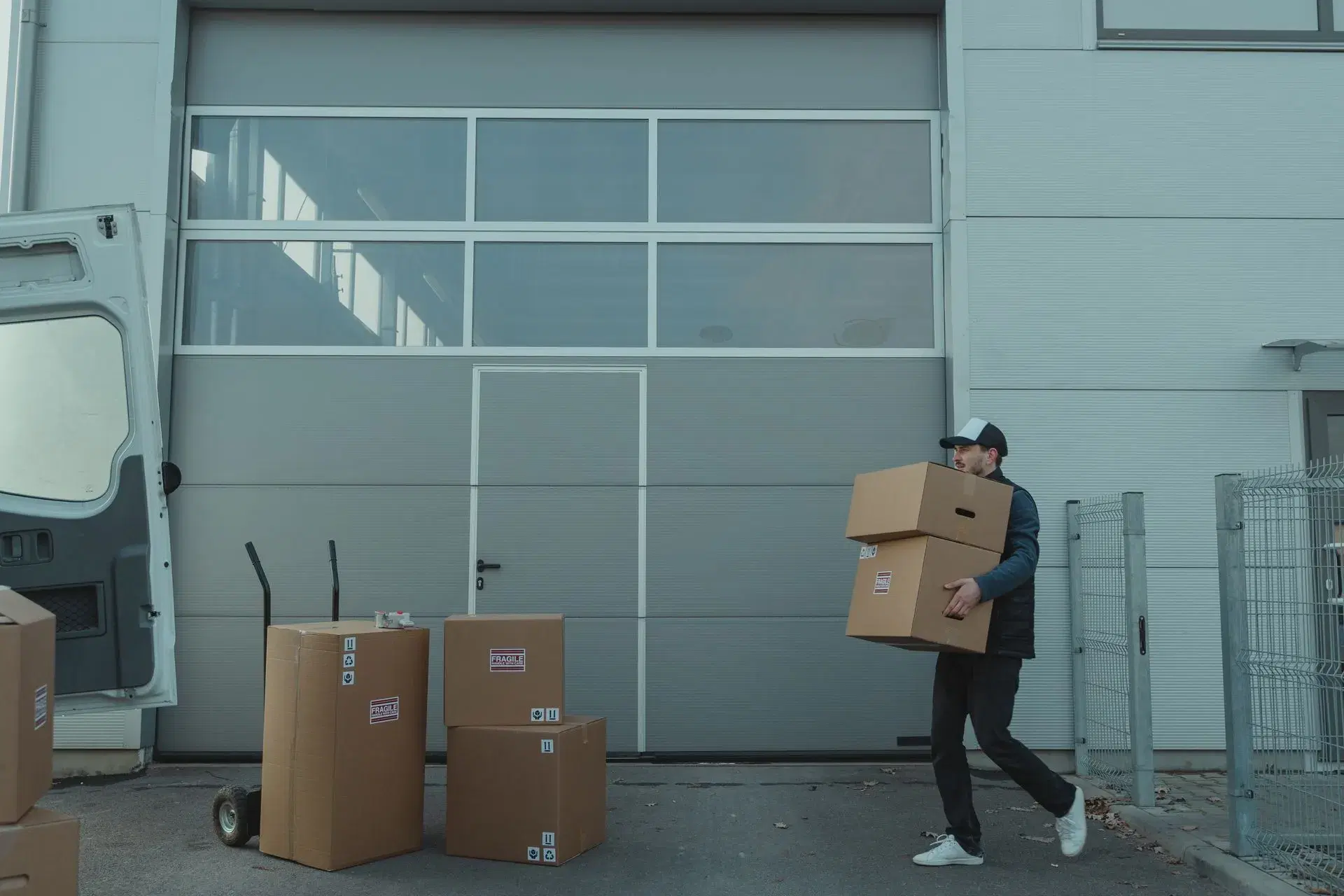
- Heavy or awkward lifting. Share it or put it off, and break the load into lighter trips with a trolley where there is one. When you do lift, keep the load close and plan the route first, the same basics as lifting at work and at home.
- Long stretches in one position. Sitting or standing, change on a rhythm of your own and do not wait for the ache to remind you. A desk that goes up and down is only useful if you use it to change, and the trick with standing desks and back pain is two marked heights, so the switch takes seconds.
- Repeated twisting or reaching. Move your feet instead of turning from the waist, and bring the work closer to you.
- Driving between jobs. Time held still is what builds back pain from driving, so plan a stop and set the seat before you leave, not while moving.
A few days is a starting point, not a deadline. When it is up, ask what you could do more of and what is still better handed over.
Judge a changed day by the next morning rather than by the afternoon. An ache that has gone back to where it started overnight is one sign the day was about right. One that is higher each morning, or that has started to spread into a leg, is telling you to change more, and it is worth mentioning at an assessment or to your GP.
Talking to your manager
You do not need a diagnosis to have this conversation, and you do not need to describe your back in detail. Four things need to be clear.
- What is going on, in a sentence. A sore lower back that makes some tasks harder is enough.
- What you can still do. Name it, because it is the part people forget to say.
- What needs to change for now, and for how long. A specific list is easier to agree to than a general one.
- When you will check back in. A date turns an open-ended favour into a short plan.
If your work is physical, the same conversation covers the colleagues who might pick up a lift. If you work for yourself, you are the manager, and the same four things still make a plan.
When work is the sticking point
What if resting in bed feels like the sensible choice? It is an understandable instinct, and a lighter day at home is not the same as lying in bed. Move about the house, walk, and swap between sitting and standing. Short rests between those are fine. For an episode of under six weeks the Royal Australian College of General Practitioners advises staying active instead of resting in bed, so the answer to rest or keep moving leans towards moving.
How long will it take to settle? Nobody can give you a date, because how long back pain lasts varies from one back, and one episode, to the next.
Is a back brace worth wearing to get through a shift? Ask before you buy one, because whether a back brace suits your back and your job is something an assessment or your GP can answer, and changing your day comes first either way.
What should you say about your job at an assessment? What a typical shift involves, and which tasks bring the ache on. The examination can then test the movements those tasks use, such as bending to a low shelf or turning with a load in your hands.
What the guidelines say
- Australian Commission on Safety and Quality in Health Care, Low Back Pain Clinical Care Standard, 2022. https://www.safetyandquality.gov.au/standards/clinical-care-standards/low-back-pain-clinical-care-standard
- Royal Australian College of General Practitioners, Handbook of Non-Drug Interventions (HANDI): Advice to stay active for people with acute low back pain, 2019. https://www.racgp.org.au/clinical-resources/clinical-guidelines/handi/handi-interventions/musculoskeletal/advice-to-stay-active-for-people-with-back-pain
When to get it looked at
Working through a sore back is for the ordinary kind. If you have a warning sign that needs an emergency department, leave work and go. Tell someone on the way out, and do not drive yourself if a leg is weak or numb.
Go to a hospital emergency department straight away if you have numbness or altered feeling around the saddle area, meaning the groin, the inner thighs, the buttocks or the genitals; a loss of normal sensation in the genitals, including during sex; trouble starting to pass urine, or any new change in your bladder or bowel control; weakness in both legs, particularly if it is getting worse; new or worsening pain running down both legs; weakness in one leg that is severe or getting worse, or a foot that has started to catch or drag when you walk; or numbness in a leg that is spreading or getting worse quickly.
Go to a hospital emergency department straight away for back or neck pain after a serious fall or a high-impact accident, such as a car accident; back or neck pain with a fever or feeling generally unwell; or new back or neck pain if your immune system is weakened, for instance by long-term steroids or chemotherapy, if you inject drugs, or if you have recently had a spinal injection, spinal surgery or a dental procedure.
Go to a hospital emergency department the same day if you have new clumsiness in both hands, or new unsteadiness on your feet.
See your GP promptly, before booking here, if you have a history of cancer, unexplained weight loss, pain at night that will not settle in any position, known osteoporosis with new severe pain, numbness that is spreading or getting worse slowly, or new, unexplained back pain as an older adult.
Have it assessed if changing your day has not brought your usual tasks any closer, if the pain comes back every working week, or if you are managing by avoiding more and more.