

There is no single list of exercises to avoid with a bulging disc. What to leave out for now is whatever sends symptoms further down your leg, and Australian guidance on low back pain still says to stay active. So the useful question is which movements, at what load, keep your symptoms in the back.
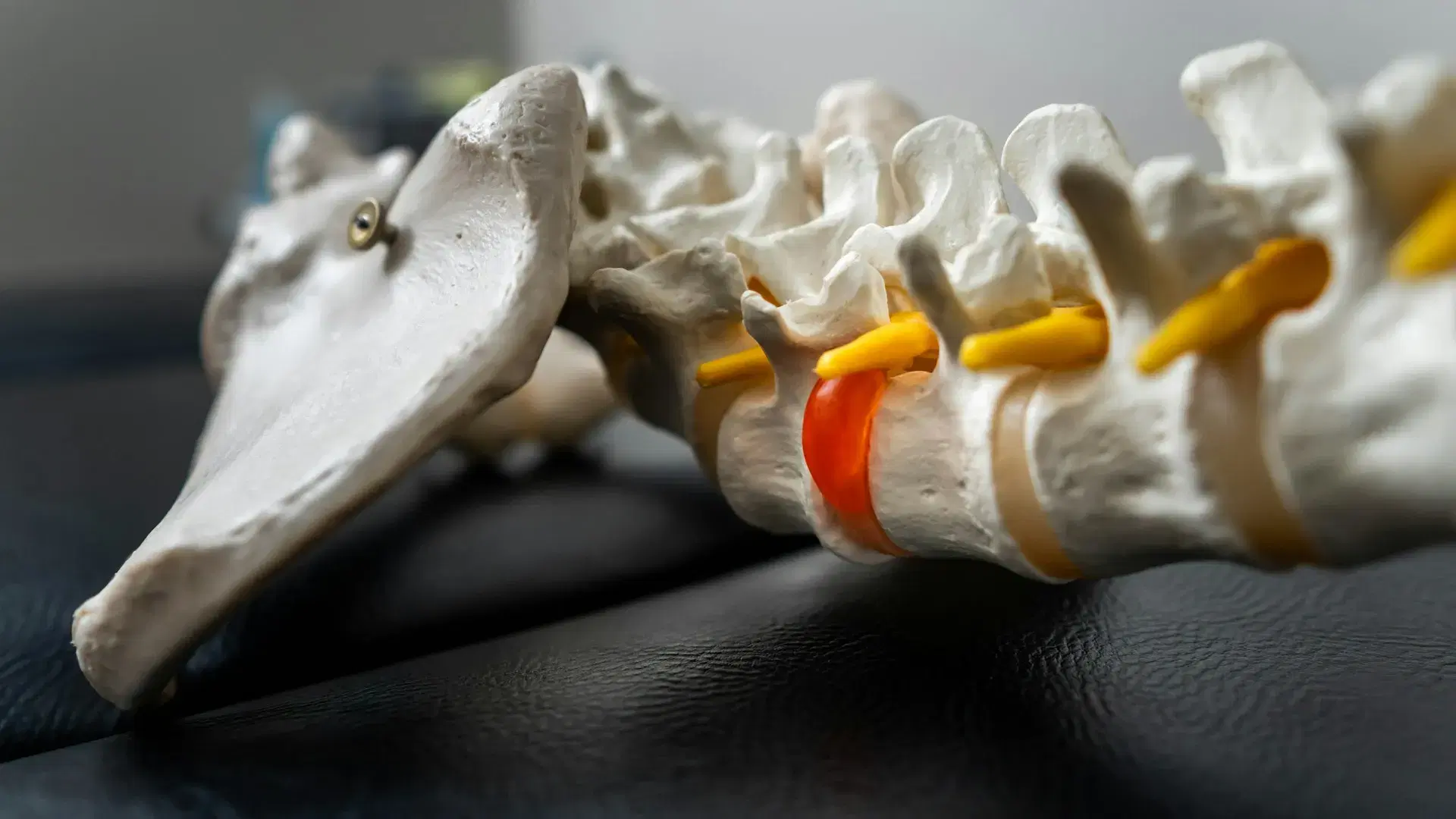
Why a list of banned exercises falls short
Lists of exercises to avoid with a bulging disc tend to agree with one another: no forward bending, no twisting, nothing heavy, no running. They are written for a disc, and you have a back, with its own sensitivity on its own day. A report names a shape. It does not say which direction your back prefers, how irritable a nerve is today or how much load it will take.
What the Australian guidance says is narrower. The Low Back Pain Clinical Care Standard (Australian Commission on Safety and Quality in Health Care, 2022) says scans and X-rays have a limited role in diagnosing low back pain. It also says to stay active and carry on with usual activity, work included, as soon as you can. Neither point is a list of movements. Together they are a direction: keep moving, and judge what is feasible on the day.
A bulge matters most when the level on the report matches where your symptoms sit. If yours names L4–L5, the L5 nerve that leaves there usually serves the outer shin and the top of the foot. At L5–S1 it is the S1 nerve, along the back of the calf to the sole and the outer edge of the foot. If the words on your report need translating, start with what is happening when a disc bulges.
Where do your symptoms go?
The most useful thing to do with any movement is to watch where the symptoms go while you do it and for a little while after. Back pain and leg symptoms are different signals. Leg symptoms can come from an irritated nerve root, and how far they travel says something about how irritated it is.
This is a check for a back you can already move about on. Leg pain that is severe or getting worse by the day needs examining before it needs testing. Otherwise, note where things sit before you start, at the end of the movement, ten minutes later and again the next morning. Then read the result as one of five patterns.
- It draws back up towards the spine. Leg symptoms shrink up the leg towards the back, even if the lower back aches a little more while they do. Write down which movement did it and how long the change lasted, and bring that to an assessment. It tells you something about your back, though not yet what comes next.
- It stays in the back and settles. A familiar ache that stays where it began and is no worse ten minutes later gives no sign that the nerve minded. That size of movement is a reasonable one to repeat on another day.
- It stays in the back and lingers. The back is more sensitive than the movement suggested. Next time do less of it: fewer repeats, a smaller range, slower, or lighter.
- It travels further down the leg, or pins and needles, numbness or burning appear that were not there before. Stop that movement for now. That says the nerve is touchy today, and it does not ban the movement for good. Go back to what did not move the symptoms, and have it looked at if it keeps happening.
- It arrives with weakness, a foot that catches, or numbness that is spreading. Stop, and go to a hospital emergency department straight away if a foot catches or drags, if weakness in a leg is severe or getting worse, or if numbness is spreading or getting worse quickly. Numbness that is spreading slowly goes to your GP promptly.
Two cautions. Symptoms can lag, so the next morning counts as part of the answer. And the same movement can read differently on a flared day than on a quiet one, so an answer from last week does not bind this week.
The usual avoid list, one movement at a time
The movements people are most often told to give up each ask something particular of the lower back. Knowing what, and what to watch for, is more use than a ban.
- Bending forward under load. Picking something up, a heavy hinge or a toe touch with a rounded back all ask the lower back to hold or fold forward. If bending forward is what sends symptoms down the leg, it earns caution. If it only wakes a back ache, adjust the range and the weight first. The hinge can be rehearsed with no weight in the hip hinge drill.
- Arching backward. Some backs are more comfortable arching than curling and some pinch. The cobra stretch is a gentle way of finding out which yours is, and its one clear stop signal is symptoms travelling further from the spine.
- Twisting with weight in your hands. Rotation under load is demanding even for a back with no history. Try the turn unloaded first, then light. If leg symptoms move on the way round, the loaded twist waits.
- Sit-ups and leg raises. A full sit-up is the other way of bending forward, through a big range, and raising both straight legs from lying makes the lower back hold against their weight. The McGill curl-up is a different job: a small lift of the head and shoulders that keeps the lower back in its natural curve.
- High impact. Running and jumping send a jolt up through the spine with every landing. A shorter, flatter, slower version tells you more than an all-or-nothing decision, and the same where-does-it-go check applies.
Adjusting load instead of crossing things off
Most movements have several dials. Range, weight, speed, number of repeats, the position you start from and how long you have been sitting beforehand can each be turned down one at a time. Turn down one, run the where-does-it-go check, and keep the change if the symptoms stay put.
A few single movements make good test pieces.
- Bird dog keeps the trunk still while an arm and a leg reach, so it asks for steadiness rather than bending. Reach long, not high.
- The knee to chest stretch bends the back forward on the floor with no load, the mirror of the cobra. Where your symptoms go in one direction against the other is the comparison you are after.
- The glute bridge is aimed at the buttock and the back of the thigh, a way of keeping the hips working from lying down. It has its own stop signs for leg symptoms.
- Walking is the movement with the fewest dials, which makes it a handy baseline to measure the others against.
Gym, scans and surgery questions
Can you keep going to the gym? A smaller version of the session may be possible. Leave the movements that sent symptoms down the leg and keep the ones that stayed in the back and settled. Turn one dial at a time on the rest.
Will a scan tell you what to avoid? Not by itself. For leg symptoms from the back, the RACGP’s 2022 guidance for GPs on imaging in adults with acute low back pain says a scan is not routine for leg pain from an irritated nerve root (radicular syndrome), and is considered in the first six weeks only if symptoms are severe, not improving and surgery is being considered. Here, a scan is arranged when clinically indicated.
What if the leg pain is not shifting? Then the question moves on from which movements to what the next step is, and that can include a GP referral to talk through surgery for a bulging disc with a surgeon. The care this clinic offers for disc and nerve problems is called disc and nerve rehabilitation.
Assessing a bulging disc means testing which directions of movement change your symptoms, how the hips and lower back move, and the strength, reflexes and sensation of the legs and feet. It also asks what you want to get back to, because that sets which movements are worth adjusting rather than dropping.
What the guidelines say
- Australian Commission on Safety and Quality in Health Care, Low Back Pain Clinical Care Standard, 2022. https://www.safetyandquality.gov.au/standards/clinical-care-standards/low-back-pain-clinical-care-standard
- Royal Australian College of General Practitioners, First do no harm: A guide to choosing wisely in general practice. For GPs: Imaging in adults with acute low back pain, 2022. https://www.racgp.org.au/clinical-resources/clinical-guidelines/key-racgp-guidelines/view-all-racgp-guidelines/first-do-no-harm/gp-resources/imaging-in-adults-with-acute-low-back-pain
When to get it looked at
Leg symptoms bring a few signs that come before any question about exercise.
Go to a hospital emergency department straight away if you have numbness or altered feeling around the saddle area, meaning the groin, the inner thighs, the buttocks or the genitals; a loss of normal sensation in the genitals, including during sex; trouble starting to pass urine, or any new change in your bladder or bowel control; weakness in both legs, particularly if it is getting worse; new or worsening pain running down both legs; weakness in one leg that is severe or getting worse, or a foot that has started to catch or drag when you walk; or numbness in a leg that is spreading or getting worse quickly.
Go to a hospital emergency department straight away for back or neck pain after a serious fall or a high-impact accident, such as a car accident; back or neck pain with a fever or feeling generally unwell; or new back or neck pain if your immune system is weakened, for instance by long-term steroids or chemotherapy, if you inject drugs, or if you have recently had a spinal injection, spinal surgery or a dental procedure.
Go to a hospital emergency department the same day if you have new clumsiness in both hands, or new unsteadiness on your feet.
See your GP promptly, before booking here, if you have a history of cancer, unexplained weight loss, pain at night that will not settle in any position, known osteoporosis with new severe pain, numbness that is spreading or getting worse slowly, or new, unexplained back pain as an older adult.
Short of an emergency, have it assessed when leg symptoms have lasted or keep returning, when one particular movement reliably sends them further down the leg, or when you are unsure which of your usual movements to keep. Bring your notes on where the symptoms went and when, plus any report you already have, and the first conversation can start from them.