

Surgery usually comes into the conversation when leg pain from an irritated nerve stays severe and is not improving, and when the examination and the scan point to the same place. Weakness in a leg that is getting worse, and a small group of other signs, skip that conversation and go straight to an emergency department.
When surgery comes up
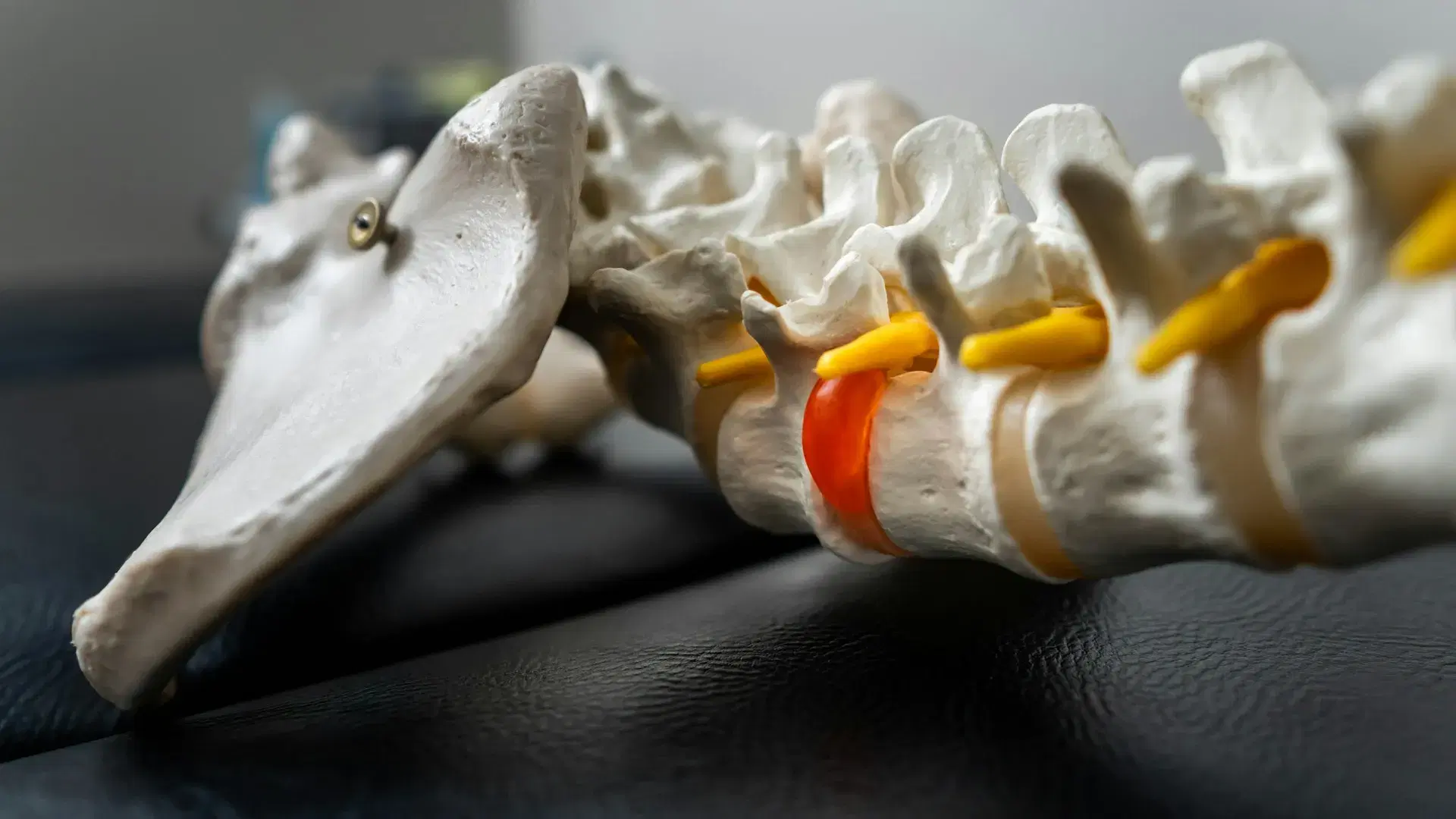
A bulge on a scan report is not a reason for surgery on its own. It is a finding, and it is read alongside how you feel and what the examination shows. What is actually happening when a disc bulges is the softer centre of the disc pressing its tough outer wall outward. A report names the shape in set words, from a bulge to a disc protrusion and beyond. The same shapes turn up on the scans of people with no pain, which is why X-rays and scans before a first visit are read against your story and your examination before a finding is taken as the cause.
For a disc in the lower back, the question is usually leg pain. A disc in the neck brings the arm and the spinal cord into it, which raises different signs, and a pinched nerve in the neck is the place to start.
Start with the usual course. The Royal Australian College of General Practitioners’ 2022 guidance for GPs on imaging in acute low back pain says non-specific low back pain has a good prognosis and usually improves within four weeks if people use simple pain strategies, avoid bed rest and keep up their usual activities. It adds that most people, whether or not they have radiculopathy, experience substantial improvements in pain and function within four weeks. Radiculopathy is pain, numbness or weakness from an irritated nerve root, often felt down a leg. That is how the condition usually goes, and it is not a promise about your leg.
Surgery enters the picture when symptoms do not follow that course. For nerve pain from the spine, called radicular syndrome, the college adds that imaging is not routinely indicated, and that in the first six weeks it is only considered if the symptoms are severe and not improving and surgery is being considered. In practice the scan follows the symptoms, and early on its job is to answer a question about surgery. Imaging here is arranged when clinically indicated.
Signs that go straight to an emergency department
A few symptoms are not part of a surgical referral at all, because they need emergency assessment. They are the signs that the nerves at the base of the spine may be under pressure.
Go to a hospital emergency department straight away if you have numbness or altered feeling around the saddle area, meaning the groin, the inner thighs, the buttocks or the genitals; a loss of normal sensation in the genitals, including during sex; trouble starting to pass urine, or any new change in your bladder or bowel control; weakness in both legs, particularly if it is getting worse; new or worsening pain running down both legs; weakness in one leg that is severe or getting worse, or a foot that has started to catch or drag when you walk; or numbness in a leg that is spreading or getting worse quickly.
If you are in the middle of a surgical work-up and any of those appear, the appointment is no longer the plan. Go to the emergency department and tell them about the disc. Back pain with a fever or feeling generally unwell goes there straight away too.
What a surgeon weighs
A surgeon is answering a narrower question than you might expect: does an operation fit the problem you have? How the disc looks on the scan is only part of that. These are the things that usually go on the scales.
- Where the pain is. The operations for a disc are aimed at the nerve, so it is leg pain that a surgeon is mostly asking about. Back pain on its own is a different conversation.
- Whether the nerve is losing function. Muscle weakness or a patch of numbness is part of what a surgeon asks about, and it can bring a decision forward. Weakness that is severe or getting worse, or numbness that is spreading quickly, is not something to weigh at an appointment: go to a hospital emergency department straight away. New weakness that is mild and not getting worse goes to your GP promptly.
- Whether the findings agree. The level and the side shown on the scan should match the level and the side of your symptoms and your examination. A bulge at one level does not explain symptoms that follow a nerve leaving the spine at another.
- How long, and what has been tried. Time matters, and so does what you did with it: staying active, simple pain strategies, medicines and exercise.
- How much it limits your life. Sleep, work, walking and sitting all count. A leg pain that wakes you every night is weighed differently from one that nags at the end of the day.
- Your health and your preference. Your general health, the medicines you take and what you would rather do. You take part in the decision.
You may hear three operations named. A discectomy removes the part of the disc that is pressing on the nerve. A decompression makes more room for the nerve by taking away a little bone or ligament. A fusion joins two vertebrae and is discussed for different reasons. Which one fits, if any, is worked out with the surgeon, who will explain the aims and the risks of each.
Questions worth taking to that appointment
It is an appointment worth preparing for. Take your scan images and the report, a short list of what you have tried and when, the medicines you take, and one sentence about what you want to be able to do again. Then ask:
- What is the operation aimed at here: the leg, the back, or both?
- Which level and which nerve are involved, and do they match the symptoms and the examination?
- What result is realistic for the leg pain, for any back pain and for numbness or weakness, and how soon?
- What are the main risks, and how likely is each for someone in this state of health?
- What happens with waiting, is there anything else to try first, such as medicines or an injection, and what would show that waiting has stopped being the right call?
- What is recovery like week by week, what has to be avoided, and for how long?
- Who does the operation, and who is the contact if something changes afterwards?
- Would a second opinion be reasonable?
Asking for a second opinion is ordinary, and a surgeon who recommends an operation expects questions. Appointments about surgery go quickly, so take someone with you if you can, or write the answers down as they come. If they leave you unsure, take them to your GP.
Where the rest of the team fits
A surgeon is one member of the team around a disc problem, alongside your GP, who coordinates, and any physiotherapist or chiropractor you see. The aim is that everyone is working from the same picture.
An assessment here includes the nerve tests: strength, reflexes and feeling in the legs, and how the findings line up with your symptoms. If a surgical opinion looks worth having, the clinic writes to your GP with those findings. Care here runs alongside the surgeon’s advice and never instead of it. In disc and nerve rehabilitation the technique is matched to how irritable the nerve is: gentle and hands-on first, with exercise carrying more of the load as the leg quietens.
After an operation, the surgeon’s instructions come first. Once you have been cleared to rebuild, the next stage is moving well after surgery.
What the guidelines say
- Royal Australian College of General Practitioners, First do no harm: A guide to choosing wisely in general practice. For GPs: Imaging in adults with acute low back pain, 2022. https://www.racgp.org.au/clinical-resources/clinical-guidelines/key-racgp-guidelines/view-all-racgp-guidelines/first-do-no-harm/gp-resources/imaging-in-adults-with-acute-low-back-pain
- Australian Commission on Safety and Quality in Health Care, Low Back Pain Clinical Care Standard, 2022. https://www.safetyandquality.gov.au/standards/clinical-care-standards/low-back-pain-clinical-care-standard
When to get it looked at
Go to a hospital emergency department straight away if you have numbness or altered feeling around the saddle area, meaning the groin, the inner thighs, the buttocks or the genitals; a loss of normal sensation in the genitals, including during sex; trouble starting to pass urine, or any new change in your bladder or bowel control; weakness in both legs, particularly if it is getting worse; new or worsening pain running down both legs; weakness in one leg that is severe or getting worse, or a foot that has started to catch or drag when you walk; or numbness in a leg that is spreading or getting worse quickly.
Go to a hospital emergency department straight away for back or neck pain after a serious fall or a high-impact accident, such as a car accident; back or neck pain with a fever or feeling generally unwell; or new back or neck pain if your immune system is weakened, for instance by long-term steroids or chemotherapy, if you inject drugs, or if you have recently had a spinal injection, spinal surgery or a dental procedure.
Go to a hospital emergency department the same day if you have new clumsiness in both hands, or new unsteadiness on your feet.
See your GP promptly, before booking here, if you have a history of cancer, unexplained weight loss, pain at night that will not settle in any position, known osteoporosis with new severe pain, numbness that is spreading or getting worse slowly, or new, unexplained back pain as an older adult.
The back signs above go to an emergency department because the Australian guidance on low back pain puts them there: the Low Back Pain Clinical Care Standard, published by the Australian Commission on Safety and Quality in Health Care in 2022, and the Royal Australian College of General Practitioners’ 2022 guidance for GPs on imaging in adults with acute low back pain both send suspected cauda equina syndrome, suspected spinal infection, a fracture after a high-impact injury and severe or rapidly worsening nerve weakness for emergency assessment.
Leg pain or numbness that is lasting, or that is limiting your sleep and work, is the point to have the nerves in your legs examined and the scan read against what the examination finds. New weakness in a leg goes to your GP first, or to a hospital emergency department straight away if it is severe or getting worse. If you have been told you have a bulging disc, bring the scan, the report and any advice a surgeon has already given.